


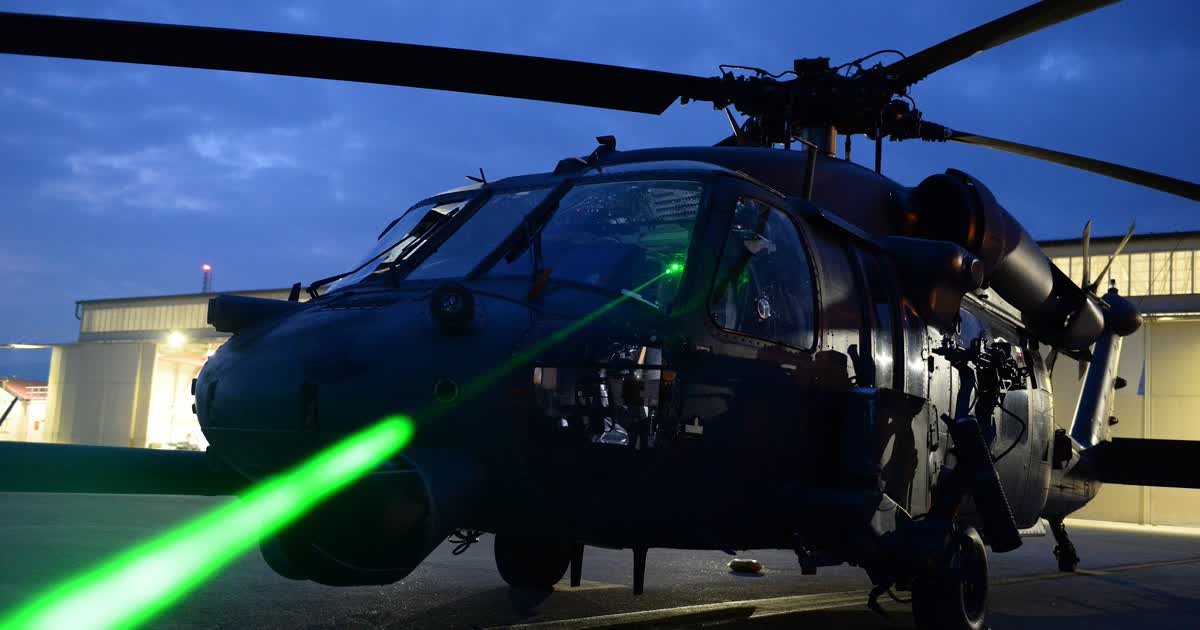
A Toledo man has been sentenced to 15 months in federal prison for aiming a laser pointer at an aircraft, according to the U.S. Attorney’s Office for the Northern District of Ohio, the Akron Beacon Journal reported.
According to court documents cited by the Beacon Journal, Branden Jay Lounsbury, 42, aimed a laser pointer multiple times at an Ohio State Highway Patrol helicopter as it flew over a residential neighborhood in Toledo on June 2, 2025. The pilots were able to identify Lounsbury’s location.

Lounsbury pleaded guilty in June to aiming a laser pointer at an aircraft or its flight path, the Beacon Journal reported. Along with the prison term, he was sentenced to three years of supervised release, which includes behavioral treatment, substance abuse testing or treatment and adult education, WTOL reported, according to the Beacon Journal.
Prosecutors said pointing a laser at an aircraft can temporarily blind or distract pilots, potentially causing a crash or permanent eye injury, and aiming a laser at an aircraft or its flight path is a federal crime, the Beacon Journal reported. Ohio law separately prohibits knowingly shining a laser or another visible-light device into the cockpit of an aircraft while it is taking off, landing or in flight, a second-degree felony under Ohio Revised Code Section 2909.081.

The case also reflects a national trend cited in the Justice Department’s release: the Federal Aviation Administration reported that laser incidents involving aircraft increased tenfold from 2014 to 2023, according to the Beacon Journal’s account of the release.
The FBI’s Toledo Resident Agency, the Ohio State Highway Patrol and the Toledo Police Department investigated the case, and Assistant U.S. Attorney Tracey Ballard Tangeman prosecuted it, the Beacon Journal reported.
Lounsbury’s sentence is not the first of its kind this year: earlier this year, an Arizona man received a prison sentence for aiming a laser pointer at Air Force aircraft, the Beacon Journal noted, part of a run of federal prosecutions built on the same conduct and the same warning from prosecutors about what a beam in a cockpit can do at low altitude.

Lounsbury will serve his 15-month sentence in federal prison and then begin the three years of supervised release, with the treatment, testing and education conditions the court imposed.