


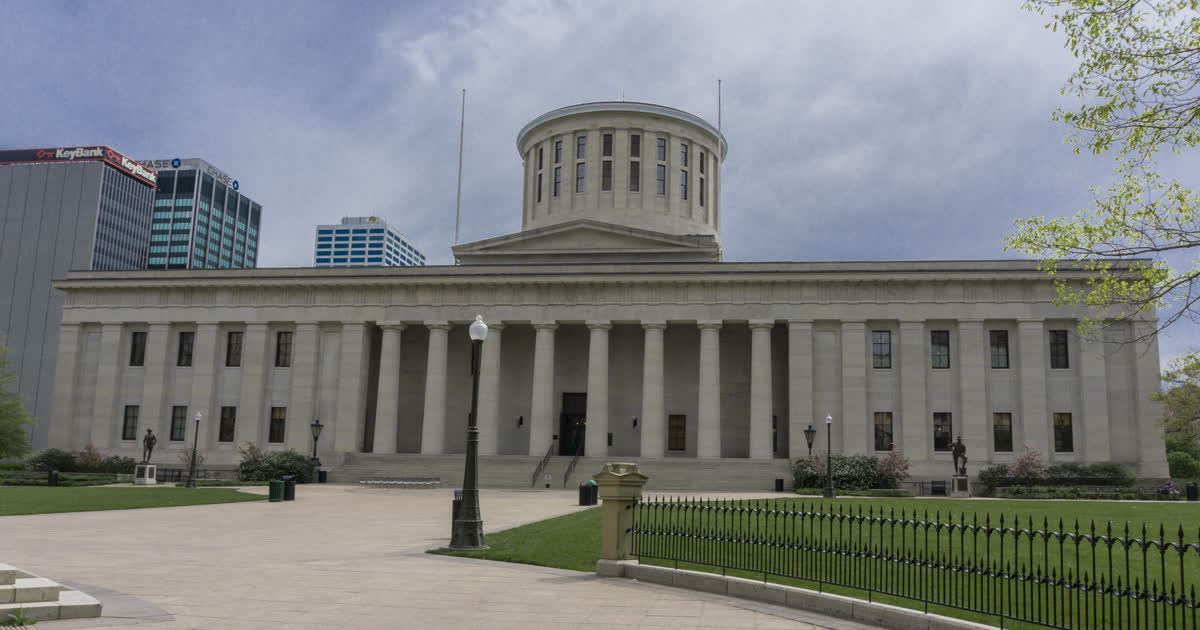
Democrat John Kulewicz declared victory on Wednesday, November 4, in the race for Ohio attorney general after finishing ahead of Republican State Auditor Keith Faber in unofficial returns. According to the Columbus Dispatch, Kulewicz was leading Faber 50.31% to 49.69% after early votes and Election Day votes were counted from the November 3 general election, with provisional ballots still outstanding.
Faber, in a statement reported by the Columbus Dispatch, conceded that his path to victory was slim and said he had called Kulewicz to wish him well. “Unless there is some unusual vote pattern in the provisional and UCAVA votes, Mr. Kulewicz will be Ohio’s next Attorney General,” Faber said in the statement reported by the Dispatch. UCAVA ballots are those cast by uniformed services and overseas voters. The acknowledgment effectively settled a contest that had been too close to call through much of the morning, though results are not official until boards of elections complete their canvass and certification.

A second independent tabulation pointed the same way. Decision Desk HQ’s Ohio results page showed Kulewicz leading by 0.63 percentage points with more than 95% of the vote in — consistent with the Dispatch’s split. The narrow finish capped a race that swung on election night: the Dispatch’s live coverage reported Faber leading at about 45% of precincts reporting and again around midnight, before later returns put Kulewicz in front.
“While there are still additional provisional and military ballots outstanding, we firmly believe that in seventy days, I will begin serving as the next Attorney General of Ohio. I could not be more honored and excited,” Kulewicz said in a statement reported by the Columbus Dispatch. On November 4, in remarks also reported by the Dispatch, he added: “This campaign is proof of the proposition that ‘only the impossible is worth the effort.'”

The seat was open because Ohio is electing a new attorney general for the first time in eight years, according to the Columbus Dispatch. The most recent elected attorney general, Dave Yost, resigned in June, and Gov. Mike DeWine appointed Republican Andy Wilson to serve the remainder of Yost’s term; Wilson did not run, the Dispatch reported. All of Ohio’s statewide executive offices were open this year because of term limits, the Dispatch noted.
Kulewicz, of Upper Arlington, is a political newcomer whose elected experience has been on the Upper Arlington City Council, according to the Columbus Dispatch. He retired as a partner at Vorys, Sater, Seymour and Pease, the Columbus-founded firm where he spent 44 years as a litigator and argued a case before the U.S. Supreme Court. The Dispatch reported he will focus the office on economic issues such as wage theft and consumer protection. He won the May Democratic primary over former state Rep. Elliot Forhan; Faber was unopposed in the Republican primary.

Faber brought a very different resume. He has served as Ohio’s auditor of state since 2019 after serving in both the Ohio House and the Ohio Senate, including as Senate president — a background the Athens County Independent summarized in its results coverage. His loss was one of several for statewide Republicans on Tuesday: the Columbus Dispatch reported Democrat Dr. Amy Acton won the governor’s race and Sherrod Brown defeated Republican U.S. Sen. Jon Husted, results NewsForce247 covered in its reports on Amy Acton’s election as Ohio governor and Sherrod Brown’s Senate victory over Jon Husted.
The office is one of the most far-reaching in state government. According to the Columbus Dispatch, the attorney general represents state agencies, pension funds and public colleges and universities, investigates and prosecutes charity fraud and Medicaid fraud, and operates the peace officers’ training academy, the state crime labs and the Bureau of Criminal Investigation.

The result also landed on a night Ohio voters rewrote their constitution. As NewsForce247 reported, voters approved State Issue 3, putting photo ID requirements into the state constitution. The Dispatch described November 3 overall as Ohio Democrats’ biggest election wins in 20 years — the backdrop for a first-time statewide candidate edging out a sitting statewide officeholder.
What we know — and what we’re still waiting on. What we know: Kulewicz led 50.31% to 49.69% in unofficial results, according to the Columbus Dispatch, and Decision Desk HQ independently showed him ahead by 0.63 points with more than 95% in. Kulewicz has declared victory, and Faber has said Kulewicz will be the next attorney general absent an unusual pattern in the remaining ballots. What we’re still waiting on: the count of provisional and military/overseas (UCAVA) ballots, still outstanding according to the Dispatch, and official certification. All election-night results are unofficial until that process finishes.
What happens next is the canvass. Under the Ohio Secretary of State’s Election Official Manual, each county board conducts an official canvass including eligible provisional ballots and must certify results to the Secretary of State within 21 days of Election Day — by November 24. The Ohio Legislative Service Commission’s post-election guide says the Secretary of State then canvasses the county abstracts and declares statewide results, with certificates of election for offices including attorney general issued around the first week of January. The reported 0.62-point margin also sits above the 0.25% threshold the Commission cites for an automatic recount in a statewide race.
Kulewicz’s own timeline — seventy days from November 4, in the statement reported by the Columbus Dispatch — points to a mid-January start for the new attorney general. NewsForce247 will update this story when the provisional-ballot count and official certification are complete.
Photo: Ɱ, CC BY-SA