


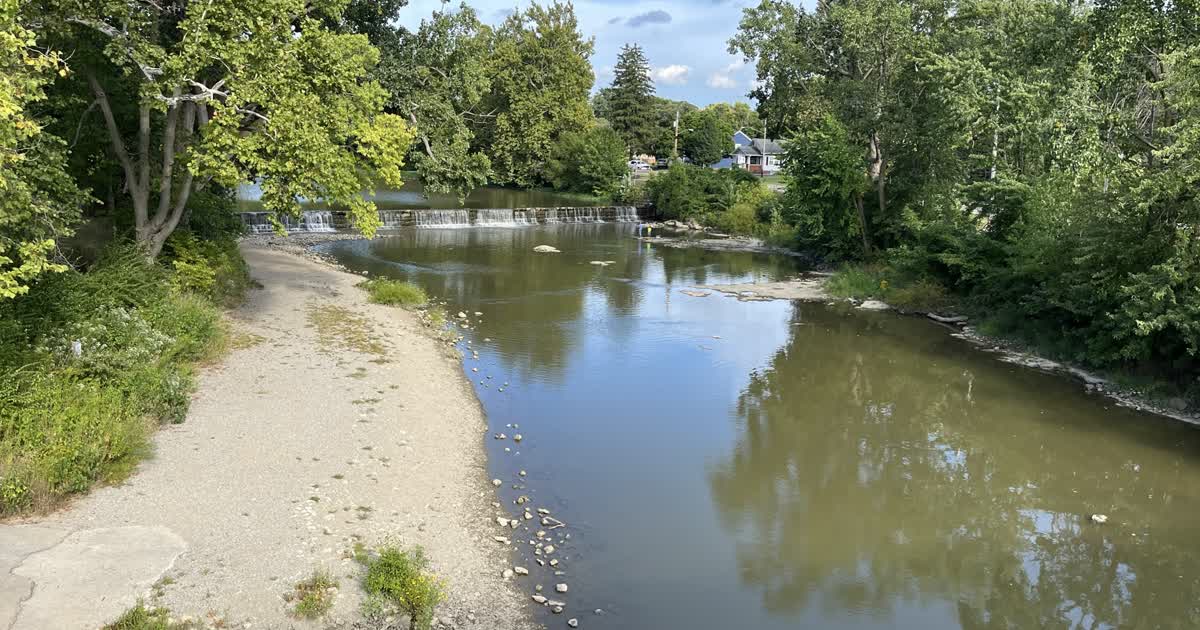
Findlay celebrated its new Urban Prairie on Monday evening, October 19, with a ribbon cutting and community tree planting at the site on East Main Cross Street, where about five acres of city-owned land in the Blanchard River floodplain are being turned into a native prairie.
Project partners spoke first at the 5:30 p.m. event, then community members were invited to help plant native trees chosen by the Findlay Shade Tree Commission. The city is developing the site with WILD Toledo, a program of the Toledo Zoo, and the Blanchard River Watershed Partnership.

When finished, the prairie is planned to include native grasses, wildflowers and more than 40 native trees, along with walking paths and educational features. Benches, signage and other features will be added over the next several months.
The project is also a flood tool. The city notes that an acre of traditional turf absorbs only about an inch of rain per hour, while an acre of prairie can absorb up to nine inches in the same time — a meaningful difference for land sitting in the floodplain of the Blanchard River, which has flooded Findlay repeatedly over the years.

Funding comes from grants rather than local taxes: a $150,000 Healthy and Sustainable Communities grant from the American Beverage Association through the U.S. Conference of Mayors, announced in January, plus support from the Findlay-Hancock County Community Foundation. The city says the grant support allows the prairie to be built at no cost to local taxpayers.
Next, WILD Toledo will prepare the site to be seeded during the coldest part of winter, using cold stratification — the natural process in which winter cold and moisture prepare native seeds to sprout. A wildflower cover crop is planned in the meantime, and prairies usually take two to three growing seasons to reach their full look.

For nearby residents, the site will offer a new kind of open space along East Main Cross Street — not mowed lawn, but grasses and flowers that change with the seasons, with paths inviting walkers into the middle of it. The work continues in the spring: a follow-on community Plant Plugging event, with thousands of plant plugs, is planned for May 2027.
Photo: Mbrickn, CC BY