


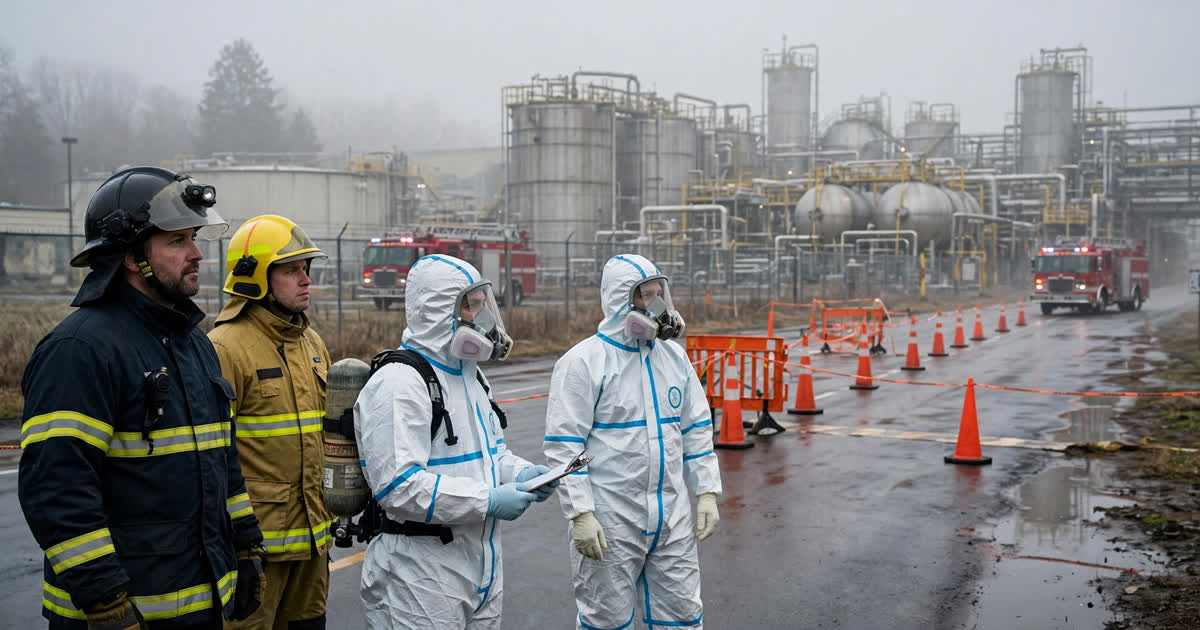
A hazardous chemical release at a north Toledo terminal remained ongoing Wednesday afternoon, with the U.S. Environmental Protection Agency monitoring air quality and supporting incident command as a chemical reaction continued inside a compromised tank. Mayor Wade Kapszukiewicz said Wednesday afternoon the situation was steadily improving, but the release that began the night before had not ended.
The release began Tuesday night at MC Tank Terminal, 1266 Progress Ave., during a transfer of glycidyl methacrylate, an industrial chemical used in plastics, paints and coatings. The Ohio EPA said an error occurred during the transfer. The chemical came from a 5,500-gallon tank and is flammable, according to officials.

Toledo Fire & Rescue ordered everyone within a 1-mile radius of the terminal to evacuate, affecting about 983 residents, while residents within a 3-mile radius were told to shelter in place. The evacuation zone includes Raintree Village mobile home park and the Alexis Addition neighborhood. The American Red Cross and TARTA buses assisted evacuees, with buses staged at the Meijer on East Alexis Road.
One Lucas County sheriff’s deputy who responded was treated at a hospital, the only known injury among responders, and officials have not determined whether his symptoms were related to exposure. Hospitals in the area treated about 30 people who came in with symptoms. The chemical can irritate the eyes, nose, mouth and skin and cause headaches, dizziness and nausea.

Toledo Public Schools closed all 57 of its schools Wednesday, and Washington Local Schools also canceled classes. Several schools in neighboring Monroe County, Michigan, closed as well. The closures kept students out of the area around the terminal while evacuations and shelter-in-place guidance remained in effect during the ongoing response.
Lucas County health commissioner Karim Baroudi described the chemical at this point as “mostly an irritant” while noting it is toxic on contact or if ingested. Officials told anyone with serious symptoms such as difficulty breathing to go to an emergency room or call 911. Dense fog Wednesday morning complicated tracking the plume, and officials cautioned that natural fog could be mistaken for chemical vapor.

Officials estimated the chemical reaction in the compromised tank could take another 6 to 16 hours to complete, and the city decided the safest course is to let the reaction finish. Crews kept their distance from the tank because of the risk it could become explosive, while air monitoring and the coordinated response continued Wednesday.