

The University of Toledo College of Law hosts its 26th annual Great Lakes Water Conference this morning, and this year’s theme — “Water, Technology and Law” — puts the region’s fastest-growing argument, the thirst of artificial intelligence data centers, at the center of the table, UToledo News reported.
The conference runs today, Friday, Nov. 13, from 9:30 a.m. to noon as a live webinar, sponsored by the College of Law and its affiliated Legal Institute of the Great Lakes. Registration closed Tuesday, Nov. 10, with registrants receiving a participation link by email. The conference is free for the public; attorneys seeking two hours of Ohio continuing legal education credit pay $65, according to UToledo News and the College of Law’s conference page.

The Legal Institute of the Great Lakes is a multidisciplinary research center within the College of Law, founded in 1993 to support research and conferences on the legal, economic and social issues of the Great Lakes region of the United States and Canada. Its annual water conference has become a standing meeting point for the lawyers, engineers and policy specialists who argue over how the largest freshwater system on earth gets used — and protected.
“The impact of novel technological developments on our water resources is hard to overstate,” Evan Zoldan, director of the Legal Institute of the Great Lakes, told UToledo News. “Some of these technological developments increase the demand for water, straining this limited natural resource. Other technological developments make it possible to protect water, for example, by making it easier to monitor water usage or identify infrastructure weaknesses.”
Four national panelists anchor the morning. After Zoldan’s introductory remarks at 9:30 a.m., David Strifling of Marquette University Law School opens at 9:40 a.m. on “Managing PFAS in Biosolids and Stormwater,” followed at 10:00 a.m. by Ana Barros of the University of Illinois Urbana-Champaign on “Envisioning a Water Secure Future,” with a question-and-answer session closing the first panel at 10:20 a.m., according to the conference agenda.
The second panel turns directly to the data center question. At 10:50 a.m., Melissa Scanlan of the University of Wisconsin-Milwaukee School of Freshwater Sciences presents “Hidden Environmental Costs of AI-Data Centers,” and at 11:10 a.m. Rhett Larson of Arizona State University’s Sandra Day O’Connor College of Law takes up “Water Data and Water Security.” A second question-and-answer session follows at 11:30 a.m., with Zoldan’s closing remarks at 11:50 a.m.
The timing is not accidental. AI is supported by a data-center development boom that demands enormous amounts of water to cool processors, UToledo News explained, while groundwater and other monitoring technology simultaneously offers new ways to understand water consumption patterns. The conference explores both ends of that tension — technology as a strain on the resource, and technology as a tool for protecting it.
“Data centers are kind of the elephant in the room,” Carmela Sleva, the 2026-27 Legal Institute of the Great Lakes Fellow, told UToledo News. “There’s a lot of conversation on what needs to happen to regulate them, but not much actually happening yet.”
Sleva, a third-year UToledo College of Law student helping organize this year’s conference alongside Zoldan, told UToledo News the theme deliberately spans the spectrum: “Data centers are a big part of this year’s theme, but we’re looking at both ends of the spectrum. So it’s technologies that threaten water resources and water security, but also technologies that could aid in protecting water resources like storm or groundwater monitoring.” Her central question frames the whole morning: “I think a big question for us is: How do you regulate something that’s growing so fast?” she told UToledo News.
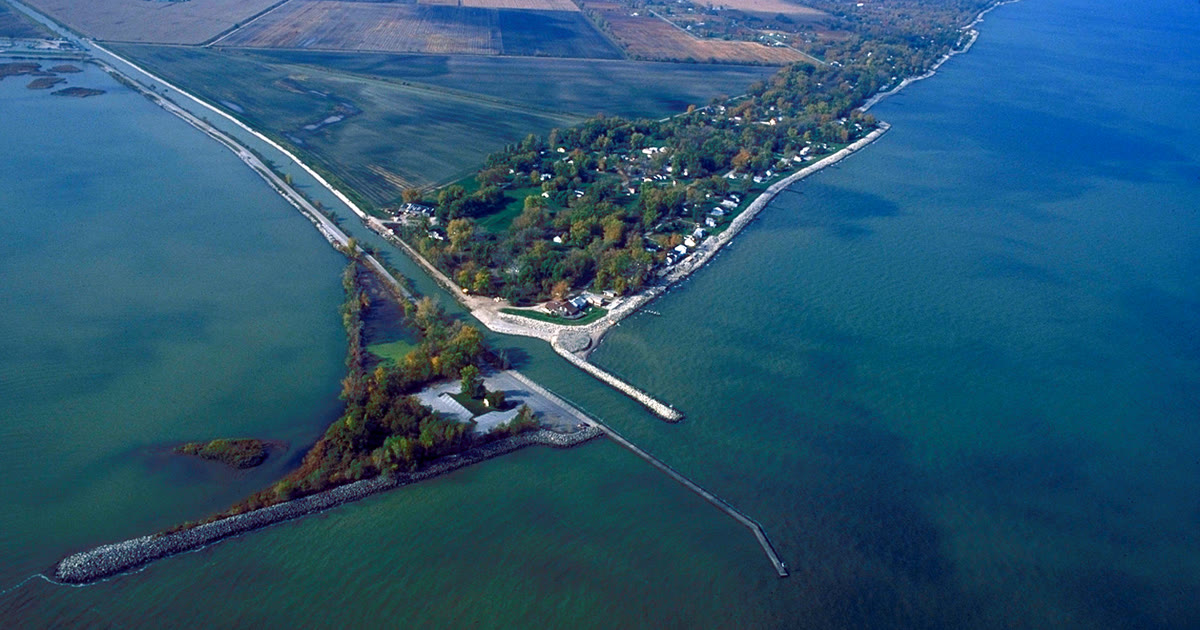
For Toledo, the questions are more than academic. The conference convenes on the shore of Lake Erie, in a city whose water politics were reshaped by the 2014 algae crisis and where restoration work continues — NewsForce247 recently covered UToledo winning nearly $900,000 to finish the Swan Creek restoration and the university’s holiday giving drives across Northwest Ohio.
What happens next plays out well beyond this morning’s webinar. Ohio communities are writing data center rules in real time — Cuyahoga Falls adopted strict size and power caps this week — and the PFAS, stormwater and groundwater monitoring questions on today’s agenda are the same ones facing the Ohio EPA, municipal utilities and the courts. The conference’s value, its organizers suggest, is getting the lawyers and the scientists in the same conversation before the permits, rather than after.