


UToledo Health has earned the American Heart Association’s 2026 Target: BP Gold+ recognition for its work helping patients control high blood pressure, The University of Toledo announced on November 17, 2026. The recognition is based on 2025 data from eight UToledo Health clinics, which together averaged better than 70 percent blood pressure control among their patients, according to UToledo News, the university’s news service.
The work behind the honor comes from The University of Toledo Regional Quality Improvement Hub, established in 2022 as part of a statewide initiative of the Ohio Department of Medicaid. UToledo’s College of Medicine and Life Sciences is one of six in Ohio taking part. The hub began its regional improvement work in January 2023, and UToledo’s adult primary care clinics joined the program’s first wave that fall, partnering with Ohio State University and the University of Cincinnati in a learning collaborative, UToledo News reported.
Some of the changes that moved the numbers are simple. Clinics now take two blood pressure readings per visit, which Umeeksha Sharma, the hub’s quality improvement (QI) coach and data lead, called “the No. 1 thing that improved our numbers” because it makes the reading accurate and medication changes appropriate, UToledo News reported. The team also trained medical assistants and front-line staff, gave providers feedback on their patients’ control rates, brought patients with high readings back sooner, expanded home monitoring, and wrote a step-by-step hypertension protocol for clinics.
“This is outside confirmation that you are really doing a good job, and it’s something that folks recognize,” Diane McCarthy, administrator in the Department of Medicine and senior project director for the hub, told UToledo News. McCarthy said the recognition carries added meaning for patients with Medicaid or no insurance, since not every practice accepts them: “That is part of our mission in the community: to support the underserved. And we also want them to feel like they’re getting top-tier healthcare.”
Patients helped shape the work. About 20 patients meet monthly with the hub’s Patient and Family Advisory Council, and when the data showed patients missing appointments, the council’s input produced a flyer listing the transportation benefits available through Medicaid — transportation being a known barrier in Lucas County, UToledo News reported. The project focuses on Medicaid patients, but the changes apply to everyone who visits the participating clinics.
The hub’s reach now extends well beyond UToledo’s own walls. After its first 18 months with the eight UToledo clinics, it expanded to outside clinics and now works with 28 clinics, 20 of them outside UToledo Health, with a new group joining this fall. The original eight clinics are moving into a sustainability phase, Sharma told UToledo News, with the hub still supplying their data and flagging any drops.
What happens next: the new cohort of community clinics begins the same improvement work this fall, while the eight original clinics try to hold their control rates above 70 percent. For Dr. Christopher Cooper, the UToledo Health cardiologist who leads the hub, the credit sits with the clinics themselves. “This really reflects the excellent work of the medical assistant staff and the clinics working with the faculty to drive improvement in care,” Cooper told UToledo News.
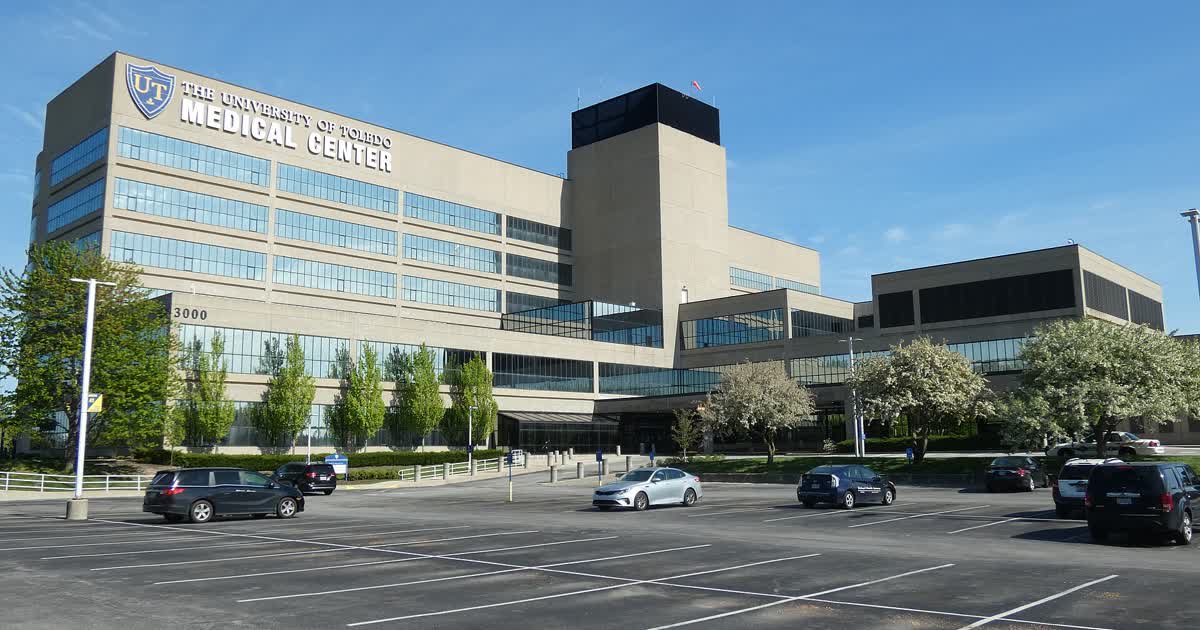
Photo: The University of Toledo Medical Center in Toledo. Photo: MrJacon000, CC BY-SA