


A University of Toledo biologist has received approximately $2.4 million from the National Institutes of Health (NIH) to study how sperm cells move, in research aimed at the eventual diagnosis and treatment of male infertility, the University of Toledo announced on November 19, 2026.
Dr. Tomer Avidor-Reiss, a professor in the College of Natural Sciences and Mathematics, received the award from the Eunice Kennedy Shriver National Institute of Child Health and Human Development, part of the NIH, to study subcellular structures called centrioles, according to the university’s release. Estimates suggest about 15 percent of couples in the United States struggle to conceive, and about half of those cases can be attributed to male infertility, the university said.

“Sperm motility is key to successful fertilization, but scientists don’t fully understand the mechanism behind it,” Avidor-Reiss said in the university’s release. “This award enables us to explore our hypothesis that centrioles mediate a new movement we call spermatozoa head-kinking.”
The head-kinking hypothesis builds on more than a decade of work. Avidor-Reiss led the team that identified a previously unknown second centriole in fruit fly sperm in 2009, in the sperm of additional insects in 2017, and — most significantly — in the sperm cells of humans and most other mammals in 2018 and 2021, a discovery detailed in the journal Nature Communications, the university said.

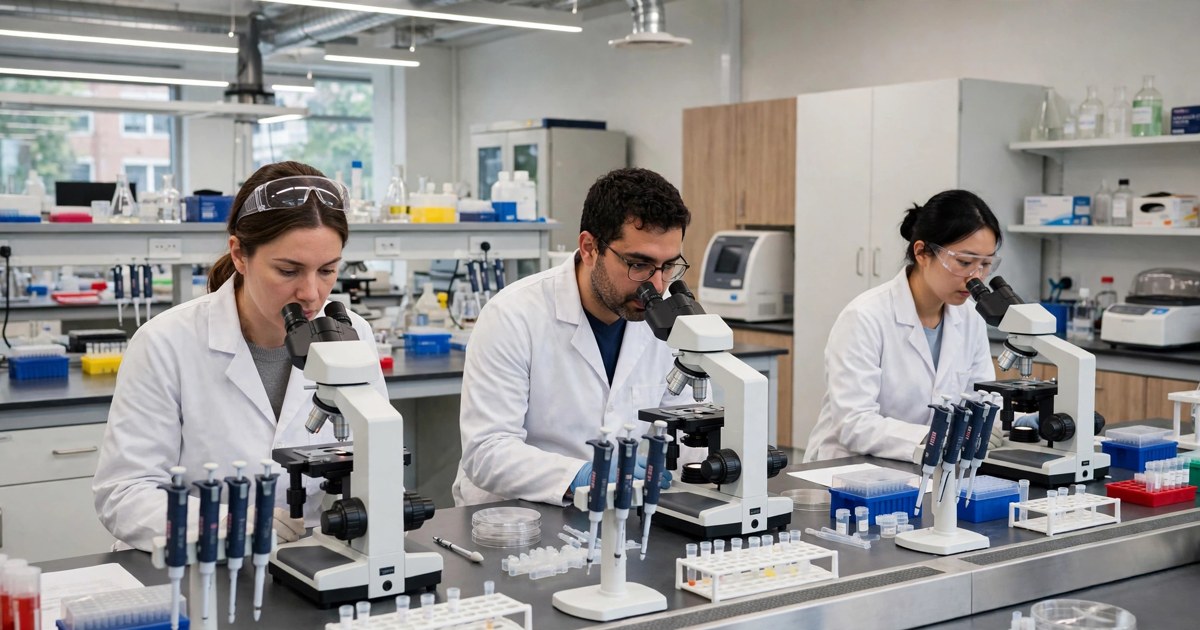
“We have reason to think that movement begins in tail of the sperm cell, and the centrioles act as a transmission system, converting the up-and-down sliding movement within the tail into lateral head-kinking,” Avidor-Reiss said in the release. The team also wants to learn how critical that motion is to penetration of the egg, working in the laboratory in Wolfe Hall, according to the university.
The five-year award is expected to support more than 10 undergraduate students, in addition to four to five graduate students and postdoctoral researchers, the university said. Collaborators include Dr. Samantha Schon at the University of Michigan, UToledo biophysicist Dr. Aniruddha Ray, Dr. Chih-Kuan Tung of North Carolina A&T State University, and UToledo’s Dr. Nagalakshmi Nadiminty, who will coordinate Institutional Review Board compliance, according to the release.
Avidor-Reiss has also developed a patent-pending diagnostic test for centriole-based infertility, the university said. “Our research has important real-world impacts,” he said in the release. “If we can definitively establish the role of the centrioles in sperm motility, we will be well positioned to develop further diagnostic tools or even treatment methods that may begin to ease the multifaceted burden of male infertility.”