


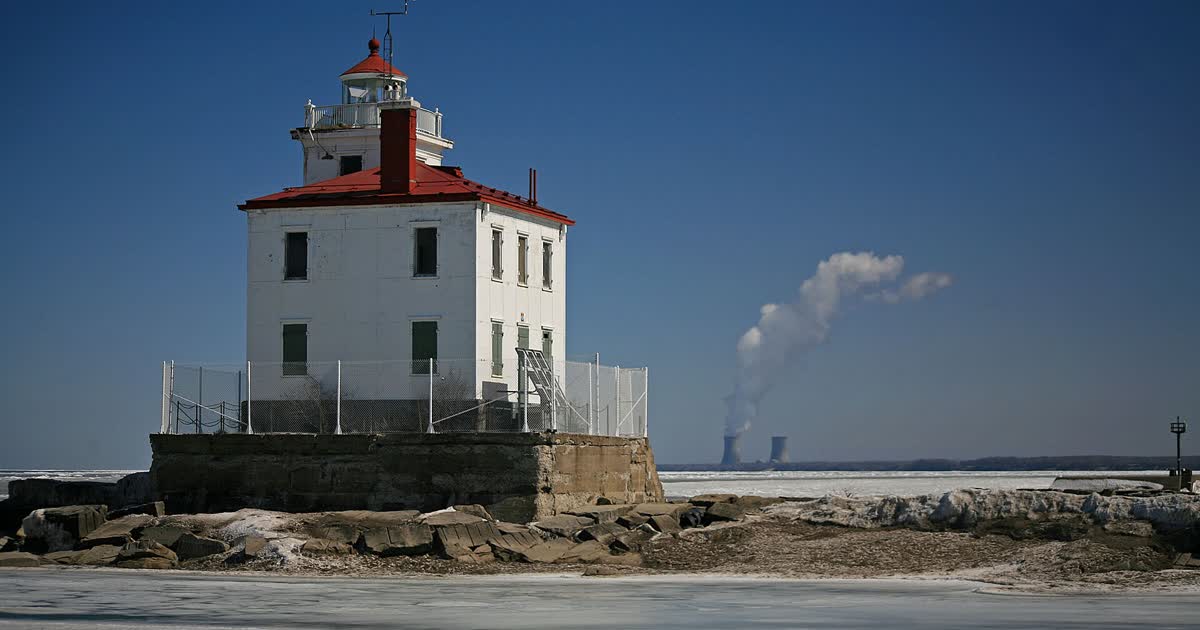
FAIRPORT HARBOR, Ohio — Six Northeast Ohio county engineers have asked Governor Mike DeWine for state help finding and paying for replacement road salt after flooding shut down Morton Salt’s Fairport Harbor mine, leaving nearly 100 public agencies with about a third of the salt they ordered, Cleveland.com reported.
The engineers, from Ashtabula, Geauga, Lake, Mahoning, Portage and Trumbull counties, sent their request to DeWine in a letter dated November 19, 2026, asking for direct purchasing help, grants or reimbursements for documented costs, according to Cleveland.com’s reporting, summarized by Wise Voter.

Flooding on October 22, 2026, shut the mine, and Morton Salt told customers it would remain closed through the winter, Cleveland.com reported. About 50,000 tons of salt mined before the flood is being divided among Morton customers by the Ohio Department of Transportation, which runs the state’s cooperative road salt purchasing program.
The engineers’ preliminary estimate puts the added cost of replacement salt at up to $21 million for local agencies, according to Cleveland.com. WKYC reported the engineers are seeking up to $21 million in emergency assistance, with agencies notified they will receive only about 32 percent of their ordered salt — a reduction of roughly 68 percent.
The shortage lands hardest in the snowbelt, where lake-effect snow can demand repeated salting runs while other parts of Ohio are dry. County engineers in the six counties maintain hundreds of lane miles of county roads, and the townships and villages in the same purchasing program face the same shortfall.
The mine’s workforce has already felt the shutdown. Morton Salt laid off 77 workers at Fairport Harbor after the water inflow, and former workers filed a federal lawsuit on November 16, 2026, over the layoffs, the Akron Beacon Journal reported, citing Cleveland.com. Whether the mine ever reopens remains unknown, according to the engineers’ account reported by Cleveland.com.
What we know — and what we’re still waiting on: confirmed — the mine flooded on October 22, 2026, is closed through the winter, and agencies in the six counties expect about 32 percent of their ordered salt, with replacement costs estimated at up to $21 million, according to Cleveland.com and WKYC. Still waiting — whether DeWine’s office will provide purchasing help or money, where replacement salt will be bought, and whether the Fairport Harbor mine can reopen at all.
Communities are already making hard choices inside the shortage. In Lake County, Eastlake told neighboring Timberlake it will not sell the village any salt this year because Eastlake’s own 3,000-ton order was cut to 948 tons, Lake Shore Views & News reported, and Timberlake has been quoted $190 a ton against about $61 a ton through the state contract.
For drivers, the practical effect this winter may be roads that are plowed more and salted less, with crews stretching a reduced supply across a full season whose worst weather usually arrives in January and February, 2027.
The engineers were scheduled to discuss their winter plans at a news conference in Chardon on Tuesday, November 25, 2026, according to Cleveland.com’s reporting.
What happens next: the six county engineers present their winter plans in Chardon on November 25, 2026, and DeWine’s office decides whether the state will help buy or pay for replacement salt before the season’s first major snow.
The Fairport Harbor mine is not a marginal supplier. Its tunnels run under Lake Erie from the Lake County shoreline, and its road salt has anchored the state contract for the snowbelt counties for years, which is why a single flood in October, 2026, can ripple into the winter budgets of nearly 100 agencies at once, according to Cleveland.com’s reporting.
State officials have said the pre-flood salt is being allocated through the Ohio Department of Transportation’s program, but the engineers’ letter makes clear that allocation alone does not close the gap: at about a third of what was ordered, a hard winter would force counties to choose which roads get salt and which get plows alone, a choice with direct safety consequences on hills, bridges and lake-effect corridors.
Photo: Laszlo Ilyes, CC BY