


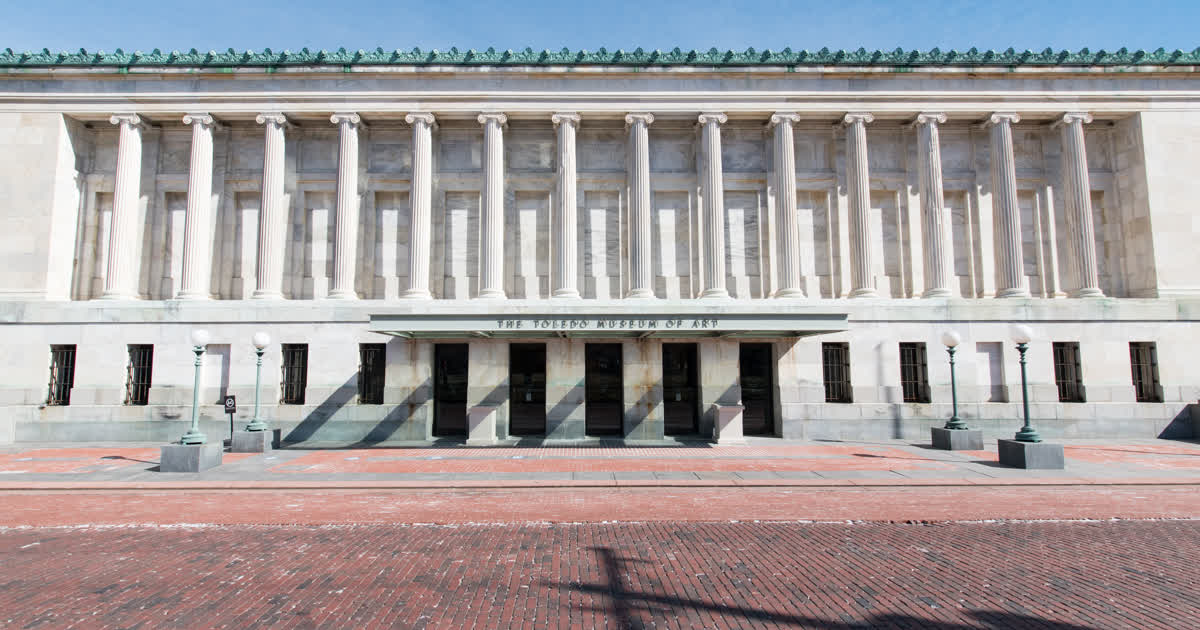
TOLEDO — The Toledo Museum of Art is in the middle of the biggest rebuild in its modern history, its main galleries closed until fall 2027 and much of the collection in storage or out on loan. Now a Toledo arts website has asked the State of Ohio to look at the terms the museum’s founding money came with, The Lake Erie Inquiry reported November 13.
Artists of Toledo says it sent the Ohio Attorney General’s office a 23-page request for review, accompanied by a petition titled “Enforce Libbey’s Will and Protect Toledo’s Art” that the site counts at 1,309 signatures, according to The Lake Erie Inquiry. The request asks the state to examine donor intent, the administration of a charitable trust, governance, and “public access to collection works,” the Inquiry reported.
The petition itself, published by Artists of Toledo, asks the Attorney General’s Charitable Law Section to investigate the administration of the Libbey Trust, review whether the museum is violating its legal obligations, and ensure the collection is restored to continuous public exhibition. It was formally submitted to the Attorney General’s office on June 23, 2026, according to Artists of Toledo, and invokes the office’s authority under Ohio Revised Code section 109.24 to review charitable trusts.
Edward Drummond Libbey was the glassmaker whose fortune built the museum. He left it an endowment, and, the petitioners say, required that art bought with that money be kept and shown in Toledo — language in Item XXV of his will that the petition asks the state to enforce, according to Artists of Toledo and The Lake Erie Inquiry.
The Inquiry’s reporting adds a wrinkle that neither side’s statements settle. A 2006 museum press kit pictured 12 well-known glass pieces; 11 of them now carry catalog records reading “Not on View,” yet two of those 11 — a Louis Comfort Tiffany vase and the Libbey punch-bowl set — appear among the highlighted works in TMA Forever, the museum’s current exhibition of collection favorites, which runs through January 3, according to The Lake Erie Inquiry’s check of the museum’s own catalog and exhibition pages. The twelfth piece, the Gazelle Bowl, reads “On View” in Glass Pavilion Gallery 3.
For the other nine pieces, the catalog records give no present location, no confirmed loan and no return date, and their exhibition histories end years ago, The Lake Erie Inquiry reported. The museum’s reinstallation page says displaced art was stored and some of it lent, that loans return when the building reopens, and that it expects about 2,300 objects on display when the rebuilt galleries open, against 1,200 before — figures for the whole museum, not promises about those nine pieces, the Inquiry noted.
The rebuild itself is not a modest refresh. The museum’s reinstallation plans are designed to reopen old doorways, show the history of glass — the industry that made both Libbey’s fortune and Toledo’s nickname — and add a quiet room for visitors to sit in, The Lake Erie Inquiry reported from the museum’s own pages. That ambition is part of what the petitioners say is at stake: a renovation this large decides, for a generation, how much of the founder’s collection the public actually sees.
The dispute lands in a city that takes its cultural institutions personally — the same Toledo where the Walleye’s six-game win streak leads the sports pages and where city services as ordinary as the fall leaf collection draw close attention. The museum is a different kind of civic asset: a free, founder-endowed collection held, the petitioners argue, in trust for the public.
What we know — and what we’re still waiting on: What is confirmed is the request itself — a 23-page filing and a petition Artists of Toledo counts at 1,309 signatures, asking the Attorney General to review the Libbey Trust’s administration, as reported by The Lake Erie Inquiry. What is not established is any wrongdoing: as the Inquiry itself noted, a contradiction on a website is not proof that anyone did wrong, and the petition is one side of a fight. The museum’s public pages do not say where the nine unlocated glass pieces are now or when they return, and no response from the Attorney General’s office or the museum to the review request has been reported.
What happens next sits with the Attorney General’s Charitable Law Section, which can review the trust’s administration under the authority the petition cites, and with the museum’s own reinstallation timeline, which runs to a fall 2027 reopening of the main galleries. NewsForce247 will follow both — and will report the museum’s response when it is given.
Photo: Ɱ, CC BY-SA