


Ohio will receive $8,076,105 from General Motors under a $220 million multistate settlement over allegations that the automaker illegally sold drivers’ behavior and location data to third parties, Ohio Attorney General Andy Wilson announced in a release issued through EIN Presswire on Oct. 30. Wilson joined a coalition of 36 attorneys general in the agreement, which requires GM to obtain express consent from consumers before collecting or disclosing driving and location data.
The case centers on GM’s Smart Driver program, which tracked driving habits from 2016 to 2024, according to the attorney general’s announcement. GM pitched the tool as a way for drivers to improve safety, and told drivers their information would not be shared with insurers without their consent, the announcement said.

Instead, according to the announcement, GM sold the data to insurance brokers, who then passed it to insurance companies to adjust premiums based on driving habits. GM did not disclose the data sale to consumers, the attorneys general alleged.
"GM broke consumers’ trust by selling such data without their knowledge and consent," Wilson said in the attorney general’s announcement. "Ohioans should not have to worry that the information collected by their own vehicles will be used against them. Companies must be held accountable when they put profits ahead of consumers’ privacy."
Most drivers who enrolled in Smart Driver did so at the GM dealership where they bought their car, according to the announcement. GM used a single sign-up process to enroll drivers in both Smart Driver and its OnStar services, and at the time the company was heavily incentivizing dealerships to sign up as many customers for OnStar as possible, with sales employees receiving bonuses based partly on enrollment numbers and dealerships ranked on those numbers.
The announcement also described an error inside GM’s own systems. The OnStar app mistakenly told 380,000 drivers that they were not enrolled in Smart Driver when they were, while GM was collecting and selling their data, according to the attorneys general. GM later quietly unenrolled those drivers without telling them about the mistake, and left their data with the brokers and insurance companies, the announcement said.

What we know — and what we’re still waiting on
What is confirmed from the attorney general’s announcement is the size of the settlement, Ohio’s $8,076,105 share, the 2016-to-2024 period for Smart Driver, and the new consent and oversight requirements described below. What the announcement does not specify is how Ohio’s share will be spent, whether individual Ohio drivers will receive direct payments, or a timetable for any consumer notice — those details were not in the release, and NewsForce247 is not assuming them.
Going forward, the settlement requires GM to limit the driving data it collects from consumers and to protect personal information as part of a comprehensive data-privacy program, according to the announcement. The terms include mandated internal and external data protection and privacy program assessments.
GM also agreed to oversight and training requirements at its dealerships, intended to protect consumers against data collection schemes without their consent, the announcement said. That dealership piece matters in Ohio, where the sign-up happened for most drivers at the point of sale rather than through a separate, clearly explained enrollment.
Ohio was joined in the coalition by the attorneys general of Alabama, Alaska, Arizona, Colorado, Connecticut, Delaware, the District of Columbia, Florida, Hawai’i, Idaho, Illinois, Kansas, Kentucky, Maine, Maryland, Massachusetts, Michigan, Minnesota, Mississippi, Nevada, New Hampshire, New Jersey, New York, North Carolina, North Dakota, Oklahoma, Oregon, Pennsylvania, South Carolina, South Dakota, Utah, Vermont, Virginia, Washington and Wisconsin, according to the announcement.
The settlement is the latest Ohio case in which a large company’s handling of consumer information drew a legal challenge and a public payout. Readers following Ohio’s wider technology and corporate-accountability coverage can also read NewsForce247’s earlier reporting on the Toledo chemical-release class actions and on UToledo researchers building AI adversaries for Army vehicle training.
What happens next is implementation: GM must put the consent, data-limits, assessment, and dealership oversight and training requirements in place under the settlement terms described by the coalition. For Ohio drivers, the practical question the announcement leaves open — how the state uses its $8,076,105 share — will be answered by the attorney general’s office in follow-up action, and NewsForce247 will update this story when that information is released.
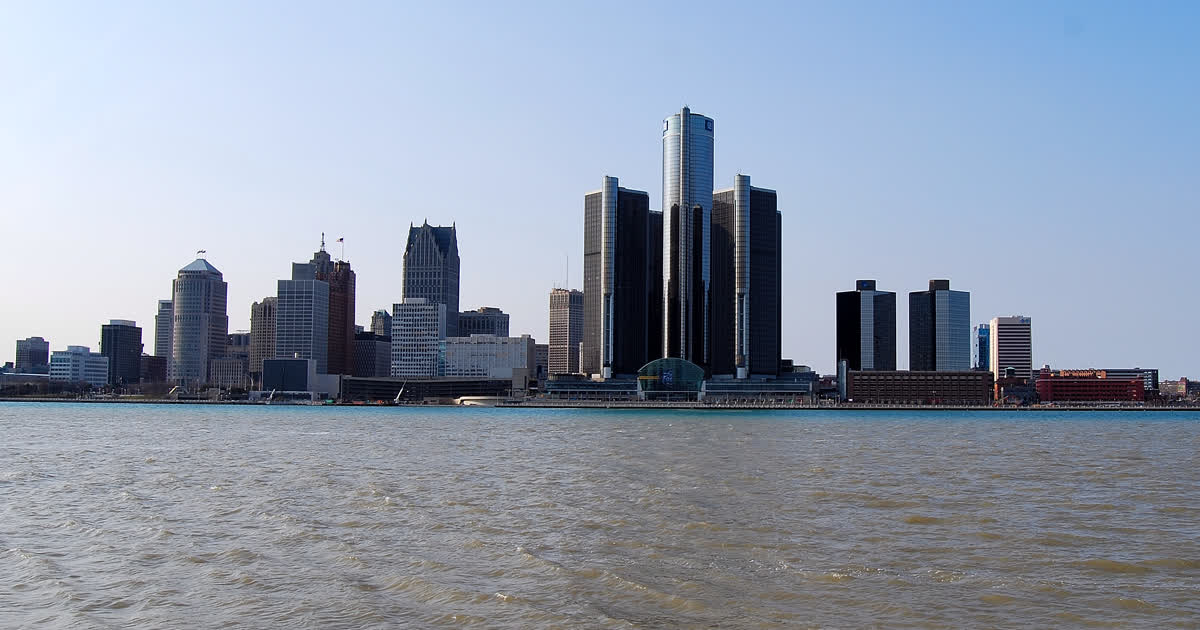
Photo: Patricia Drury, CC BY 2.0
[…] The Columbus route was part of a broader Lufthansa long-haul expansion announced this month, and Simple Flying reported it will be the first scheduled long-haul passenger service in John Glenn Columbus’s history and the airport’s only widebody operation. With Cincinnati’s airport located across the state line in Kentucky, Ohio will have two airports with long-haul service once the route begins, joining Cleveland’s existing nonstop to Dublin. The launch also lands amid continued investment in the capital city, from OhioHealth taking naming rights for the Columbus NWSL club’s training grounds to the statewide business settlement that saw Ohio receive $8 million as GM settled claims it sold drivers’ data. […]