


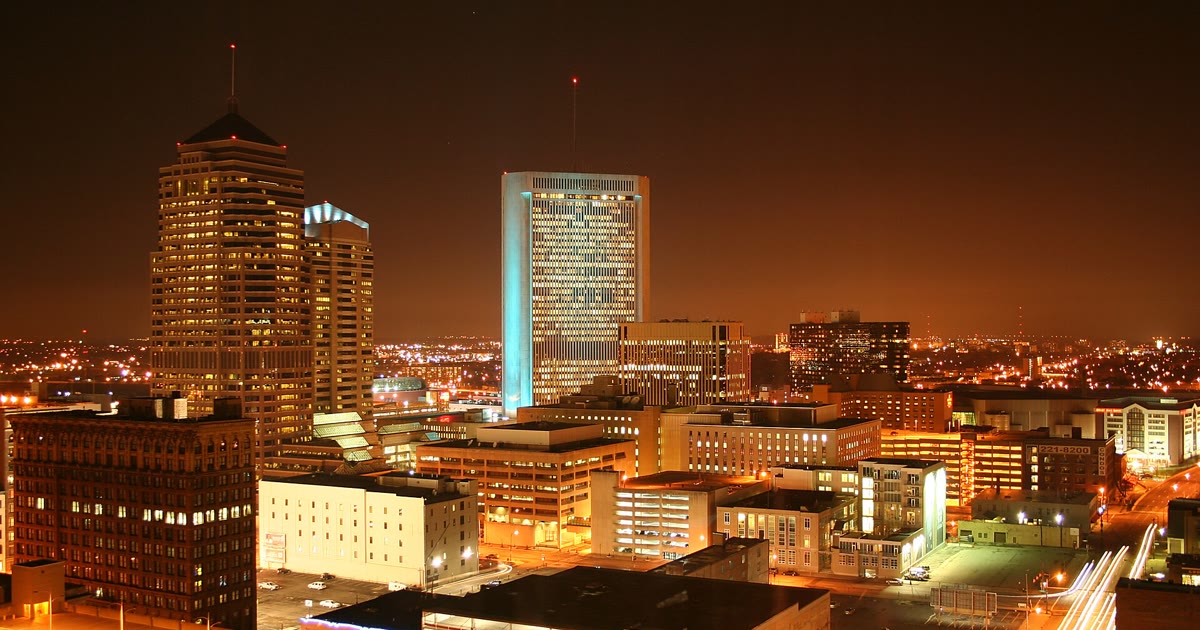
COLUMBUS, Ohio — Ohio shoppers are expected to spend about $31.8 billion between November and January, a 3.6 percent increase over last year, according to the annual holiday retail forecast produced by the University of Cincinnati’s Alpaugh Family Economics Center and released by the Ohio Council of Retail Merchants.
The forecast, released on November 19, 2026, and reported by The Canton Repository, projects growth in every major Ohio metro area except one. The Columbus metro leads the state with a forecasted increase of 8.7 percent, while the Akron area is expected to grow 5.2 percent and the Cleveland area 2.6 percent. Youngstown is the only metro area expected to see less holiday spending this year, with a projected drop of 1.4 percent compared with 2025, The Canton Repository reported.
The Columbus, Cleveland and Cincinnati metro areas will again account for more than half of all Ohio holiday spending — 55.5 percent of the statewide total, according to the forecast. That concentration is familiar in Ohio retail: the state’s three largest metros hold most of its population, most of its malls and outlet centers, and most of its warehouse and delivery jobs that surge with the season.
The projection lands as the season’s biggest weekend unfolds. Black Friday shoppers filled central Ohio stores on Friday, November 27, 2026, and Small Business Saturday follows today, November 28, when independent shops in downtowns from Lancaster and Delaware to Granville and Circleville make their own case for holiday dollars against the big chains and online sellers.
Retailers entered the weekend with shoppers planning to spend more than $1,600 on average this holiday season, up 4 percent from last year, according to a Deloitte study cited by NBC4 in Columbus. The same coverage warned that scammers work the season as hard as retailers do, and consumer advocates urge Ohioans to slow down on too-good-to-be-true offers, gift-card demands and package-delivery texts that ask for payment information.
The forecast’s metro split matters beyond the registers. A Columbus area growing at 8.7 percent while Youngstown slips 1.4 percent is the state’s two-track economy in miniature: logistics, health care and state government keep adding jobs and rooftops around the capital, while parts of the Mahoning Valley continue to lose ground they have been trying to recover for decades.
Seasonal hiring follows the spending. Warehouses, delivery networks and stores across Ohio add tens of thousands of temporary jobs each fall, and a stronger-than-expected season is often the first step toward some of those jobs becoming permanent in January, when returns, inventory and restocking keep distribution centers busy well past Christmas.
For shoppers, the practical picture is a season that is busy but not frantic. Stores opened early on Black Friday with advertised discounts of 50 to 70 percent on selected items at central Ohio outlet centers, and the forecast suggests most Ohio retailers will meet or modestly beat last year’s totals rather than post a breakout year — growth, but growth that has to be earned store by store.
What we know — and what we’re still waiting on: What is confirmed is the forecast itself — $31.8 billion in projected Ohio holiday sales from November through January, up 3.6 percent, from the University of Cincinnati economics center’s annual report for the Ohio Council of Retail Merchants. What is not yet known is the actual result: the first hard read comes when the U.S. Census Bureau and state sales-tax receipts report the season’s numbers early next year.
What happens next is the season itself. Small Business Saturday runs today, November 28, 2026, Cyber Monday follows on November 30, and Giving Tuesday on December 1. Ohio’s retailers will spend the next five weeks testing whether the forecast’s 3.6 percent growth shows up at their registers — and Youngstown-area stores will be working to beat the one negative number on the state’s map.