


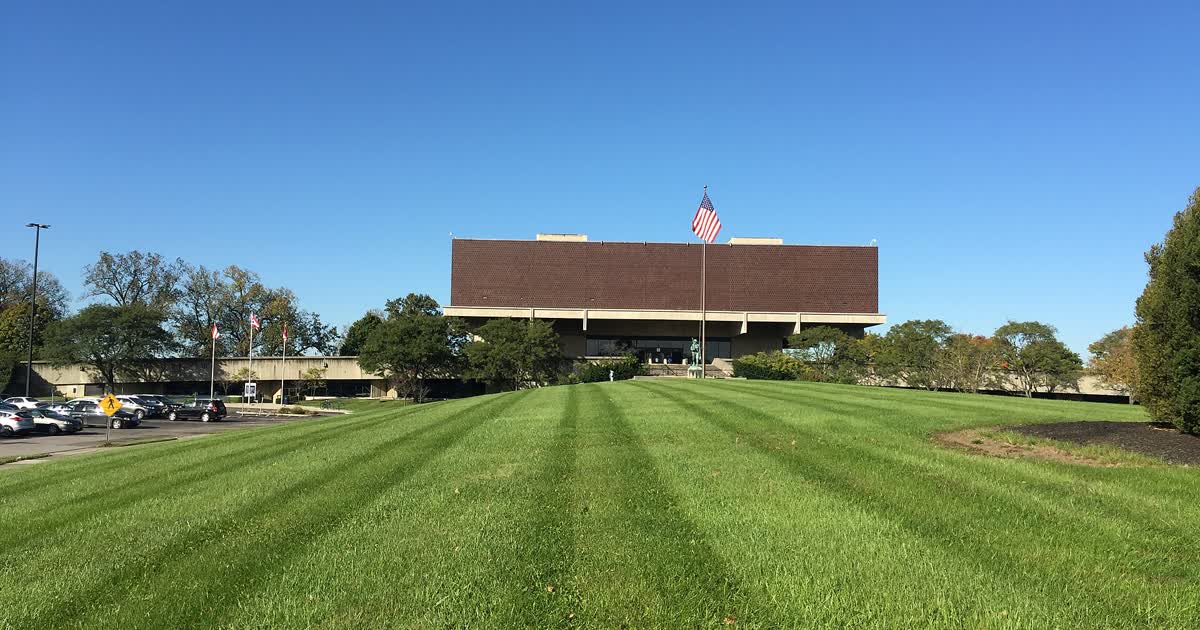
The Ohio History Center, the state museum and research center beside the Ohio Expo Center in Columbus, will remain closed through 2030 while it undergoes a major rehabilitation, WOSU reported in a story published by WYSO on Oct. 30. The building shut abruptly in September over a problem with its fire-safety system, and what began as an emergency closure has now become a four-year project.
The rehabilitation is funded largely by $58 million from the state for fiscal years 2027 and 2028, WOSU reported. Upgrades to the building were already planned as part of a broader overhaul of the Ohio History Connection’s campus, and work has begun, the station reported — the fire-safety failure moved the timeline from planned renovation to full closure.

The center has been the Ohio History Connection’s headquarters and anchor museum since it opened in 1970. For more than five decades it has housed the organization’s flagship exhibits, its archives and library, and the staff who run a statewide network of historic sites — which is why a closure measured in years, not months, reaches far beyond one building in Columbus.
Megan Wood, executive director of the Ohio History Connection, called the building the organization’s anchor, according to WOSU. Wood told WOSU the organization needs the rehabilitation “to keep it relevant, safe and sustainable for coming generations of Ohioans” — a statement that frames the project as both a safety fix and a generational reinvestment in the 1970 building.

What we know — and what we’re still waiting on: WOSU reported the closure runs through 2030 and that state money covers most of the cost. Still unanswered in the reporting so far are the detailed construction phases, whether any galleries or collections will rotate to other venues during the closure, and exactly when in 2030 the doors reopen. Those details will shape how schools, researchers and families plan around the loss of the state’s main history museum.
Not everything on the campus is dark. Records and archives remain open by appointment on Thursdays and Fridays, WOSU reported, so genealogists and researchers can still reach the collections with advance planning. Programming also continues at Ohio Village, the newly renovated living-history site next door, which stays open while the main building is closed.

The Ohio History Connection also plans more virtual talks and podcasts while the center is closed, WOSU reported — a shift that moves part of the museum’s public programming online for the duration of the rehabilitation.
The timing lands in the middle of a busy stretch for Columbus cultural attractions. As NewsForce247 reported earlier today, the city’s holiday season is opening with new Clippers lights and returning favorites, and Columbus schoolchildren got a surprise this week when ‘Wimpy Kid’ author Jeff Kinney visited Oakland Park Elementary — reminders that the History Center’s absence will be felt most by the school groups that filled its galleries each fall and spring.

For teachers, the closure means reworking a field-trip staple. Ohio Village’s continued programming gives classes an on-site alternative on the same campus, but the indoor museum experience — the exhibits that anchor state-history lessons — will not be available again until the next decade.
For the Ohio History Connection, the stakes run in both directions. A successful rehabilitation delivers a safer, modernized anchor for the next generation; a long closure risks fading from the routines of the families and schools that visited every year. Keeping archives, Ohio Village and virtual programming active is the bridge the organization is building across those four years.
The timeline, as WOSU reported it, runs like this: the building closed abruptly in September when the fire-safety problem surfaced; upgrades that were already planned as part of the campus overhaul were folded into a full rehabilitation; the station’s Oct. 30 reporting put the reopening beyond 2030’s start — the center stays closed through 2030 — with the state’s $58 million for fiscal years 2027 and 2028 carrying the bulk of the funding.
For regular visitors, the practical change is planning. A spontaneous museum day in Columbus is off the table for four years; an archives visit now means an appointment on a Thursday or Friday, and a history program may mean logging into a virtual talk or podcast instead of walking into a gallery. Ohio Village, freshly renovated, becomes the campus’s public face in the meantime.
What happens next: rehabilitation work already begun continues under the state funding for fiscal 2027 and 2028, with the center closed through 2030. Visitors should plan on appointment-only archives on Thursdays and Fridays and on Ohio Village for in-person programming until the main building reopens.
Photo: Sebastian Wallroth, CC BY 4.0