


NEW ALBANY, Ohio — Intel, the chipmaker building a $28 billion semiconductor campus in Licking County, has been sued by shareholders who accuse the company of misleading investors about a slump in personal-computer sales in the months before its stock lost more than a quarter of its value in a single day, The Wall Street Journal reported.
The proposed class action, filed by the shareholder-rights firm Robbins Geller Rudman & Dowd, says Intel concealed the scale of the PC sales slowdown and an inventory glut, and failed to disclose that supply constraints were limiting its production for data-center customers, The Wall Street Journal reported. The suit says any boost from artificial intelligence and data-center demand was more than offset by the PC downturn, according to The Wall Street Journal.
Shares of Intel plunged 28.6 percent on October 30, 2026, wiping out about $140 billion in market value the day after the company reported disappointing third-quarter results and forecast a prolonged slowdown in PC sales, The Wall Street Journal reported. The lawsuit seeks to represent shareholders who owned Intel common stock between July 23, 2026 and October 29, 2026, and it seeks unspecified damages, The Wall Street Journal reported.
The complaint names Intel’s chief executive, Lip-Bu Tan, and its chief financial officer, David Zinsner, as defendants alongside the company, and the named plaintiff is the City of Southfield Fire and Police Retirement System, according to the filing as reported by The Wall Street Journal and other outlets covering the case. The allegations in the complaint are claims, not findings — Intel will have the opportunity to respond in court, and no court has ruled on them.
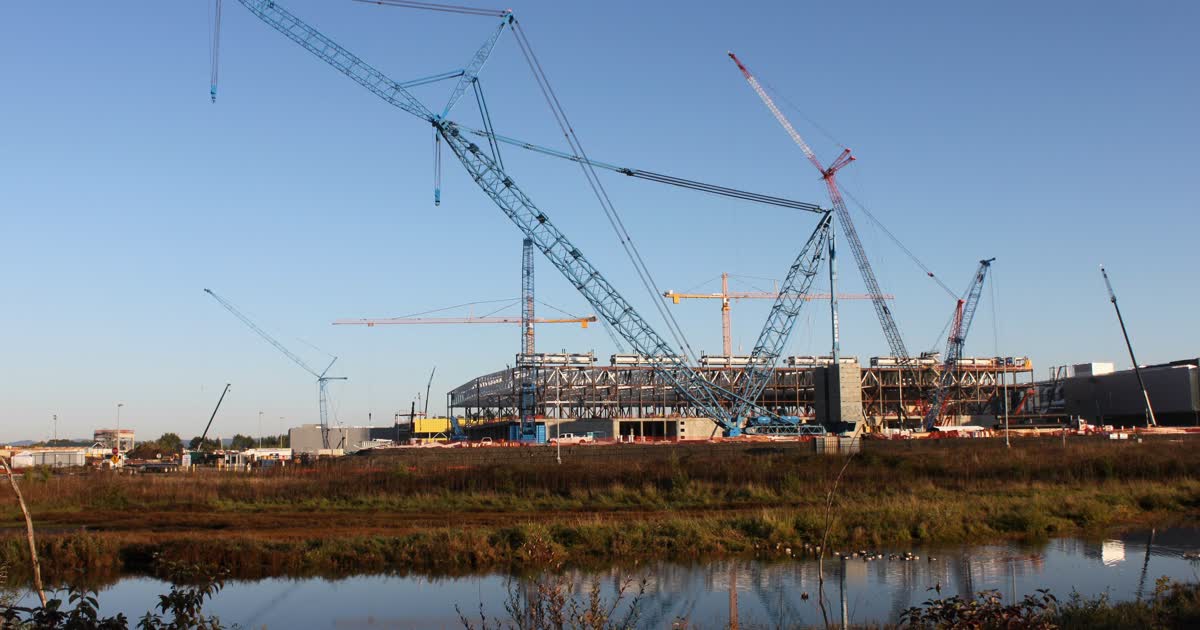
For central Ohio, the case lands on top of the region’s largest economic development bet. Intel’s Ohio One campus near New Albany, in Licking County, is a $28 billion project to build two semiconductor factories — the largest single private investment in Ohio history when it was announced — and construction has been under way on the site for years, with cranes and hundreds of workers reshaping the landscape along the Licking County corridor.
The lawsuit does not challenge the Ohio project itself, and nothing in the complaint changes the construction underway in Licking County. What it does is add a legal fight over the company’s candor with investors to a period in which Intel’s broader business — the PC market that still supplies much of its revenue — has been under pressure, the pressure the plaintiffs say the company understated.

What we know — and what we’re still waiting on
Confirmed: a proposed class action has been filed accusing Intel and its top two executives of materially false and misleading statements about the company’s business, operations and financial results between July 23, 2026 and October 29, 2026, and Intel’s stock fell 28.6 percent on October 30, 2026 after its third-quarter report, The Wall Street Journal reported. Still unknown: whether a court will certify the case as a class action, how Intel will answer the allegations, and whether the litigation has any effect on the company’s Ohio construction timeline — the company has announced no change to the project.
Local stakes are not abstract. The Ohio One site anchors supplier investments, road and utility work and thousands of promised jobs across Licking County and the Columbus region, and public incentives were committed on the strength of Intel’s long-term plans. A shareholder suit over disclosure practices is a corporate-governance fight, not a construction decision, but it is one more measure of the financial strain the company is under as it spends heavily to rebuild its manufacturing business.

The sequence the complaint lays out is a familiar one in securities litigation. Through the summer and fall, the plaintiffs say, Intel’s public statements about its business, operations and financial results were materially false and misleading because they did not convey how hard the PC slowdown and inventory buildup were hitting revenue and profitability, The Wall Street Journal reported. When the third-quarter numbers arrived on October 29, 2026 with a forecast of a prolonged PC slump, the market repriced the stock in a single session — the 28.6 percent drop on October 30, 2026 that erased about $140 billion in value, according to The Wall Street Journal.
A proposed class action of this kind asks a federal judge to let one case stand in for every investor who bought or held the shares during the stated class period, rather than requiring thousands of individual suits. The July 23, 2026 to October 29, 2026 window in this filing is the period during which the plaintiffs say the misleading statements kept the share price artificially high, The Wall Street Journal reported. Cases like this typically take years, and many end in settlements without any admission of wrongdoing — outcomes that remain entirely ahead in this one.
What happens next is procedural: the case proceeds in federal court, where a judge will decide whether it moves forward as a class action on behalf of the shareholders who held the stock during the period the complaint covers. In New Albany, the visible work — the fabs rising in Licking County — continues on the company’s published schedule unless Intel says otherwise.
Photo: Intel Free Press, CC BY