


Quick Takeaways
• Google and Ohio Power Company have filed a joint proposal for a $10.8 million upgrade of 15.5 miles of aging transmission lines in Columbus, financed by Google, according to a November 19, 2026, Google press release reported by The Columbus Dispatch.
• The advanced conductors would add more than 700 megawatts of capacity, cut line losses and slightly lower the transmission costs other customers pay, according to The Columbus Dispatch.
• Google would also put $1 million toward line-worker training and manufacturing apprenticeships, and the project needs approval from the Public Utilities Commission of Ohio (PUCO) and the Ohio Power Siting Board, according to The Columbus Dispatch.
COLUMBUS, Ohio — Central Ohio’s power grid could get a significant upgrade courtesy of Google, which has joined Ohio Power Company in proposing a $10.8 million project to rebuild aging transmission lines in Columbus, according to The Columbus Dispatch.
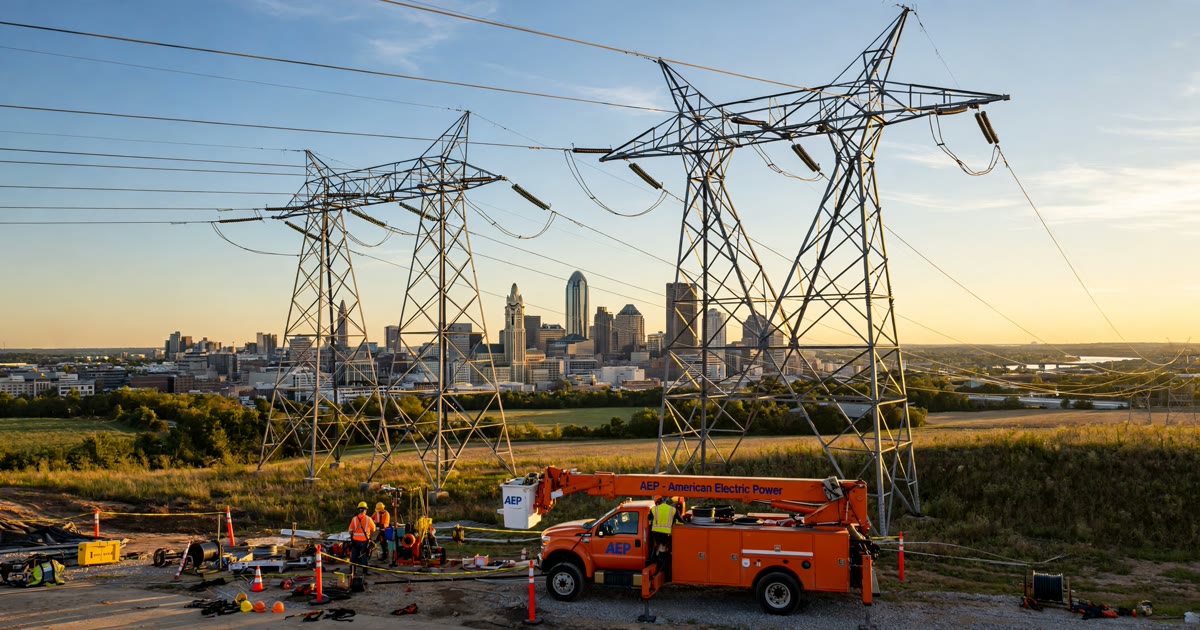
Google and Ohio Power Company, formerly AEP Ohio, filed the joint proposal to replace aging wires with advanced conductor technology that allows significantly more power to flow through the same lines, according to a November 19, 2026, Google press release reported by The Columbus Dispatch. The work would cover 15.5 miles of transmission lines in Columbus, and Google would finance the project.
Once the upgrade is complete, the lines are expected to provide more than 700 megawatts of additional capacity to serve the region’s growing demand, according to The Columbus Dispatch. The project is also expected to reduce the energy lost as electricity travels the lines and to slightly reduce the transmission costs that other customers pay.
The scale matters in central Ohio, where demand is climbing fast. The region is one of the epicenters of the national data center boom, with multiple facilities built and under construction, and a proposed $500 billion data center complex has been pitched for Pike County, roughly an hour south of Columbus, according to The Columbus Dispatch.

“Google has a long history of pioneering frameworks for corporate energy buyers to bring new forms of energy generation onto the grid,” Amanda Peterson Corio, Google’s global head of energy and power, said in the company’s announcement, as reported by The Columbus Dispatch. “This transmission participation agreement with Ohio Power Company represents a new way for data centers to help expand transmission capacity years faster, while lowering costs for local consumers and improving grid reliability,” Corio said, according to The Columbus Dispatch.
The proposal arrives as public and political pressure grows on technology companies to help cover the costs that mega data centers powering the artificial intelligence (AI) boom are forcing onto electric utilities and their other customers, according to The Columbus Dispatch. Reconductoring existing lines is one of the fastest ways to add capacity, because the towers and rights of way are already in place.

Beyond the wires themselves, the joint proposal includes $1 million from Google for workforce development — money aimed at increasing line-worker training, conductor installation education and manufacturing apprenticeships, according to The Columbus Dispatch. Those are the exact trades a multi-year transmission build-out depends on, and utilities across Ohio have warned that a shortage of trained line workers is one of the constraints on grid work.
What we know — and what we’re still waiting on: the confirmed facts are the price, the mileage, the financing and the expected capacity gain, all from the joint filing as reported by The Columbus Dispatch. What is not yet known is whether state regulators will approve the arrangement, whether the cost-sharing model will be applied to other lines, or what conditions regulators might attach.
If the project receives approval from the Public Utilities Commission of Ohio and the Ohio Power Siting Board, the transmission upgrade is expected to be in service by late 2028, according to The Columbus Dispatch.
What happens next: the joint proposal goes before the Public Utilities Commission of Ohio and the Ohio Power Siting Board for review and approval, with the upgraded lines targeted to enter service in late 2028 if approved, according to The Columbus Dispatch.