


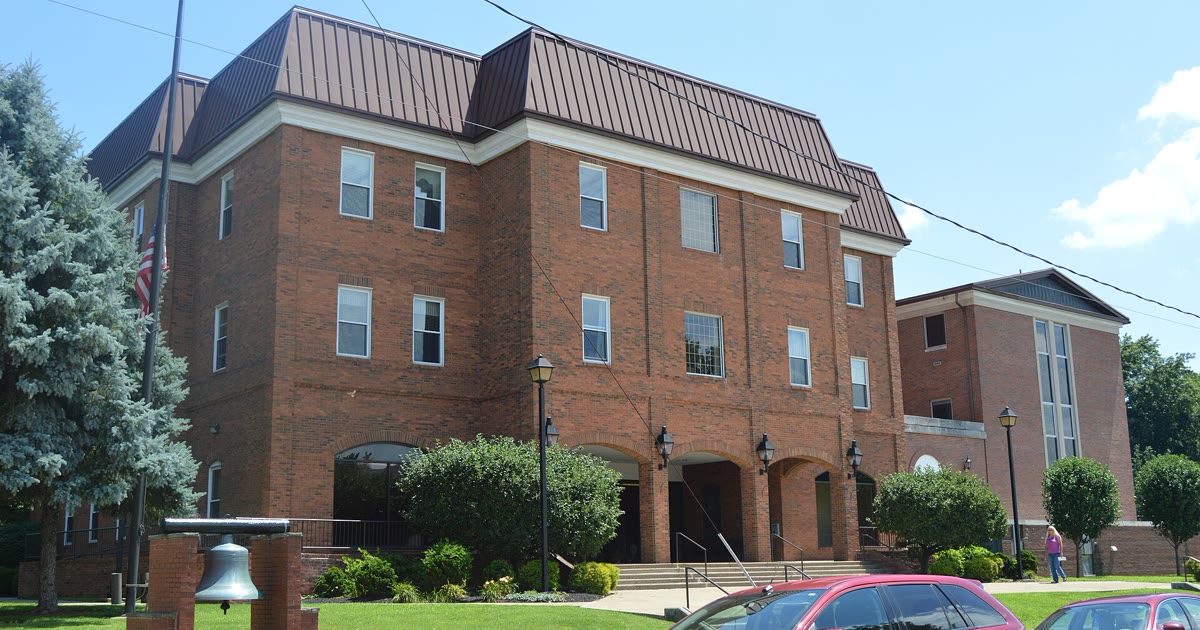
GALLIPOLIS, Ohio — The Gallia County Sheriff’s Office has officially launched I.G.N.I.T.E., a national jail education and re-entry program, at the Gallia County Jail, marking a new chapter in the county’s efforts to help incarcerated individuals develop skills, access resources and prepare for a successful return to the community, the sheriff’s office announced.
I.G.N.I.T.E. stands for Inmate Growth Naturally and Intentionally Through Education, WOWK reported, and Gallia County is the 51st site nationwide to implement the program in its jail. The model replaces idle time in custody with structured education, life-skills work and job-readiness programming, delivered inside the jail by the sheriff’s office and its partners.
The program is a National Sheriffs’ Association initiative. It was developed by Genesee County, Michigan Sheriff Christopher Swanson, who launched it in his own jail on September 8, 2020, and it was formally established as a national sheriffs’ program in 2021, according to the National Sheriffs’ Association. Since then it has spread county by county, with sheriffs adopting the model and adapting it to their own facilities.
Ohio is part of that spread. Summit County became the 34th county in the United States to adopt I.G.N.I.T.E. when its sheriff’s office launched the program at the Summit County Jail in January 2026, and Sandusky County was an early Ohio adopter. Gallia County’s launch makes the program a presence in southern Ohio as well.
The launch also lands on a jail that has been drawing strong marks from state inspectors. The Gallia County Jail received a 100 percent compliance rating from the Ohio Department of Rehabilitation and Correction for the fourth consecutive year, Sheriff Matt Champlin announced, continuing a streak that began when the county’s new correctional facility opened in 2023. The jail’s 2026 annual inspection was conducted by the department on October 2, 2026.
That combination — a newer facility, a clean inspection record and now a structured education program — is the sheriff’s office’s argument that a county jail can be more than a holding space. I.G.N.I.T.E.’s national model emphasizes education, personal growth, job readiness and accountability, and preparation for life after incarceration, the National Sheriffs’ Association says.
What we know — and what we’re still waiting on: Confirmed are the launch itself, Gallia County’s place as the program’s 51st site nationwide as reported by WOWK, and the program’s focus on education and re-entry preparation. Not yet detailed publicly are the program’s first class schedule inside the Gallia County Jail, the local partners who will teach or mentor, and how many incarcerated individuals will take part in the first group — details the sheriff’s office is expected to share as enrollment begins.
The timing matters locally. Gallia County is also in the middle of its holiday season in Gallipolis, where Gallipolis in Lights opened this week in City Park, and the county has been working through storm recovery that made it eligible for SBA disaster loans open for September storm damage in Gallia, Morgan and neighboring counties.
Supporters of jail education programs argue the payoff shows up after release: participants who leave custody with stronger reading and math skills, a credential in progress and a plan for work are less likely to return. I.G.N.I.T.E.’s national backers point to research on the original Michigan program showing gains in participants’ math and reading levels and hundreds securing full-time employment after release, according to the Genesee County Sheriff’s Office.
The Gallia County launch follows the pattern sheriffs have used elsewhere in the program’s expansion: a public kickoff with the National Sheriffs’ Association, staff training on the curriculum, and then enrollment of the first participants from the jail’s population. Because county jail stays are often measured in weeks rather than years, programs like I.G.N.I.T.E. are built to deliver value quickly — assessments, coursework and re-entry planning that can continue with community providers after release.
For Gallia County families, the program’s promise is nearer to home: a relative who spends weeks or months in the county jail can spend that time in a classroom-style program instead of a cellblock routine, and walk out with connections to education and work rather than starting from zero.
What happens next is implementation: the sheriff’s office will enroll its first participants and build the class schedule inside the jail, and the program’s progress — enrollment, completions and outcomes — will be the measure residents can judge it by in the months ahead.