


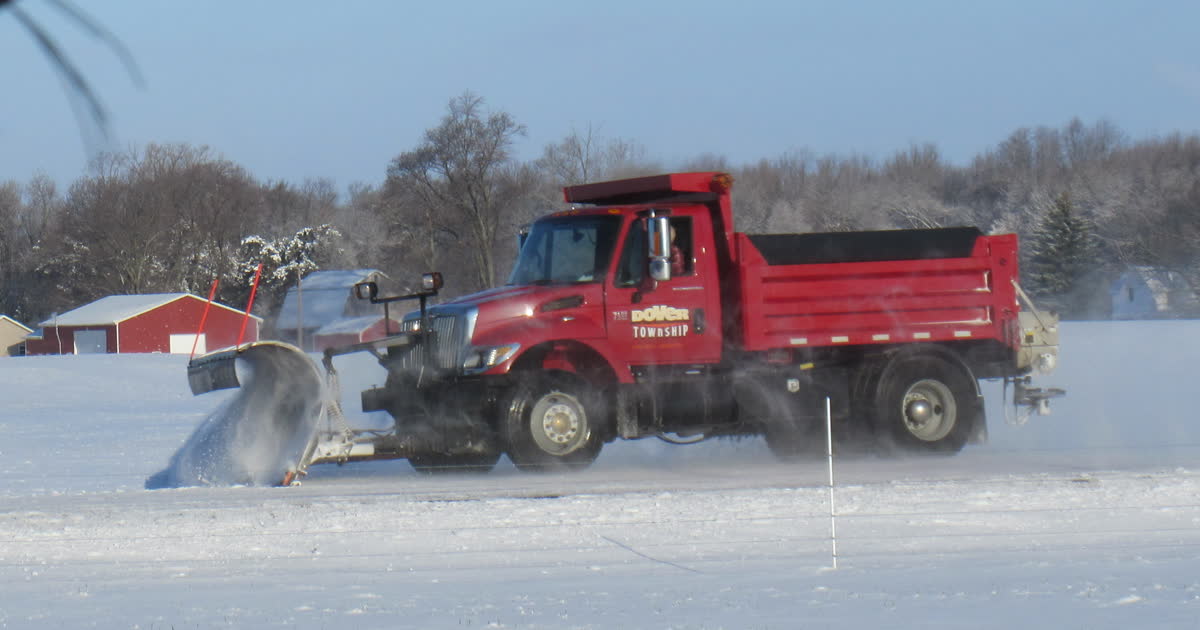
CHARDON, Ohio — Six Northeast Ohio county engineers have asked Governor Mike DeWine for state help finding and paying for road salt after flooding shut down Morton Salt’s Fairport Harbor mine, the region’s main source, leaving nearly 100 public agencies expecting to receive only about a third of the salt they ordered for this winter, according to cleveland.com’s reporting on the engineers’ request.
The engineers from Ashtabula, Geauga, Lake, Mahoning, Portage and Trumbull counties made their case in a November 19, 2026 letter to the governor and then stood together at a news conference in Chardon on Tuesday, November 25, 2026, as WOIO, 19 News in Cleveland, reported. “We’re looking out for all of the communities that are affected in the six Northeast counties,” Mahoning County Engineer Patrick Ginnetti said at that news conference, WOIO reported.
The shortage traces to October 22, 2026, when miners found a significant inflow of water in the mine roughly 2,000 feet beneath Lake Erie, according to Lakeshore Views & News’ reporting on the closure. Morton Salt halted underground operations, laid off 77 workers, and began prorating deliveries to its customers — telling agencies on the Ohio Department of Transportation’s cooperative purchasing contract to expect about 32 percent of what they ordered, including what had already been delivered, cleveland.com reported.
Lake County Engineer Alan Exley offered the bleakest assessment at the Chardon news conference. “We don’t know if the mine will reopen; we certainly don’t think it’s going to open this winter,” Exley said, according to WOIO’s report. That means the six counties — the heart of Ohio’s Snow Belt, where lake-effect storms can drop a foot of snow on one community and nothing on the next — must buy their way through an entire winter on the open market.
The price of doing so is the second half of the crisis. Replacement salt, much of it shipped from overseas, is running 200 to 300 percent above contract prices, the engineers said at the news conference reported by WOIO and cleveland.com. Their preliminary estimate puts the extra cost at roughly $21 million to $22 million across the affected agencies, and that is the range of state assistance they are asking DeWine to consider, according to cleveland.com.
The arithmetic is visible in individual communities. The City of Mentor ordered 6,000 tons through the state contract at $61.10 a ton, about $366,600, and has received 2,217 tons — its full prorated share, with no more coming on that contract, Public Works Director Lorne Vernon told Lakeshore Views & News. Mentor has about 5,000 tons in storage including last winter’s carryover, against a 10-year average use of 10,000 tons in a normal winter and 12,000 in a harsh one, Vernon told Lakeshore Views & News.
One partial backstop exists: the Ohio Department of Transportation is dividing about 50,000 tons of salt that was mined before the flood among contract customers, according to cleveland.com’s reporting. Spread across nearly 100 agencies in six counties, that supply cushions the shortage but does not close it, and the engineers say agencies are simultaneously shopping for imported salt at the higher prices before the first major lake-effect event arrives.
Road crews are also changing how they will use what they have. Counties and cities plan to stretch supplies by concentrating salt on hills, curves, bridges and intersections, treating secondary streets more sparingly, and mixing in sand and other grit for traction, according to the plans engineers described to cleveland.com. Plowing itself will not change — the engineers emphasized that snow and ice operations continue regardless of the salt supply — but drivers may see more hard-packed snow on neighborhood streets between storms this winter.
The timing could hardly be tighter. The request landed in Columbus in the same week that the season’s first snowflakes were already mixing into rain across northern Ohio, and the Snow Belt’s heaviest lake-effect months — December, January and February — are immediately ahead. Every week spent sourcing replacement salt is a week in which stockpiles that start at half strength, as Mentor’s does, can only shrink.
For the 77 laid-off mine workers in Fairport Harbor, and for Morton Salt, the open questions run on a separate track: what caused the water inflow, whether the mine can be made safe and dry again, and on what timeline. The company has announced no reopening date, and Exley’s assessment at the news conference — no operation this winter — is the only public guidance local officials say they have, according to WOIO.
What happens next sits in Columbus. The governor’s office has not announced a decision on the engineers’ request for roughly $21 million to $22 million in help, and the six counties are proceeding on the assumption that they must secure replacement salt with or without it. NewsForce247 will follow the state’s response and the counties’ purchasing as winter begins.
Photo: Threeowls, CC BY-SA 4.0