


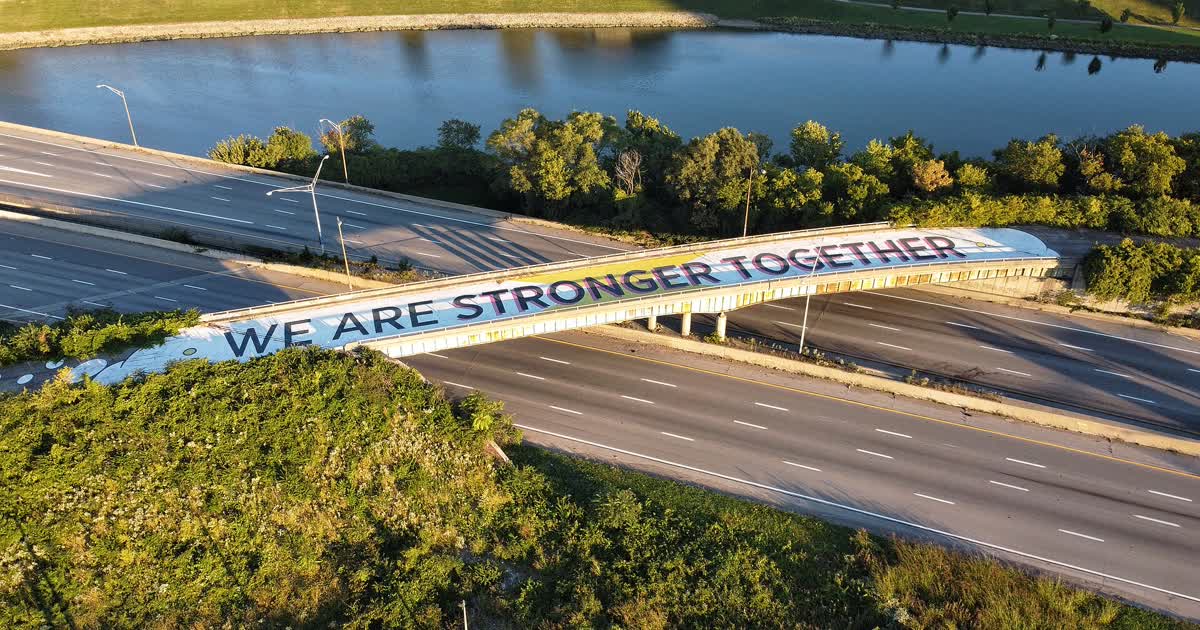
COLUMBUS, Ohio — A guardrail now stands along Interstate 71 in Columbus where 20-year-old Ashton Krick died in a crash earlier this year — installed within the past month after his parents spent months pressing the Ohio Department of Transportation to act at the spot near the Woodward Park Trail bridge, WBNS 10TV reported.
Krick died earlier this year after a crash on Interstate 71 in Columbus, according to WBNS 10TV’s reporting. His mother, Linda Stagerwald, and her husband pushed ODOT for the guardrail for months after his death, and within the past month the department approved and installed the rail at the site, according to WBNS 10TV.
For the family, the rail is the point: a physical change at the exact stretch of highway that took their son, made so that another family’s drive home does not end the same way, WBNS 10TV reported. Stagerwald told WBNS 10TV she had not been able to drive past the site until recently, and that returning helped her feel connected to him.
What exactly happened that night remains partly unanswered even for the family. According to WBNS 10TV’s reporting, police initially believed Krick was traveling northbound and left the road for reasons that are still unknown — possibly after falling asleep — and toxicology testing found no substances in his system.
The guardrail is one piece of how the family is answering the loss. They have also started a scholarship foundation in Ashton’s honor through Olentangy Schools and painted memorial rocks in his memory, according to WBNS 10TV. The scholarship turns a name on a memorial into a recurring gift to students in the district where he grew up, and the rocks — small, painted, placed where people who loved him will find them — have become a quieter, more personal marker alongside the state’s steel one on the interstate.
Guardrails are among the most routine pieces of hardware on an Ohio interstate, and among the most consequential: they exist to keep a vehicle that leaves the traveled lanes from reaching whatever is beyond the shoulder — a bridge structure, a slope, a tree line. Engineers call the principle a forgiving roadside: drivers will make mistakes, fall asleep, reach for a phone, and the road is supposed to give them a chance to survive the error. Where a rail is missing at a spot a family can point to, the argument for adding it is rarely complicated, and ODOT’s approval this fall closed a months-long effort that began with a grieving family’s request, according to WBNS 10TV’s reporting.
The family’s months of asking also show how roadside safety changes usually happen in Ohio: not in a single announcement, but request by request. A resident reports a dangerous curve, a missing rail, a blind merge; the district studies the location against crash history and design standards; and if the case is made, a work order follows. It is a process that can feel slow to the people living with the loss, and it depends heavily on somebody insisting — as the Krick family insisted — that a specific stretch of pavement be looked at again.
The story lands in a state that sees more than a thousand traffic deaths a year, many of them in single-vehicle crashes where a car leaves the roadway. Roadside hardware cannot prevent those crashes, but barriers and rails are designed to forgive them — to turn a departure from the lane into a survivable event rather than a fatal one. Every rail installed after a death is also, unavoidably, an admission about the margin that was there before it.
What we know — and what we’re still waiting on: confirmed through WBNS 10TV’s reporting are Krick’s death earlier this year in the Interstate 71 crash, the family’s months of advocacy, and ODOT’s approval and installation of the guardrail within the past month. Still unknown, including to the family, is why Krick’s vehicle left the road that night — a question no guardrail can answer.
WBNS 10TV closed its report with an invitation that fits the family’s own path: viewers worried about a road or intersection near them can write to the station. The Kricks’ experience suggests the same is true of the state itself — a specific concern, raised persistently by the people who know the spot, can move a bureaucracy.
What happens next: the scholarship foundation through Olentangy Schools carries Ashton’s name forward, and the rail now stands on Interstate 71 near the Woodward Park Trail bridge for every driver who passes it — most of whom will never know the name of the young man, or the parents, behind it.
Photo: Jsjessee, CC BY-SA