


Southwest Ohio’s food banks are finding new ways to keep up with demand that is not easing. In Dayton, The Foodbank, Inc. — which serves the Dayton area including Montgomery and Preble counties — is operating with 118,000 food-insecure people in its service area, a third of them children, according to a November 11 report by ThinkTV’s Brick by Brick program.
The pressure shows up in household budgets first. More than half of the people who visit food banks skip meals to make ends meet, and 60% must choose between paying for utilities and buying groceries, according to the Ohio Association of Foodbanks 2026 study cited by ThinkTV. More than half of food-bank households earn below $20,000 a year, and 69% earn below $30,000, the study found.
“They’re saying that gas is high, energy’s high, the cost of food is high, and so now they’re not able to cover all their basic expenses because their wages are not keeping pace with the cost of living,” Foodbank Development Director Amber Wright told ThinkTV. The Foodbank holds five to eight food drives a year, and its largest event this year, held in September at the University of Dayton arena, served close to 2,000 families — around 6,000 individuals — according to Wright in ThinkTV’s report.
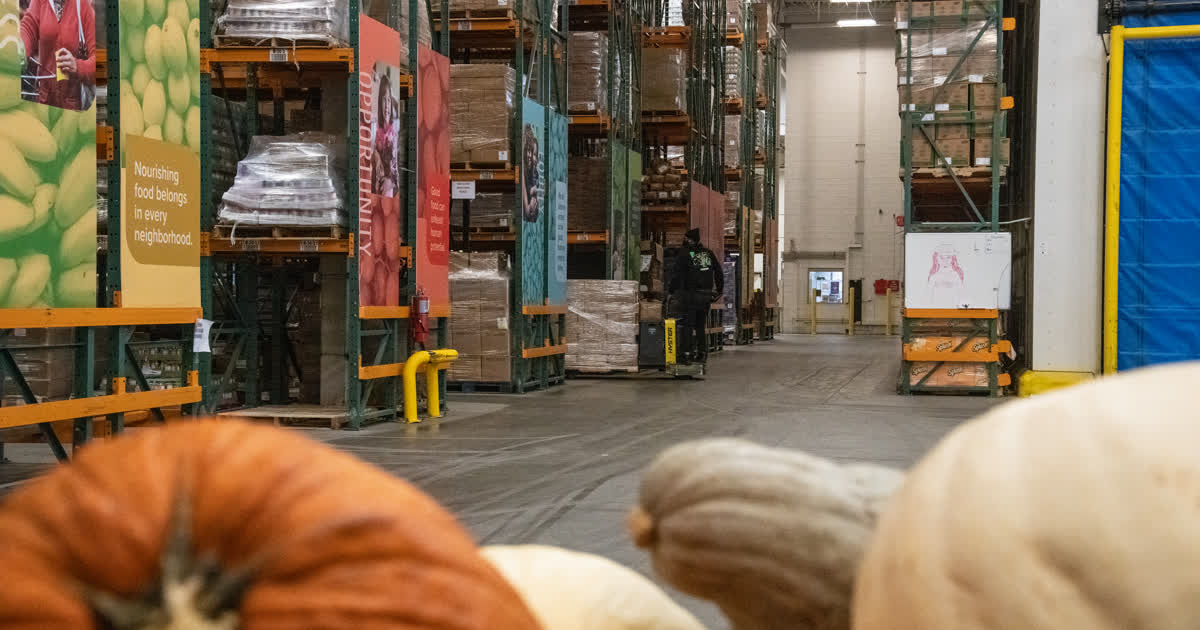
In June, the organization marked its 50th anniversary with a block party and the grand opening of a 12,000-square-foot Community Resource Center next to its southwest Dayton warehouse, ThinkTV reported. Built from community listening sessions, the center offers classes from edible landscaping and agroforestry to art therapy, houses a large commercial kitchen, and includes two medical exam rooms where providers plan to offer basic services such as flu shots, vaccinations and checkups.
The center also reflects who works at The Foodbank: around 50% of its staff have been involved with the criminal justice system, according to Wright in ThinkTV’s report, and the organization now hosts what it describes as the nation’s first onsite probation office, so staff can meet supervision requirements without risking the jobs that keep them in compliance.
Next on the property is a public food forest — food-bearing trees and bushes planted outside the gated area under an agroforestry grant received in partnership with Central State University, so anyone walking by who is hungry can pick food freely, Wright told ThinkTV. In Cincinnati, meanwhile, Freestore Foodbank — which provides 47 million meals a year across 20 counties — has expanded summer meal programs and community distributions after federal SNAP support was cut in half in October, according to ThinkTV.