


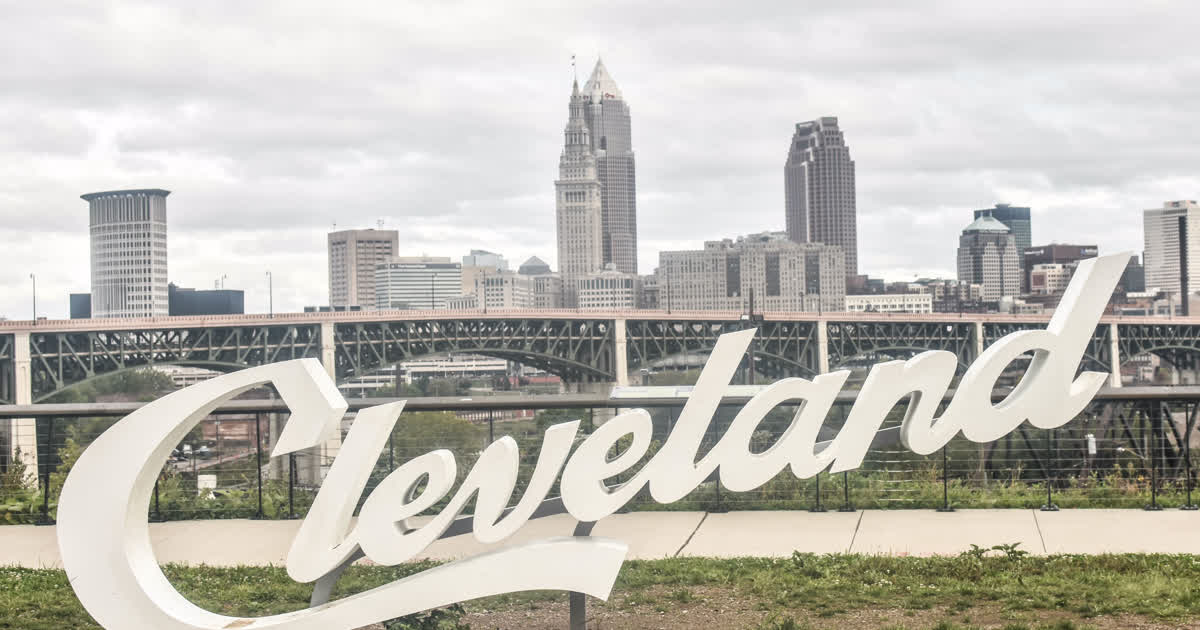
CLEVELAND, Ohio — Cleveland’s poverty rate fell to 24.1% in 2025, its lowest level in more than four decades, according to a report by the Center for Community Solutions cited in Ohio Newswire’s Nov. 10 roundup of the latest Census figures. The improvement is real, the report found — but it is uneven, and not every racial and ethnic group in the city shared in the gains.
The figure comes from the U.S. Census Bureau’s American Community Survey estimates for 2025. Even at its lowest level since the 1980s, Cleveland’s rate remains among the highest of any large American city: Detroit’s poverty rate stood at 30.4% in the same data, and Cleveland, Detroit and Baltimore all sat above Philadelphia’s 20.4%, according to the Philadelphia Inquirer’s analysis of the new Census numbers, reported by Philadelphia Politics.

The federal poverty line itself shows how little slack the number leaves. For a family of four, the threshold was about $32,750, according to the Inquirer’s reporting on the Census release — meaning roughly one in four Cleveland residents lives in a household at or below an income that leaves almost no margin for a car repair, a medical bill or a missed paycheck.
The longer trend puts the 2025 figure in context. In its analysis of the previous year’s Census data, released in September 2025, the Center for Community Solutions found Cleveland’s poverty rate had eased from 30.7% in 2023 to 28.3% in 2024 — and that Cleveland still held the second-highest poverty rate among large U.S. cities, behind only Detroit, in the share of residents, children, working adults and older adults living in poverty.

That earlier Community Solutions analysis also found a measure of progress underneath the ranking: looking back five years to before the pandemic, the overall poverty rate and the rates for children, working adults and older adults had all decreased in Cleveland, and the pandemic did not appear to have worsened the city’s poverty rates. The 2025 drop to 24.1% extends that multi-year direction — the question the new report raises is who it is reaching.
That is the “bad news” half of the Center for Community Solutions’ framing of Census releases: a citywide average can fall while the experience of specific neighborhoods and communities barely moves. The 2025 report, as summarized in Ohio Newswire’s roundup, found the gains were not shared evenly across racial and ethnic groups, even as the headline rate touched a four-decade low.

Methodology matters here, and the Census Bureau itself flags it. The American Community Survey is an estimate, built from survey sampling, and it carries a margin of error; experts told the Inquirer that year-to-year moves can partly reflect sampling, and that some immigrant households may be less likely to answer census surveys during stepped-up immigration enforcement, according to the Inquirer’s reporting. The Bureau also cautions that estimates from different data vintages are not directly comparable.
The rate is not an abstraction for city government. Poverty levels shape how much federal and state aid flows into Cleveland and how far city and county programs — housing assistance, food support, health clinics, utility help — have to stretch to meet the need in front of them. A falling rate changes the planning math slowly; a rate still near one in four keeps the demand immediate.

Cleveland’s economic development push runs on the same streets. Related coverage from NewsForce247: the city has approved a Midline plan to turn 350 acres into a jobs district and greenway, and in Stark County, Liberty HealthShare gave $25,000 to five hunger relief groups — two ends of the same regional effort to change what the next Census release will show.
What we know — and what we’re still waiting on: We know the 2025 estimate puts Cleveland at 24.1%, the lowest since the 1980s, still second among large cities behind Detroit, with uneven gains by race and ethnicity, per the Center for Community Solutions report and the Census data. What is still to come is the detailed breakdown — child poverty, working-age and senior rates, and neighborhood-level figures — that will show where the improvement concentrated and where it did not.
What happens next: the Center for Community Solutions’ full analysis of the 2025 Census data will fill in those breakdowns, and city and county agencies will fold the new rate into the funding formulas and program plans that follow the Census calendar. The next annual American Community Survey release will show whether 24.1% was a step in a continuing decline or a one-year move in a noisy estimate.
Photo: Erik Drost, CC BY