


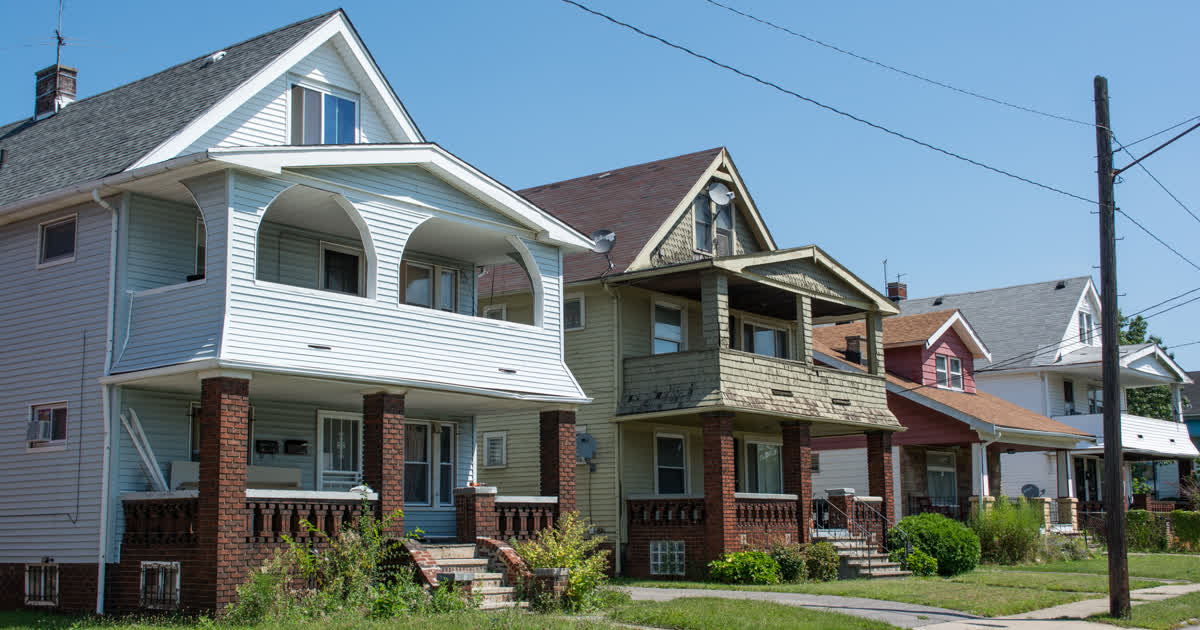
Cleveland has lost out on $7.8 million in federal money meant to make local homes lead-safe, after the U.S. Department of Housing and Urban Development rejected its latest lead hazard grant application. Signal Cleveland reported the decision followed a risk review of how the city manages federal housing money, which judged the city too risky for the new award. Cleveland Magazine’s CLE Daily newsletter on November 5 likewise reported that HUD judged the city too risky based on its performance across several federal housing grants.
The rejection is not a judgment that Cleveland does not need the money. Cleveland’s housing stock includes many older homes, and lead hazards there remain a central concern for families and landlords. Instead, Signal Cleveland reported, HUD’s review looked beyond the lead program to the city’s broader track record on federal housing funds — its reporting, whether it hit its goals, and whether work finished on time, according to an explainer by PbFree Ohio drawing on Signal Cleveland.

That broader record gave federal officials pause. Last year the city came close to losing three existing federal lead grants because the money was being spent too slowly, Signal Cleveland reported. HUD has also raised concerns about how Cleveland handles its Community Development Block Grant funds, and a law firm the city hired found HUD could cut or halt that funding if the issues are not fixed, PbFree Ohio reported, drawing on Signal Cleveland.
City officials say the picture has been improving, even if not in time to save this application. Signal Cleveland reported that officials expressed disappointment and pointed to a faster pace of lead work recently, with about 100 housing units completed in the past year, compared with roughly 40 units over the five years before that. That acceleration matters, but it also underlines how slow the earlier pace had been — and why reviewers still looked at the longer record.

The denial also fits a longer history. This is not the first time Cleveland has lost federal lead money: Signal Cleveland reported that the city lost a $2 million federal lead grant in 2012. Each loss leaves fewer public dollars to help owners pay for work that can be expensive to finance alone.
What makes this rejection especially consequential is the timing. Cleveland still has three older HUD lead grants in progress, but all three are winding down, Signal Cleveland reported. A $9.7 million grant focused on the Glenville neighborhood is closing at the end of November, a $2 million healthy homes grant is closing next June, and a $5.7 million citywide grant is closing next July. Without the new $7.8 million award, there is no fresh federal lead money lined up to replace them.

What we know — and what we’re still waiting on. Confirmed are the rejection itself, HUD’s risk-review reason, the amounts and closing dates of the three existing grants, and the city’s stated next steps. Not yet known is whether an appeal has any realistic path to restoring this award, what alternative funding the city can assemble, and how much lead work will slow once those grants close. Those answers depend on the debriefing the city is seeking from HUD and on funding decisions not yet announced.
For landlords and tenants, one point is already clear: legal obligations have not changed. PbFree Ohio, drawing on Signal Cleveland’s reporting, noted that Cleveland’s lead safe ordinance still requires rental properties built before 1978 to be certified, and that the city is still enforcing the Lead Safe Certificate requirement. A lost grant does not pause a certificate deadline — it only changes how much outside help may be available to pay for the work.

That help was already in short supply. Owners who cannot afford lead work on their own are often pointed to the Lead Safe Cleveland Coalition, which already has a waitlist, PbFree Ohio reported. With less federal money coming in, owners face longer waits for assistance while enforcement continues — a squeeze likely to fall hardest on small landlords and tenants in the oldest housing.
Reaction reflected that frustration. City Council member Kris Harsh called the denial “terrible news,” Signal Cleveland reported. The remark captures the stakes for a city trying both to reduce childhood lead exposure and to prove it can spend large grants promptly and finish projects on schedule. In HUD’s judgment, Cleveland has not yet made that case.
The city’s immediate response is procedural, but it matters. Signal Cleveland reported that Cleveland is seeking a debriefing with HUD, checking whether it can appeal, and looking for other ways to pay for lead cleanup — a position Cleveland Magazine also summarized on November 5. A debriefing should tell the city which parts of its record drove the risk rating — staffing, reporting, spending pace, project management, or a combination.
What happens next is twofold. In the short term, watch for the outcome of the debriefing request and any formal appeal, along with any announcement of replacement state, local or philanthropic funding to keep lead work moving after the existing grants close, beginning with the Glenville grant at the end of November. Longer term, winning federal lead money again will likely depend on sustaining this year’s faster pace — about 100 units in a year, rather than dozens over five years — and showing the management problems behind this review have been fixed.
Photo: Tim Evanson, CC BY