


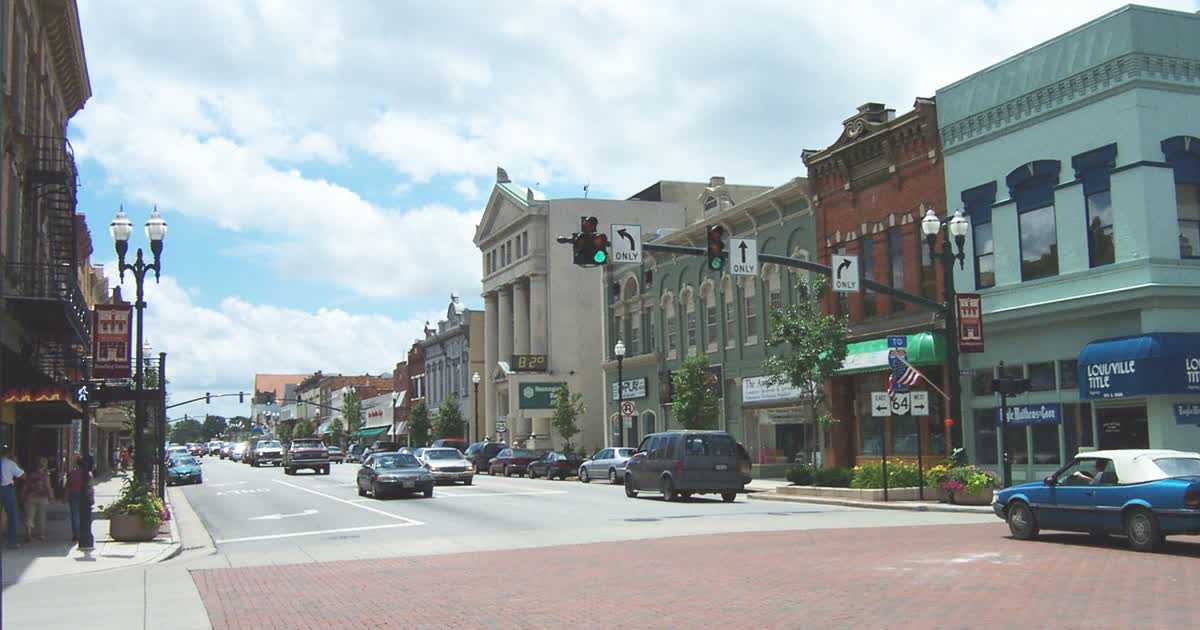
Downtown Bowling Green gets a new front door for business on Thursday, Nov. 12, as the Bowling Green Chamber of Commerce and the Four Corners Center + COWORK celebrate the opening of a mixed-use business, coworking and residential hub in a restored historic building at 248 S. Main Street, according to the project’s Nov. 12 announcement.
The Four Corners Center occupies a historic building that Bowling Green Economic Development restored after it sat vacant — a first-of-its-kind project for the organization that amounts to an approximately $1.5 million investment in downtown Bowling Green, the announcement said.
“The Four Corners Center + COWORK will be an integral part of downtown Bowling Green, sparking job growth in the community,” Gov. Mike DeWine said in the announcement. “When state and local partners work together on projects like this, the benefits reach beyond downtown and strengthen the entire region.”
The building is already working. In September, the Bowling Green Chamber of Commerce, VisitBG Ohio, the Downtown Bowling Green Special Improvement District and Bowling Green Economic Development all moved into the Four Corners Center, the announcement said, giving the restored building a built-in core of the city’s business and tourism organizations from day one.
The coworking side — the community’s first, according to Bowling Green Economic Development — offers local professionals, startups and branch units private offices and cubicles, the Falcon and Bobcat Conference Rooms, and direct access to Four Corners staff, the announcement said. Jenny Bowers, development manager for Bowling Green Economic Development, said in the announcement that the team “felt that renovating this historic building was a meaningful project, gives the Four Corners a permanent home, and offers a brand new cowork space in a vibrant, modern setting.”
Katie Thompson, executive director of Bowling Green Economic Development, said in the announcement that the project “was the first of its kind for Bowling Green Economic Development and we couldn’t have done it without the support of the Vibrant Communities program through JobsOhio and our partners at the Regional Growth Partnership,” adding that the collaboration already taking place among the businesses in the building is “exactly what we’ve hoped for.”
The money behind the restoration was a partnership stack: a $487,000 JobsOhio Vibrant Communities Grant, a grant from Meta, and a rebate from Efficiency Smart, according to the announcement. The JobsOhio Vibrant Communities Program offers competitive grants for projects that transform areas within a distressed community, and the program’s statewide track record cited in the announcement — more than $30 million invested across more than 100 projects, generating $186 million in total investment, 1,500 jobs and $81 million in new annual payroll — shows why Bowling Green competed for a share of it.
JobsOhio President and CEO J.P. Nauseef said in the announcement that “the completed restoration of this historic building in the heart of Bowling Green is the result of strong collaboration and completes the community’s vision to transform a once-vacant structure and revitalize its downtown,” and that creating a space for residents to work and connect “will not only bring new energy to the neighborhood but spur additional business investment along Main Street.”
What we know — and what we’re still waiting on
What we know: the ribbon-cutting is Thursday, Nov. 12 at 248 S. Main Street; the project represents about $1.5 million invested in a formerly vacant historic building; the anchor organizations moved in during September; and the funding stack is led by the $487,000 JobsOhio grant. What we’re still waiting on: the announcement does not list how many coworking memberships or offices are still available, what membership costs, or which residential units in the mixed-use building are occupied. Those details will say a lot about how quickly the center fills.

The opening fits a wider Northwest Ohio pattern of communities building places meant to keep workers and investment close to home — from the supportive-housing construction in our report on the $22 million Mission Point groundbreaking in Toledo to the workforce focus of Toledo AI Week’s free career training for Northwest Ohio workers. Chase Eikenbary, vice president of project management at the Regional Growth Partnership, made that connection explicit in the announcement: “Downtowns are the heart of Ohio’s communities, and quality of place is a major factor for companies deciding where to invest and grow.”
What happens next is the everyday test: whether startups, remote workers and branch offices take the desks, and whether a once-vacant Main Street building becomes the kind of address that pulls the next investment downtown with it. Thursday’s ribbon-cutting is the celebration; the occupancy numbers over the next year will be the verdict.
Photo: Wapcaplet, CC BY-SA 3.0