


Every cardholder of the Akron-Summit County Public Library should assume their account information was reached in a cyber incident the library learned about on November 17, 2026, the library announced on November 18, 2026. An outside entity obtained unauthorized access to customer account information through three of the library’s vendors that provide services related to customer accounts, and the library’s mobile app has been taken down while a forensic investigation continues, according to the library’s official statement and reporting by the Akron Beacon Journal.
The information accessed was the kind of data a library account holds: name, address, email address, phone number, date of birth, home branch, username and library card number, the library said. The account information is hosted in the cloud, and because the three vendors are interconnected, the library does not yet know which vendor was the point of entry, its spokesperson told the Akron Beacon Journal.

Just as important is what was not reached. Plain-text passwords were not accessed, and neither was any customer’s borrowing or hold history, the library said. The library does not collect or store Social Security numbers, driver’s license numbers or credit card numbers, so none of that information exists in its systems to be taken.
As far as the library understands, all of its cardholders were affected, marketing and communications director Dana Setting told the Akron Beacon Journal. That makes the incident one of the broadest data exposures to hit an Ohio public library system — not a limited set of accounts, but the system’s whole cardholder base across Akron and Summit County.
The library’s own systems and internal networks remained protected and secure, and nothing was deleted, the library said. “Nothing was deleted or anything like that. The only thing that’s ongoing is a forensic investigation,” Setting told the Akron Beacon Journal.
The most visible effect for patrons is the missing app. The library deactivated its app temporarily out of caution, with no timeline for its return. “We don’t actually think that there’s an active threat, but taking down the app allows us some breathing room, some space to work on the issues that are affecting things,” Setting told the Akron Beacon Journal.
Patrons are being urged to reset their library PIN or password — a step that also updates their access to the Libby and Hoopla services for Akron-Summit cardholders — and to watch their accounts and report any unusual activity. The vendors involved have engaged third-party cybersecurity specialists, and the library does not expect investigation findings for at least a few days.
Akron is not alone in this. The Cuyahoga County Public Library said on November 17, 2026, that attackers had also accessed its patrons’ information, and the incident has affected several libraries and vendor systems across the country, according to the Akron Beacon Journal’s reporting. The pattern points at the shared vendor layer that modern library systems rely on for accounts, apps and digital lending — a single compromise upstream can surface in many library systems at once.
The incident also lands in a county already arguing about who holds residents’ data and how tightly. Akron’s civilian oversight board recently urged the city to ban police from sharing Flock license-plate reader data and to pause renewals until an audit ends — a separate fight, but the same underlying question of how much personal data public institutions and their vendors should hold, and on what terms. Read our earlier coverage of Akron’s Flock data debate.
What we know — and what we’re still waiting on. Confirmed: an outside entity reached cardholder account information through three library vendors; the data included names, contact details, dates of birth, usernames and card numbers; passwords in plain text, borrowing history, Social Security numbers, driver’s license numbers and credit card numbers were not involved; the app is down and a forensic investigation is under way. Still unknown: which vendor was breached, when the access began, whether the data has been misused, and when the app will return.
What happens next is the forensic report. The library expects no findings for at least a few days, and its next public update should name the vendor involved and the full scope of the access. Until then, the library’s advice to every cardholder stands: reset your PIN or password, and keep an eye on your accounts.
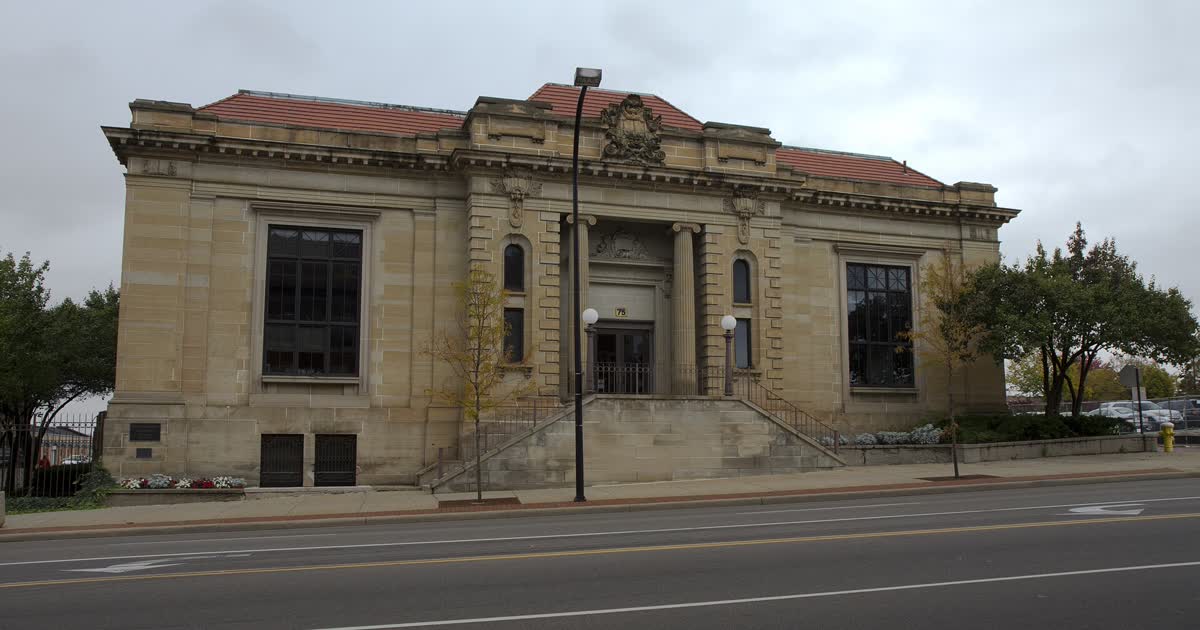
Photo: Robbie Schneider, CC BY-SA 3.0