


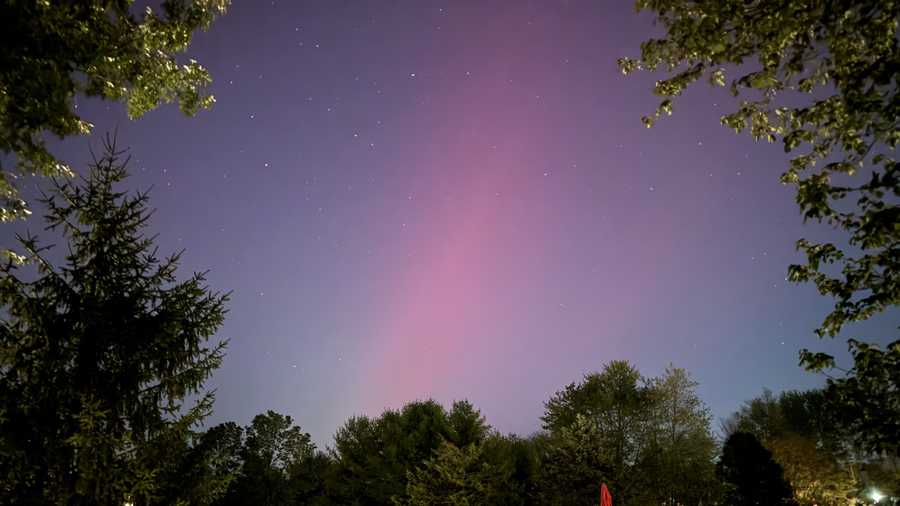
The National Oceanic and Atmospheric Administration’s (NOAA) **Space Weather Prediction Center** has issued a **G3 (strong) geomagnetic storm watch**, forecasting elevated auroral activity across parts of the Midwest and Great Lakes regions.

Such geomagnetic storms occur when charged particles from the sun interact with Earth’s magnetic field, creating glowing curtains of color in the atmosphere. While the aurora is most commonly visible near the Arctic Circle, powerful solar storms can push the light show into lower latitudes — including Ohio.
“Under clear and dark skies, there’s a real chance for people in Central Ohio to see faint shades of green or pink near the northern horizon,” said a forecaster with the Space Weather Prediction Center. “Peak viewing would likely be after midnight, but visibility depends heavily on local weather and light conditions.”

The current storm stems from a **coronal mass ejection**, a burst of solar plasma launched from the sun’s surface earlier this weekend. As these charged particles reach Earth, they can also cause minor disruptions to communications, navigation systems, and power infrastructure — though such effects are expected to be limited.
Local meteorologists say skies across Central Ohio should remain partly clear through the evening, offering at least a brief window for skywatchers. To improve chances of seeing the Northern Lights, experts recommend heading away from city lights and looking north after dark.

NOAA’s forecast suggests geomagnetic activity may subside by Tuesday morning, making tonight the best opportunity to witness the spectacle.