

TOLEDO, Ohio — A University of Toledo student has developed patent-pending technology that would let surgeons stress-test a patient’s broken bone and a proposed repair before making an incision, according to UToledo News. Yogesh Kumaran, an M.D./Ph.D. candidate, built the system after years testing orthopaedic implants in mechanical and virtual environments, UToledo News reported Oct. 27.
The idea began about a decade ago, when Kumaran joined Dr. Vijay Goel’s lab as a bioengineering undergraduate at UToledo, according to UToledo News. The lab used computer modeling — the same engineering used to test a bridge beam or an airplane wing — to predict how implants perform in the body. “We use this technology to make implants safe for patients in general. Why aren’t we using it for each individual patient?” Kumaran told UToledo News.

His product, OssPlan, starts with diagnostic imaging such as a CT scan of a broken bone and builds a three-dimensional biomechanical model from it, according to UToledo News. Surgeons can then simulate different fixation options and test how the bone and implant would hold up under everyday forces, including walking, climbing stairs, and sitting down and standing up. UToledo News reported that OssPlan adds a physics layer to the model, creating a patient-specific digital twin that can be tested before surgery.
Trauma is the starting point, because fractures vary so widely. “Trauma is where we’re starting, because no two fractures are alike,” Kumaran told UToledo News. He told UToledo News the approach could eventually apply to joint replacement, spinal fusion and ACL repair, and that no FDA-cleared product currently offers surgeons this kind of patient-specific testing.

UToledo’s Technology Transfer Office has filed a provisional patent titled “Systems and Methods for Peri-operative Planning and Prediction,” according to UToledo News. Rather than hand the idea to another company, Kumaran founded Ohio-based Ossatura Labs Inc. UToledo News reported the company has an option to license the technology from UToledo, Kumaran leads a four-person team, and with the right funding the team is targeting about five years to reach surgeons.
The work carries forward Goel’s legacy. Goel, director of UToledo’s Engineering Center for Orthopaedic Research Excellence, or E-CORE, died in 2024 and held 18 patents, according to UToledo News. Kumaran was raised mostly in Toledo, attended St. John’s Jesuit, and has done all his training at UToledo, according to UToledo News — bioengineering as an undergraduate, a completed Ph.D. in biomedical engineering, and now medical school.

Kumaran will pitch the invention Thursday, Oct. 29, at 5:30 p.m. as one of five Tech419 finalists at the Nitschke Technology Commercialization Complex, competing for more than $20,000 in funding and prizes, according to UToledo News.
He has less than two years of medical school left and hopes to match into an orthopaedic surgery residency, according to UToledo News. His advice to students, he told UToledo News, is: “If a student has an idea, don’t be afraid to take the leap because if you don’t do it, somebody else will.”
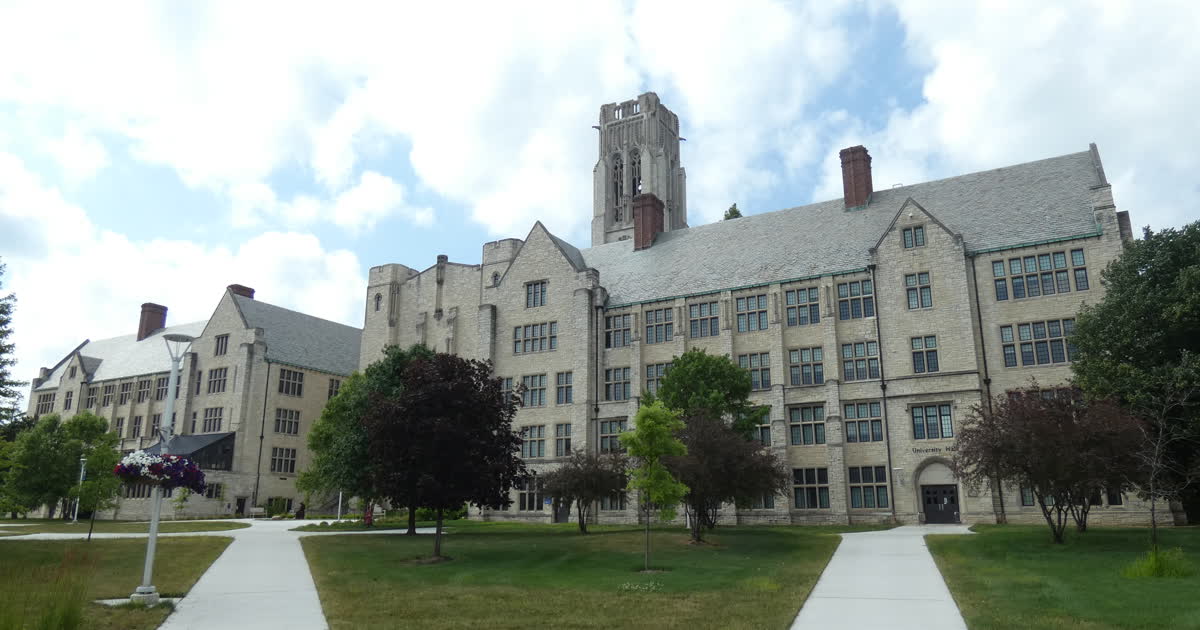
Photo: MrJacon000, CC BY-SA 4.0