


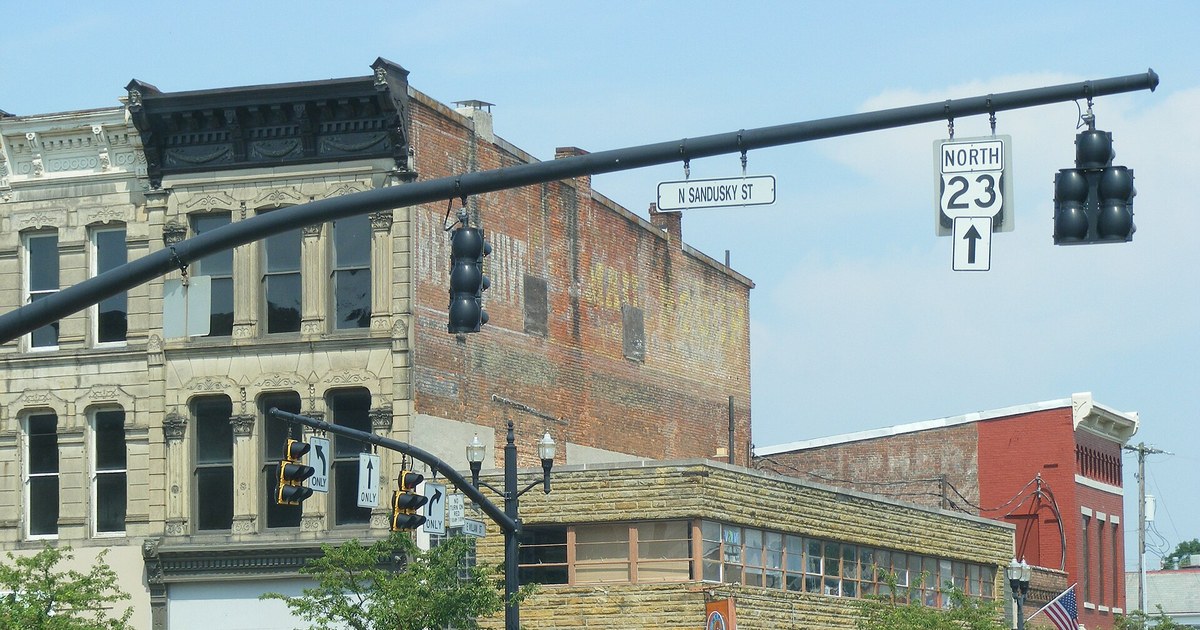
DELAWARE — Early in-person voting is under way at the Delaware County Board of Elections, 2079 U.S. Hwy. 23 North, Suite 4 in Delaware, and the Tuesday, Nov. 3 general election ballot carries three countywide levy questions — for developmental disabilities services, mental health services and public transit.
The Delaware County Board of Developmental Disabilities is asking for an additional 1.8-mill levy for five years, estimated to raise $25,448,490 a year at about $63 per $100,000 of property value. The new levy would replace an expiring 2-mill levy; a renewal-with-increase proposal was narrowly rejected in May, falling short by 552 votes, 50.69% to 49.31%. The board serves more than 2,400 people across the county.
The Delaware-Morrow Mental Health and Recovery Services Board seeks a renewal of 1.5 mills combined with a 0.5-mill increase — 2 mills in total — for five years, estimated to raise $23,005,505 a year at about $50 per $100,000 of value.
The third countywide question would give the Delaware County Regional Transit Authority its first dedicated local funding source: a 0.2% sales and use tax for a continuing period. It would apply across the county except in the portions of Columbus, Westerville and Dublin covered by COTA, and would bring the total sales tax in covered areas to 7.20% — 20 cents on a $100 purchase.

The county’s own offices are uncontested: Republican Renee Vaughan is the only candidate for county commissioner and Republican George Kaitsa the only candidate for county auditor, with no Democrat filing for either seat. The contested races are legislative: U.S. Rep. Jim Jordan (R) faces Joshua D. Kolasinski (D) in the 4th District, and Rep. Troy Balderson (R) faces Jerrad Christian (D) in the 12th. For the Ohio House, Brian Lorenz (R) faces Shelby Kimball (D) in the 60th District and Shawn Stevens (R) faces Vince McGrail (D) in the 61st; in the 19th Senate District, Ryan Rivers (R) faces Janet Wagner (D).
Local questions elsewhere in the county include an additional 2-mill levy for current expenses in the Village of Galena, for four years at an estimated $192,942 a year (about $70 per $100,000); a Harlem Township fire and EMS renewal of 4 mills for four years, an estimated $956,658 a year (about $97 per $100,000); and a Sunbury charter amendment on whether to allow data centers.

Statewide, Ohio voters will choose a governor — Republican Vivek Ramaswamy, Democrat Amy Acton or Libertarian Don Kissick — and decide a U.S. Senate race between Republican Jon Husted, Democrat Sherrod Brown and Libertarian William B. Redpath. Also on the ballot are attorney general (Keith Faber vs. John J. Kulewicz), auditor of state (Frank LaRose vs. Annette Blackwell), secretary of state (Robert Sprague vs. Allison Russo), treasurer (Jay Edwards vs. Seth Walsh), two Ohio Supreme Court seats, and State Issue 3, a proposed constitutional amendment that would require photo identification to vote.
Early in-person voting continues at the board of elections office from 8 a.m. to 5 p.m. on weekdays through Oct. 23, then expands: Saturday, Oct. 24 from 8 a.m. to 4 p.m.; Monday, Oct. 26 from 7:30 a.m. to 7:30 p.m.; Tuesday, Oct. 27 from 7:30 a.m. to 8:30 p.m.; Oct. 28–30 from 7:30 a.m. to 7:30 p.m.; Saturday, Oct. 31 from 8 a.m. to 4 p.m.; and Sunday, Nov. 1 from 1 to 5 p.m. Absentee ballot applications are due by 8:30 p.m. on Oct. 27, and voted absentee ballots must be received by 7:30 p.m. on Election Day. Voters must show photo identification, and polls will be open Tuesday, Nov. 3 from 6:30 a.m. to 7:30 p.m.
Photo: Ben Turover, CC BY-SA 3.0