


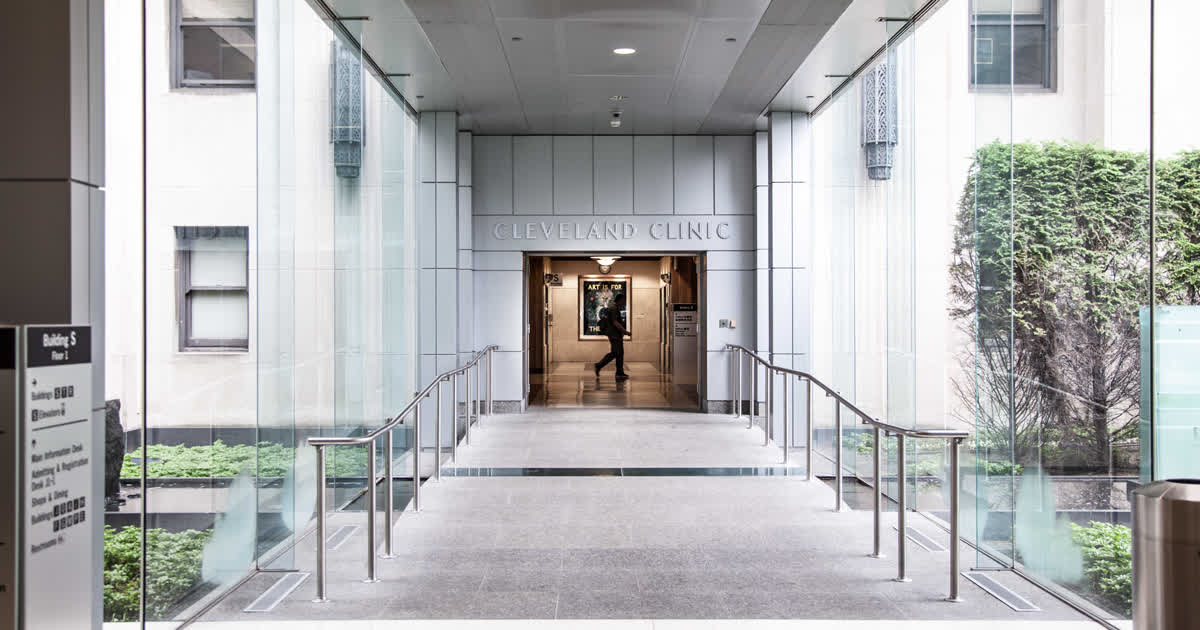
Ohio’s only federally funded Alzheimer’s disease research center will keep working for another five years. The National Institute on Aging, part of the National Institutes of Health, has awarded a grant expected to total $21.1 million to continue funding the Cleveland Alzheimer’s Disease Research Center, the center’s partner institutions announced, and the Akron Beacon Journal reported the award on November 12.
The five-year renewal, covering 2026 through 2031, supports a multi-institution collaboration led by Dr. Jagan Pillai, a cognitive neurologist at Cleveland Clinic, according to Cleveland Clinic’s announcement of the award. The center, established in 2019, brings together physicians and scientists from Cleveland Clinic, Case Western Reserve University, University Hospitals, the MetroHealth System and the Veterans Affairs Northeast Ohio Healthcare System.
The center’s central question is one that families across Ohio ask in exam rooms every week: why does dementia move fast in one person and slowly in another? According to the partner institutions’ announcements, the Cleveland center focuses on understanding why Alzheimer’s disease and related dementias progress at different rates among individuals and across their different forms, with the goal of slowing progression and improving diagnosis, care, treatment and prevention.
The numbers behind the research are sobering. More than 6 million people are living with dementia, the Akron Beacon Journal reported in its account of the award, and that figure continues to grow as the population ages. For Northeast Ohio families, the center is the region’s front door to clinical studies, biomarker research and specialist expertise that would otherwise require travel to research hubs in other states.
The award drew support from U.S. Rep. Emilia Sykes, whose office highlighted the renewal for Ohio’s only NIH-funded Alzheimer’s disease research center, according to the release cited by the Akron Beacon Journal. The Cleveland center is one of 37 NIH-funded Alzheimer’s Disease Research Centers in the nation, according to University Hospitals’ announcement, a network that shares data and findings so discoveries in one city can be tested and applied in others.
The grant is funded through NIH grant P30AG072959, according to the institutions. Renewals of this kind are competitive: centers must show that their earlier funding produced research momentum worth extending, and the five-year horizon gives the Cleveland teams room to follow research participants over time — essential for a disease whose story is written in years, not weeks.
The collaboration’s structure is part of the point. Cleveland Clinic brings large-scale clinical care, Case Western Reserve University brings academic research depth, University Hospitals and MetroHealth broaden the patient populations studies can reach, and the VA Northeast Ohio system ensures veterans — a group with distinct dementia risk factors — are part of the research picture, the partner announcements said.
Related coverage: our reporting on the Trailhead Foundation’s first funds from the Summa Health sale in Akron and on Cleveland Clinic completing its Youngstown orthopaedic takeover shows how Northeast Ohio’s health systems are reshaping care across the region.
Understanding progression is more than an academic question. If researchers can learn why one patient’s disease advances slowly while another’s races ahead, clinical trials can be designed around the patients most likely to show an effect, families can plan with better information, and treatments in development can be matched to the stage and type of dementia a person actually has. That is the through-line of the Cleveland center’s work as its partner institutions describe it: measure progression carefully enough, in enough different people, and the disease becomes easier to interrupt.
The center’s five institutional partners also give its studies reach across Northeast Ohio’s communities — urban and suburban, insured and safety-net, veteran and civilian. Dementia does not affect every community at the same rate or in the same way, and a research center rooted in five different health systems is positioned to see those differences in its data rather than assume them. The renewed award keeps that infrastructure — coordinators, clinics, data cores and participant relationships built since 2019 — intact instead of forcing it to rebuild.

What happens next is the work itself: the renewed funding runs from 2026 to 2031, and the center’s teams will continue enrolling participants and pursuing the progression research the award supports. For Ohio families facing a dementia diagnosis, the practical effect is continuity — the state’s only center of its kind, in Cleveland, keeps its doors, its studies and its specialists in place for another five years.
Photo: Mutaz Albar, CC BY