


After 25 years studying Lyme disease, a University of Toledo researcher has landed the biggest grant of his career to build a vaccine against it. Dr. Mark Wooten, a professor in UToledo’s Department of Medical Microbiology and Immunology, has received a five-year, $3.7 million award from the National Institute of Allergy and Infectious Diseases, part of the National Institutes of Health, UToledo News reported.
There is currently no Lyme disease vaccine available in the United States — the last one, LYMErix, was pulled from the market in 2002 — while the CDC estimates about 476,000 people may be diagnosed with Lyme disease each year, and the tick populations that carry it keep expanding their range, including into Ohio, UToledo News reported.

Wooten’s approach, developed at UToledo, is unconventional. Studying the Lyme bacterium Borrelia burgdorferi under advanced microscopes, his team engineered a strain that can only move forward — unable to reverse when it hits a dead end, it becomes trapped, stops moving and is cleared by the immune system, while still triggering a full immune response, UToledo News reported. In earlier studies funded by the U.S. Department of Defense, the strain protected mice for up to a year and was cleared safely even in animals with severely compromised immune systems, according to UToledo News.
"It’s what’s called a spirochete. It looks and moves like a snake," Wooten told UToledo News. "Antibiotics can clear it, but there’s damage already done to your heart or your brain that can cause chronic disease. That’s why there’s a push for vaccines to keep it from ever being established."

The new grant will let Wooten’s team refine the vaccine — testing doses, timing schedules and immune-boosting additives called adjuvants — and identify which proteins on the bacterium’s surface drive protective immunity, with the goal of building a cleaner recombinant vaccine from just those proteins, UToledo News reported. UToledo filed a provisional patent application for the approach in December 2025, with research assistant John Presloid named as co-inventor.
The award also expands Wooten’s Toledo lab, funding research associates, postdoctoral researchers and students. What happens next: by the end of the five-year grant, Wooten told UToledo News, he hopes to have a candidate ready to attract pharmaceutical interest and move toward clinical development — and a decision on converting the provisional patent to a full application is expected by the end of this year.
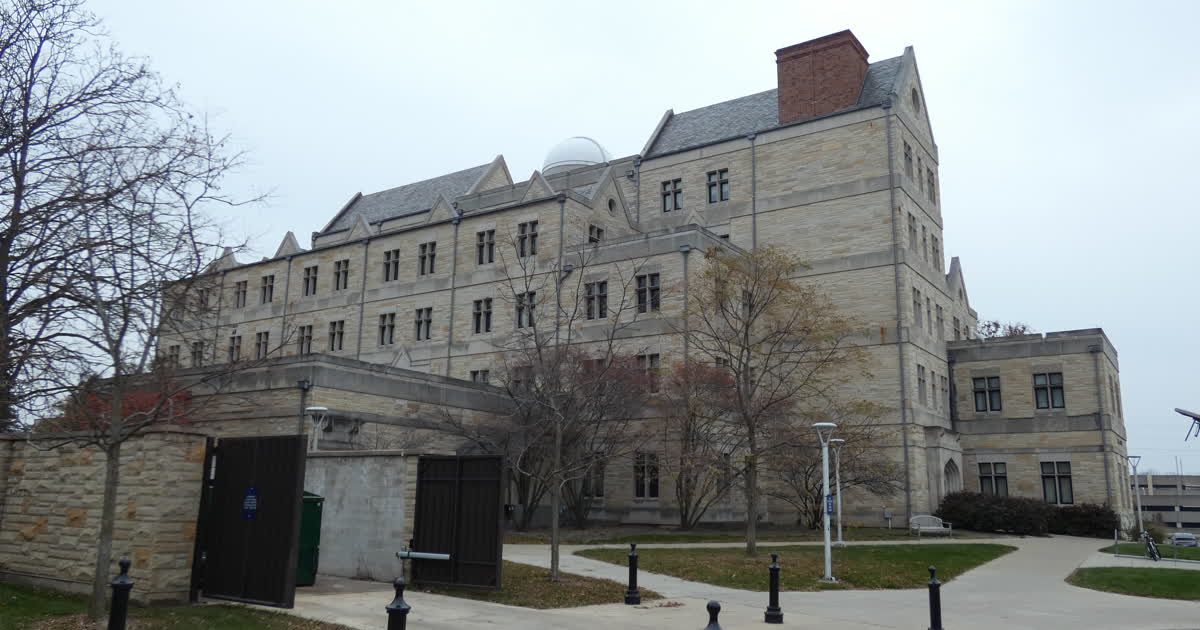
Photo: MrJacon000, CC BY-SA
[…] Related coverage: Toledo readers have followed a busy fall for community investment — see how Toledo and Bowling Green turned the Battle of I-75 into a food drive, the latest on the case where eight people sued a Toledo trucking firm over the October chemical release, and the $3.7 million Lyme disease vaccine grant at UToledo. […]