


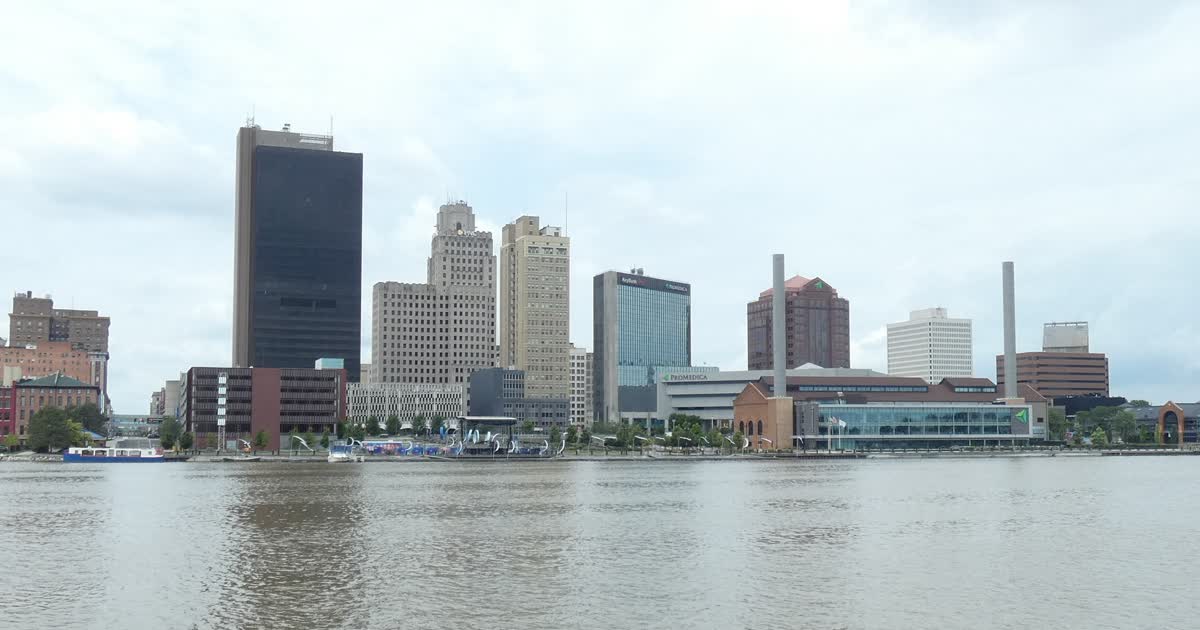
TOLEDO, Ohio — Sixteen pockets of Lucas County will carry a powerful new federal tax incentive starting Jan. 1, after the U.S. Treasury signed off on Ohio’s new map of Opportunity Zones — and only three Ohio counties received more designations than Lucas, Lake Erie Inquiry reported Sunday.
Starting Jan. 1, people who put money into the 16 Lucas County tracts will pay less federal tax on what they earn there, according to Lake Erie Inquiry, which read the county counts off the state’s approved tract list released Nov. 5. Nine of Lucas County’s 16 zones were also zones under the first version of the program in 2018, Lake Erie Inquiry reported.

Statewide, the approved list holds 260 zones, each a census tract, according to the governor’s office list reported by Lake Erie Inquiry. Gov. Mike DeWine announced that 260 census tracts in Ohio have been named federal Opportunity Zones, 95.3 WLKR reported, in an announcement the governor’s office made with Ohio Department of Development Director Lydia Mihalik, according to the governor’s Nov. 5 announcement as reproduced by New Americans Magazine.
The rest of Northwest Ohio shares in the map. Erie County has two zones, and Wood, Ottawa, Sandusky, Huron, Defiance, Williams, Seneca and Hancock counties have one each, while Allen County has five, Lake Erie Inquiry reported. Firelands Current confirmed the Firelands portion of that picture — two Erie County census tracts and one each in Huron, Ottawa and Sandusky counties become federal Opportunity Zones on Jan. 1, 2027, per Gov. DeWine’s office.

The new designations run through 2036, Lake Erie Inquiry reported. Under the permanent Opportunity Zones 2.0 framework enacted by Congress in 2025, states must redesignate eligible zones every 10 years, according to the governor’s announcement as reproduced by New Americans Magazine. Nationally, the U.S. Department of the Treasury and the IRS announced the new designations on Nov. 5, covering 6,576 census tracts effective Jan. 1, 2027, according to Greenberg Traurig’s analysis of the federal announcement.
The program’s purpose, per the governor’s announcement, is to provide federal tax incentives designed to encourage outside investment that supports housing development, business expansion, job creation and community revitalization. DeWine, quoted in the governor’s Nov. 5 announcement as reported by New Americans Magazine, said: “Every community in Ohio has something special to offer, and we want to make sure they have the opportunity to thrive… Whether it’s bringing new life to a downtown, creating great-paying jobs, or building housing for more families, these Opportunity Zones will help attract investments that can make a real difference in the lives of Ohioans.”

The scale of the competition for designations underlines how sought-after the tracts were. The Department of Development received 951 nominations representing 515 of Ohio’s 1,040 eligible census tracts, according to the governor’s announcement, and 260 tracts were ultimately designated — including 96 in rural communities. Seventy-eight of the new tracts were also in Ohio’s original program, which in 2018 designated 320 tracts across 73 counties, according to the announcement.
Local officials and developers should be clear-eyed about what the designation does and does not do. As Firelands Current reported, the designations do not announce particular local construction projects, investment amounts or new jobs — they change the tax math for investors who choose to put capital into the tracts, and the projects themselves must still be proposed, financed and built.

What we know — and what we’re still waiting on
Confirmed: the 16 Lucas County tracts, the Jan. 1, 2027 effective date and the 2036 horizon, per the state’s approved list and the Treasury announcement. Still waiting: the street-level picture of which Toledo neighborhoods sit inside the 16 tracts, which local projects position themselves to use the incentive first, and how Lucas County and Toledo plan to market the zones to investors in the new year.
What happens next is a local race against a federal clock. With the zones effective Jan. 1 and fixed for a decade, the communities that organize projects earliest — housing, downtown redevelopment and business expansion are the categories the governor’s announcement names — stand to capture the first wave of Opportunity Zone capital in Northwest Ohio.
Photo: MrJacon000, CC BY-SA 4.0