


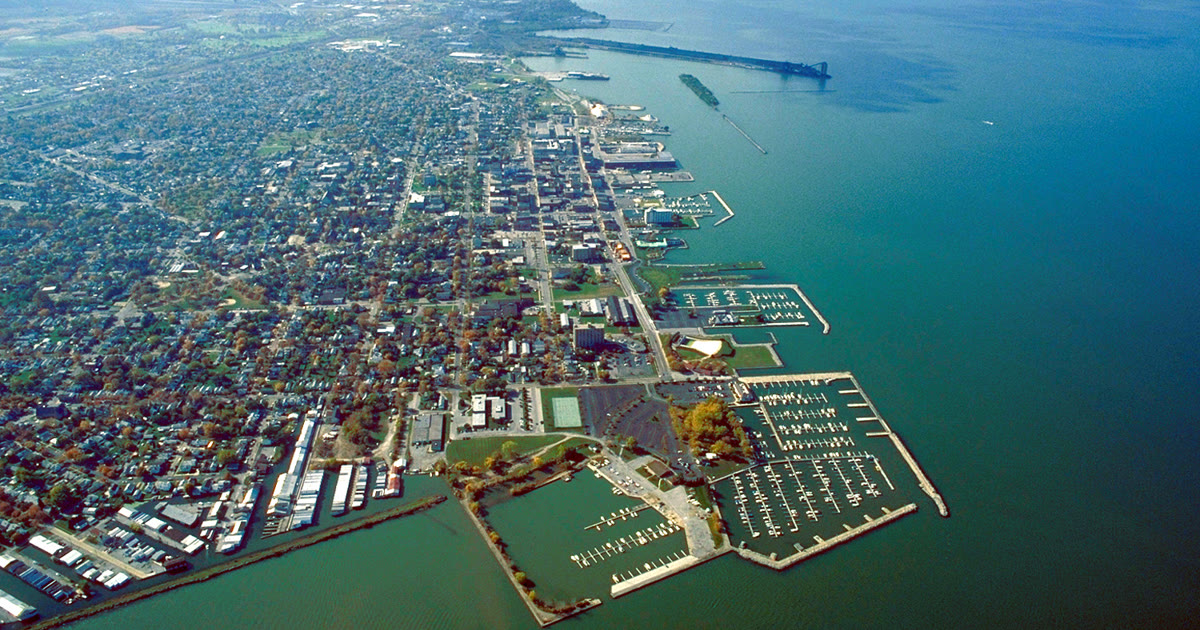
SANDUSKY, Ohio — Dredging at Sandusky Harbor is complete, the U.S. Army Corps of Engineers, Buffalo District, announced on Thursday, Nov. 5, clearing about 109,000 cubic yards of sediment from the federal navigation channel and sending most of that material to a nearshore site where Lake Erie currents are expected to feed it along the coastline as beach nourishment, according to the Buffalo District’s completion release distributed by EIN Presswire.
The work, done under a $628,000 contract, restores the harbor’s authorized depths for the commercial vessels and recreational boaters who use this deep-draft Lake Erie port in Erie County. Crews mechanically dredged the Moseley Channel and the Straight Channel, the two channels the Corps maintains at Sandusky, and finished a project that had been working on the water since early October.

“Completing dredging in Sandusky Harbor is another mark of the Corps of Engineers’ dedication to efficiency, good stewardship of American taxpayer dollars, and delivery of a critical mission the Corps of Engineers is known for,” Lt. Col. Aaron Anderson, commander of the Buffalo District, said in the Buffalo District’s release. “This work ensures vessels remain safe, ports across Ohio and the Great Lakes keep thriving, and the U.S. economy stays strong,” Anderson said in the same release.
The split of the material is a central part of this year’s story. About 100,000 cubic yards were placed in the nearshore site, where, the Corps said in its release, local currents will deposit the material along the coastline in a process that mimics natural beach nourishment. The remaining 9,000 cubic yards were placed in a designated open-lake site. In other words, most of what came out of the shipping channel did not simply disappear — it was put back to work along Ohio’s shoreline.

That approach marks a sharp change in scale from the harbor’s last dredging. Sandusky Harbor was last dredged in 2025, when about 9,000 cubic yards of material were removed and placed in the open lake, according to the Buffalo District. This year’s removal was more than twelve times that amount, and this time the overwhelming share of it went to the nearshore nourishment site instead of the open lake.
The timeline shows how a harbor project is built in stages. The Buffalo District awarded the $628,000 contract in July 2026 to Michigan-based Morrish-Wallace Construction Co., according to the Corps’ release. Work started Oct. 6, a start the Corps announced at the time and that Baird Maritime and Dredging Today also reported in October, with completion then scheduled by Nov. 1. The completion announced on Nov. 5 closes that work out.

Why a channel needs this work at all comes down to shoaling — sediment that gradually builds up and makes the water shallower than ships need. The Corps said in its release that authorized depths in Sandusky Harbor range from 21 to 26 feet, with the shallowest depths in the Straight Channel and the deepest in the Moseley Channel, and that it maintains those depths to support safe and efficient navigation for large vessels. Sandusky Harbor is dredged annually, the Corps said, depending on shoaling conditions, funding availability and federal navigation priorities.
The stakes are measured in cargo and jobs, not just feet of water. The harbor handled 2.6 million tons of cargo in 2023, including coal and lignite at 90 percent, petroleum coke at 5 percent and coal coke at 4 percent, according to the Buffalo District’s release. Waterborne transportation through the harbor supports $266.8 million in business revenue, 864 direct, indirect and induced jobs, and $55.5 million in labor income, the Corps said, putting the harbor’s overall annual economic impact at more than $322 million.

For Erie County residents, the effects are practical and visible. Commercial operators get a channel cleared back toward its authorized depths, recreational boaters get a safer entrance, and shoreline communities get nourishment material arriving the slow, natural way — moved by currents along the coast rather than trucked in. That is the idea behind beneficial use of dredged material: a maintenance necessity becomes, at the same time, a resource for the coast.
What we know — and what we’re still waiting on
What is confirmed comes directly from the Buffalo District: the volume removed, the contract amount and contractor, the Oct. 6 start and Nov. 5 completion, the placement split, and the harbor’s authorized depths and cargo figures, all in the district’s completion release, with the contract, start date and volume also reported when the work began by Baird Maritime and Dredging Today. What the release does not provide is a post-dredging depth survey, or a timetable for when the nearshore material is expected to visibly build up along any specific beach — those results will show themselves over the coming months, not in a single announcement.
What happens next is the quieter phase of the same cycle. The nearshore material will be left to the currents the Corps counted on to spread it along the coastline, harbor users will work the cleared channels at their maintained depths, and the harbor will return to the annual rhythm the Corps described — monitored for shoaling and dredged again when conditions, funding and federal priorities line up. For a port that moves millions of tons and supports hundreds of jobs, Thursday’s completion is less an ending than a reset: the channel is clear, and the clock starts on next year’s work.