


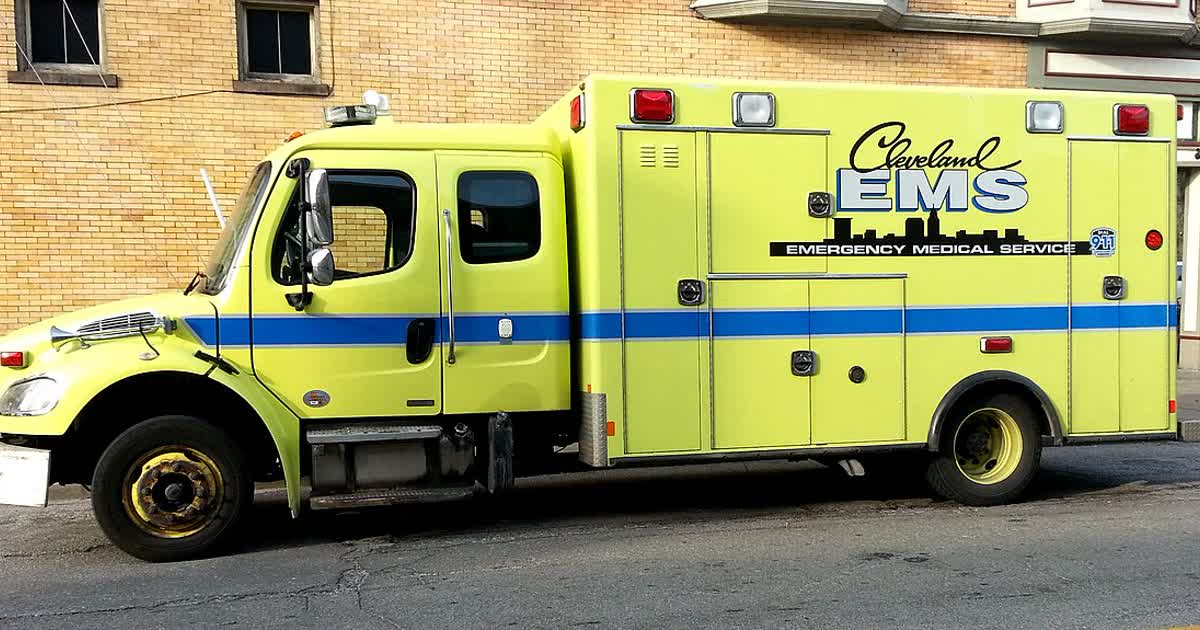
CLEVELAND, Ohio — A private ambulance driver transporting a patient to the Cleveland Clinic got lost, left the vehicle and took a rideshare home on Wednesday, Oct. 28, leaving the patient behind until a Cleveland EMS crew responded and completed the transport, according to Cleveland-area reporting first reported by WOIO and WKYC and summarized by EMS1.
The incident occurred in the 4100 block of West 150th Street, according to EMS1’s summary of the Cleveland reporting. The driver worked for Lynx EMS, a private ambulance company — not for Cleveland EMS — a distinction the Cleveland Association of Rescue Employees, CARE Local 1975, stressed in its statement, as reported by EMS1.

A second provider who was treating the patient in the back of the Lynx ambulance remained with her and called for another ambulance to continue the transport, Firehouse.com reported, summarizing WKYC’s reporting. A Cleveland EMS unit was then dispatched, administered care and transported the patient to the Cleveland Clinic, according to CARE Local 1975 as reported by EMS1.
In a later account reported by FOX 8 and carried by the New York Post, the patient described the driver saying she was done driving and taking an Uber, and said the driver had been going in circles after getting lost. The early Cleveland reports and the later FOX 8 account differ on some details of the patient’s condition and the trip’s origin, and NewsForce247 is reporting only the points the accounts agree on here: the driver got lost, left, and a city crew finished the job.

Cleveland EMS Deputy Commissioner Chris Chapin said the situation was a first in his more than three decades on the job, FOX 8 reported via the New York Post. "Never heard of that before" was Chapin’s assessment, as reported by FOX 8 — a measure of how far outside normal practice the episode fell for the city’s own service.
Lynx EMS, in a statement to local news outlets reported by EMS1, said: "Patient safety and quality care are of the utmost importance to us and responsibilities we take very seriously. Upon becoming aware of the situation, immediate steps were taken to address the matter and ensure the patient’s well-being and care needs were addressed." The company said it was continuing to review the circumstances and would take appropriate action based on its findings, EMS1 reported.

Private ambulances handle a large share of non-emergency and interfacility transports in Ohio, moving patients between hospitals, nursing facilities and specialty clinics — work that rarely makes news until something goes wrong. The Cleveland Clinic trip in this case was exactly that kind of routine transport, which is why a driver simply leaving mid-trip drew disbelief well beyond Cleveland.
The episode lands in a difficult fall for Northeast Ohio health care, where NewsForce247 has also covered University Hospitals’ ongoing recovery from an October cyber incident. The two stories are unrelated, but both turn on the same public expectation: that the systems people depend on in a medical crisis will simply work.

What we know — and what we’re still waiting on
What is confirmed across the Cleveland reporting is the date, the West 150th Street location, Lynx EMS’s role, Cleveland EMS’s response and Lynx’s statement that it is reviewing the incident. What has not been reported is whether the driver remains employed by Lynx EMS, whether any state regulator is reviewing the transport, or the patient’s condition after she reached the hospital — none of the outlets cited reported those points.
What happens next is Lynx EMS’s review. The company has said it will take appropriate action based on what that review finds, according to its statement reported by EMS1. Until it says more, the record stands as the city’s own EMS leaders described it: an unprecedented abandonment, answered by a city crew that finished the transport.
There is also a practical lesson for patients and families in the reporting: the crew that rescued this transport was the city’s, called in after the private trip broke down. CARE Local 1975’s insistence on that distinction, reported by EMS1, was not bureaucratic pride — it was a reminder that two different systems share Cleveland’s streets, with different employers, different oversight and, on Oct. 28, very different endings to the same trip. The patient at the center of it did reach the Cleveland Clinic, carried there by the public system after the private one walked away.
Photo: Tim1965, CC BY-SA