


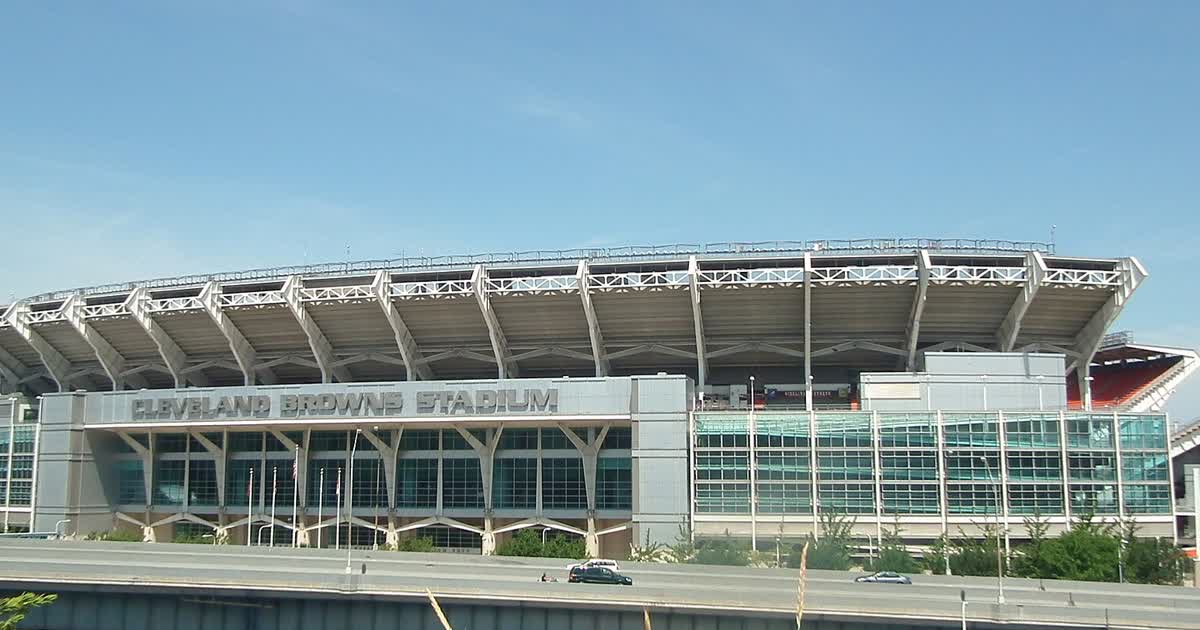
The Cleveland Browns’ next home is quite literally being built from the bottom up. In a Nov. 2 inside look at construction of the new Huntington Bank Field in Brook Park, Sports Business Journal reported that crews are digging 90 feet below ground to meet Federal Aviation Administration requirements, because the enclosed stadium is rising right next to Cleveland Hopkins International Airport and its height above ground has to stay within strict limits.
The project is pushing toward a 2029 opening, according to Sports Business Journal, which visited the northeast Ohio site as work continues on one of the largest construction jobs in the state. Instead of building up, the Browns are building down: most of the seating bowl will sit below the surrounding grade, a design driven by the airport next door.

The scale of the excavation alone tells the story. Reporting on the early site work by UReport Stories put the dig at roughly 80 to 90 feet deep, with nearly 2 million cubic yards of dirt to be moved, and about 70 percent of the stadium’s seating below ground level. Independence Excavating is performing the excavation and site work, UReport Stories reported, with Michel’s Foundations handling deep foundation work.
The new stadium is planned as a 67,500-seat enclosed venue with about 2,500 standing-room spaces and a translucent roof designed for year-round use, according to UReport Stories. It is rising on a 176-acre site in Brook Park, on land that was once a Ford Motor Company plant, as earlier reporting by Construction Review Online noted.

The road to this point ran through a public fight over the airport. The Ohio Department of Transportation initially denied a construction permit in August 2025 after an FAA study found the proposed building would extend into Hopkins airspace, then reversed course that September after a third-party aviation consultant concluded the stadium posed no hazard, according to reporting by Ideastream Public Media summarized by Coliseum Online. The City of Cleveland later sued ODOT over that ruling, NEOtrans Blog reported, even as site preparation moved ahead.
The price tag has been reported in the $2.4 billion to $2.6 billion range, with the Browns and Haslam Sports Group committing roughly $1.75 billion in private financing and about $600 million in public funding part of the plan, according to Pollstar News. The team’s downtown lease runs through 2029, and the Browns plan to move into the Brook Park stadium that same year, Construction Review Online reported.

What we know — and what we’re still waiting on
What we know: construction is underway, the excavation is the defining feature of the job, and the opening target is 2029. At the April 30 groundbreaking, Dee Haslam said construction would create more than 6,000 jobs, with 75 percent of the workforce expected to be local, according to UReport Stories. What we’re still waiting on: a final accounting of the public funding share, which Pollstar News reported remains unresolved, and the long-term plan for the current lakefront stadium site once the team leaves downtown.
For Browns fans, the construction story runs alongside the season itself. The team is 5-3 after Sunday’s loss at Pittsburgh — read our coverage of Watson sacked eight times as the Browns fell 27-6 at Pittsburgh — and Cleveland’s other lakefront team is home tonight, as we reported in unbeaten at home, the Cavaliers host the Thunder Monday night.

The Brook Park stadium is also the centerpiece of a larger mixed-use entertainment district planned around it, with the first phase of that development scheduled to open alongside the stadium in 2029, according to UReport Stories. That makes the project as much a real-estate and jobs story for Cuyahoga County’s southwest suburbs as it is a football story.
What happens next is years of visible progress: excavation and foundation work first, then the structure rising — mostly downward — toward the 2029 season. NewsForce247 will continue following the build, the funding questions, and what the move means for downtown Cleveland’s lakefront.
Photo: Erik Drost, CC BY