


Researchers at The University of Toledo have secured new federal funding to help the U.S. Army rethink how it trains and tests autonomous ground vehicles and prepares the operators who oversee them, the university announced on Oct. 29 in a release published by UToledo News.
The project, known as A3GENT, for Army Adaptive Adversary Generation Technology, is sponsored by the U.S. Army’s DEVCOM Ground Vehicle Systems Center in Warren, Michigan, and is contracted through the University of Michigan’s Automotive Research Center, according to UToledo News. The center is the Army’s lead organization for research, development and engineering of military ground vehicle systems.

In current military training simulations, autonomous vehicles and their operators encounter opposing forces that behave in known, scripted ways. The UToledo research is building artificial intelligence agents that instead learn from an operator’s own moves and respond with unpredictable, real-time tactics, according to UToledo News.
“If our systems only train against scripted scenarios, they’re not going to learn how to handle the unexpected,” Dr. Grace M. Bochenek, UToledo’s vice president of research and innovation, said in the university’s announcement. “We’re building adversaries that adapt as they go, so the systems and the people operating them are ready for the curveballs, not just the plays they’ve already seen.”

Bochenek leads the UToledo work with Dr. Ahmad Y. Javaid, interim chair and associate professor in the Department of Electrical Engineering and Computer Science and the project’s technical lead, according to UToledo News. UToledo is one of two university partners on the project, partnering with the University of Central Florida, which is helping build realistic simulated environments and plans to incorporate real-world terrain and geographic data.
“The real purpose of doing this in simulation is to make these systems trustworthy and reliable before they’re deployed,” Javaid said in the university’s announcement. Bochenek said in the announcement that the project is not about using AI to deploy a weapon, but about adding intelligence into ground vehicle systems in a way designed to reduce a soldier’s cognitive load. Running thousands of simulated iterations also lets researchers test design decisions before they become costly, she said in the announcement.

The team’s work has already won a best paper award at the most recent Ground Vehicle Systems Engineering and Technology Symposium for intelligently deploying simulated forces based on terrain, according to UToledo News. The research currently supports two Ph.D. students and one master’s student at UToledo, with plans to add a research scientist and a software developer as the two-year project continues. The researchers also point to possible commercial uses, including training commercial semi-truck drivers in simulators that respond dynamically instead of following a fixed script.
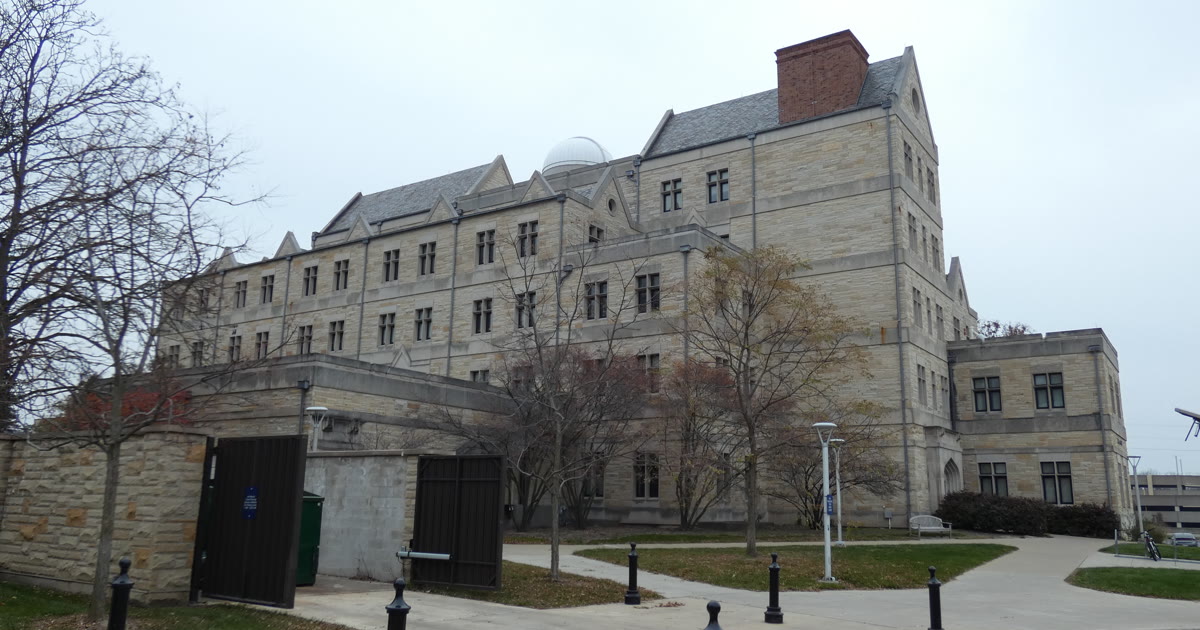
Photo: MrJacon000, CC BY-SA