


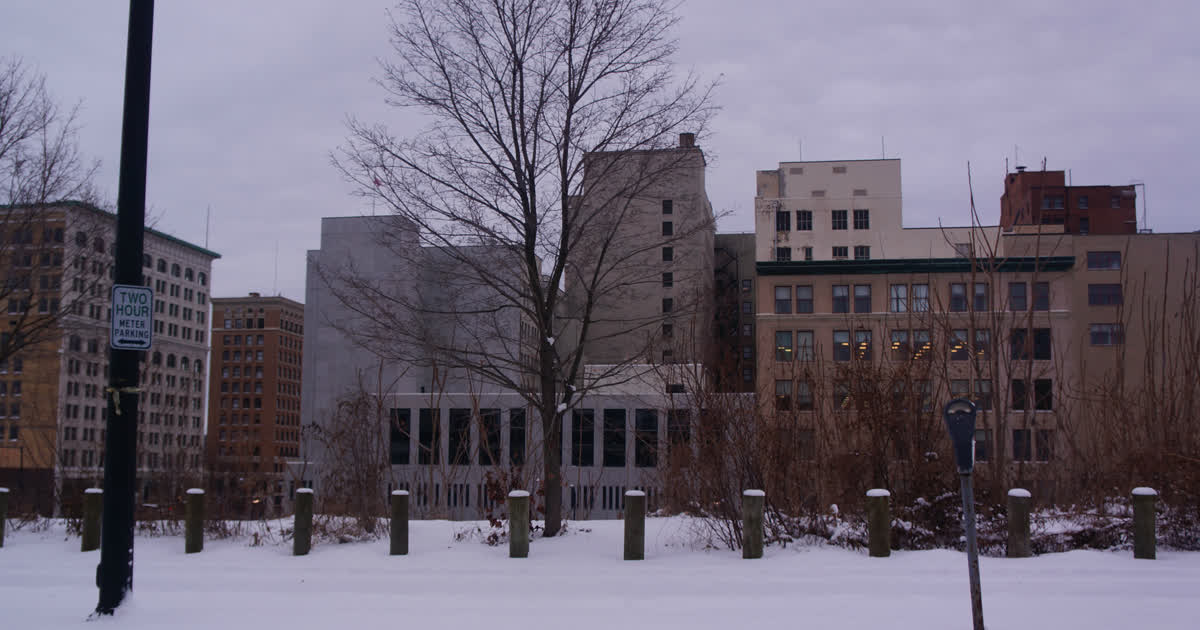
A $36 million affordable housing project is underway in Youngstown, where officials and developer Wallick broke ground Friday for a 120-unit apartment complex at 800 East Indianola Avenue, on the site of the former Woodside Receiving Hospital on the city’s South Side.
The complex will include 30 one-bedroom apartments, 72 two-bedroom units and 18 three-bedroom units, according to the project announcement. Each apartment will have a fully equipped kitchen with a dishwasher and garbage disposal, washer-dryer hookups and storage, and the development will also include a playground and a community lounge for residents.

Rents in the new buildings will be capped so that residents spend no more than 30 percent of their income on housing, a standard aimed at keeping the apartments within reach of working families and residents on fixed incomes in a city where quality affordable rentals remain in short supply.
The Indianola Avenue site has sat as a reminder of an earlier era of Youngstown health care since the Woodside Receiving Hospital years, and project backers at Friday’s ceremonial groundbreaking said the investment is the kind the neighborhood has not seen in quite some time. Representatives of Wallick joined city, state and federal officials to launch the work.

Affordable housing construction has become a central piece of Youngstown’s neighborhood strategy, as the city works to replace aging housing stock, return vacant institutional land to productive use and keep residents who work in the Mahoning Valley from being priced out of it.
No completion date was announced in the project release. When the buildings open, the 120 income-capped homes will rank among the largest single affordable housing additions in Youngstown in recent years, on a South Side site that is being rebuilt rather than left vacant.
The project also returns a large institutional parcel to the tax and housing rolls at a moment when Youngstown, like much of the Mahoning Valley, is trying to add homes faster than older stock is lost. Housing advocates in the region have long pointed to the gap between the rents working families can carry and the cost of building new units without public support, which is why income-capped developments of this size draw city, state and federal partners to the same groundbreaking table.
Photo: Kasamias9, CC BY-SA 4.0