


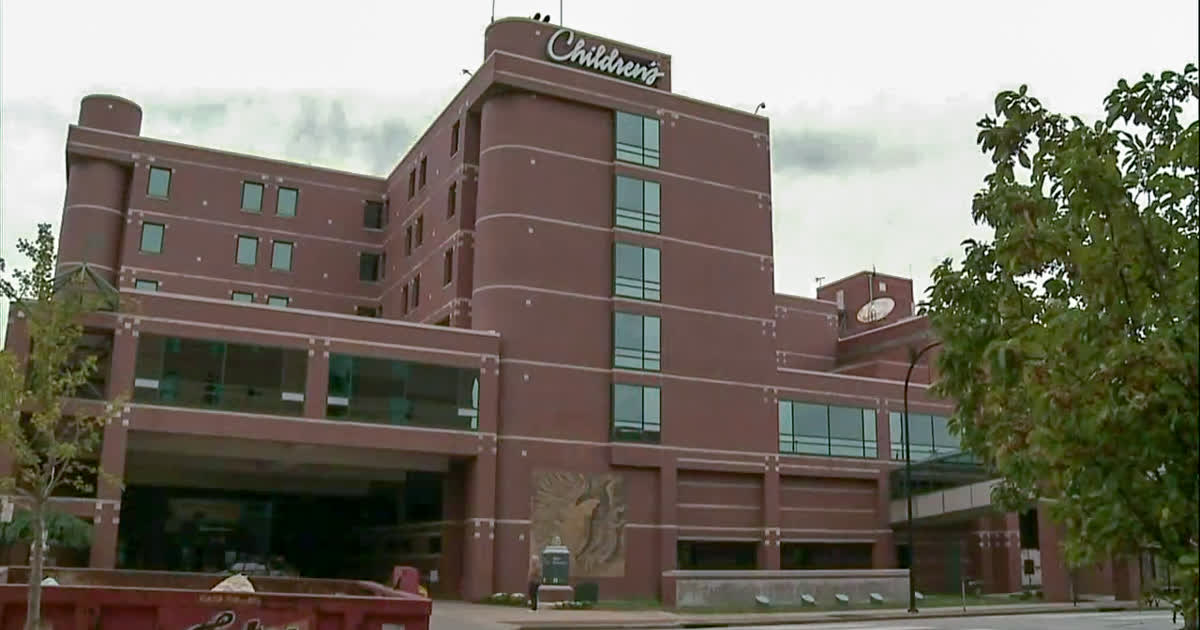
Akron Children’s is putting $4 million behind a simple idea: that a child’s eyes can tell doctors a great deal about the brain. The hospital has received a $2 million research endowment from the Knights Templar Eye Foundation to expand its research into pediatric eye disorders, and Akron Children’s will match the gift with another $2 million, the foundation announced.
The research is led by Dr. Faruk H. Örge, the Dr. Boomer and Jill Burnstine Endowed Chair in Pediatric Ophthalmology at Akron Children’s, who joined the hospital in 2025. His team studies eye movements and pupil reactions, particularly in patients with nystagmus, a condition that causes repetitive, uncontrolled eye movements and remains, in Dr. Örge’s words, poorly understood despite its impact on vision, learning and quality of life.

Akron Children’s already houses what the foundation describes as a top-of-class eye movement recording laboratory, with a database of more than 18,000 eye movement recordings — the largest collection of its kind in the world. Researchers hope that matching those recordings and pupil reactions with brain wave algorithms will unlock new understanding of vision and neurological conditions affecting children.
The work builds on a specialty Akron has become known for worldwide. Dr. Örge’s predecessor, Dr. Richard Hertle, was internationally known for his expertise in nystagmus, and families have traveled to Akron Children’s from around the world for that specialized care since 2010.

For babies and nonverbal patients, the promise is personal. As Dr. Örge explained, clinicians often cannot know what such a patient is thinking or which part of the brain is responding to a visual stimulus; learning to read those signals through the eyes could open a new door to diagnosis and care — the eyes, he said, really are a window to the brain and the entire body.
In 2025, the American Academy of Ophthalmology presented Dr. Örge a Distinguished Service Award for work that included virtual-reality simulators that shortened the time it takes to learn to diagnose crossed eyes from weeks to days — an example of the Akron program turning research into faster care for children.

The new endowment gives that work a permanent funding base in Akron, keeping a research program of global reach — and the families who travel for it — anchored in Northeast Ohio.
Photo: David Nethers, CC BY 3.0