


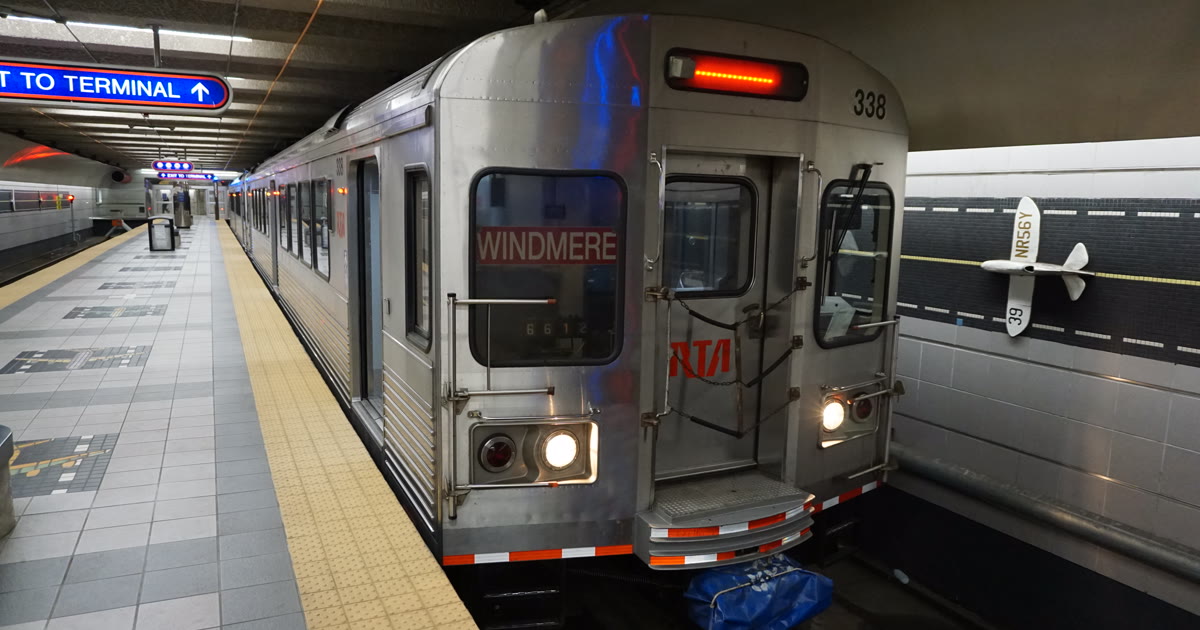
CLEVELAND, Ohio — Cleveland’s transit riders now need somewhere to go: the Greater Cleveland Regional Transit Authority’s updated Customer Code of Conduct requires every passenger to have a legitimate transportation destination and to get off at the end of the line, and the rule — introduced earlier this month — is drawing sustained opposition from homeless advocates as winter arrives, Mass Transit Magazine reported in its account of Cleveland.com’s reporting.
Under the code, riders who appear to have no legitimate transportation destination will be asked to leave the vehicle, and those who refuse may be removed, cited for criminal trespass, or both, Mass Transit Magazine reported. An All-Day pass, which allows unlimited rides, does not allow consecutive trips on the same vehicle — no looping or turnaround rides — and the code also bans camping and sleeping or lying down in RTA facilities or vehicles without a transportation purpose.
The Northeast Ohio Coalition for the Homeless has denounced the rule, saying in a statement that RTA’s revised code “clearly seeks to criminalize people experiencing homelessness and prevent unhoused people from utilizing public transportation,” Mass Transit Magazine reported. “Being homeless is not a crime nor a threat to public safety,” Josiah Quarles, the coalition’s director of organizing and advocacy, said in the coalition’s release, as reported by Mass Transit Magazine.
The coalition warned that the timing could be dangerous. “As the cold weather approaches, this policy will certainly cost lives,” the coalition’s statement said, as reported by Mass Transit Magazine. Chris Knestrick, the coalition’s executive director, said cutting off transit access also cuts people off from the services they need — employment, medical care, shelter and housing, Mass Transit Magazine reported.
RTA’s leadership has defended the policy. At the agency’s general meeting, General Manager and CEO India Birdsong Terry said RTA has been used as a transitional home for too long when people really need housing and other services, and she noted the agency has had a code of conduct for more than 20 years — the new code updates those policies, Mass Transit Magazine reported. “This is a long time coming,” Birdsong Terry told the meeting, according to Mass Transit Magazine.
RTA Police Chief Deirdre Jones has said the new rules are meant to improve safety, Mass Transit Magazine reported. The agency gave more than 24 million rides in 2025, according to News 5 Cleveland’s reporting on the rule — a scale that makes any conduct policy a decision affecting thousands of daily trips across Cuyahoga County.

The advocates’ ask is specific: the coalition called on RTA leadership to suspend enforcement of the non-destination riding rule until the agency meaningfully consults with people experiencing homelessness, disability advocates and community organizations, Mass Transit Magazine reported. For now, the code of conduct remains in place, and Birdsong Terry told critics she welcomed the passion if it turns toward solutions, Mass Transit Magazine reported.
The dispute lands at the hardest moment of the year for it. Cleveland’s cold season is beginning, overnight temperatures are falling below freezing, and buses and trains are among the few warm, public, moving spaces in the city. That is the advocates’ core argument: whatever the rule’s intent, its first test will come on the coldest nights, applied to the riders with the fewest alternatives.

What we know — and what we’re still waiting on: confirmed — the updated code is in effect, it requires a destination and an exit at the end of the line, and refusal can bring removal or a trespass citation, per the code as reported by Mass Transit Magazine and News 5 Cleveland. Still open: whether RTA will suspend or amend enforcement as the coalition has asked, and how the rule is being applied in its first weeks — the agency has not announced a change.
What happens next is enforcement through the winter: the coalition’s suspension request is before RTA’s leadership, and the agency’s board meetings are the next public forum where the rule — and its first weeks on the buses and trains — will be argued out.
Photo: Michael Barera, CC BY-SA