


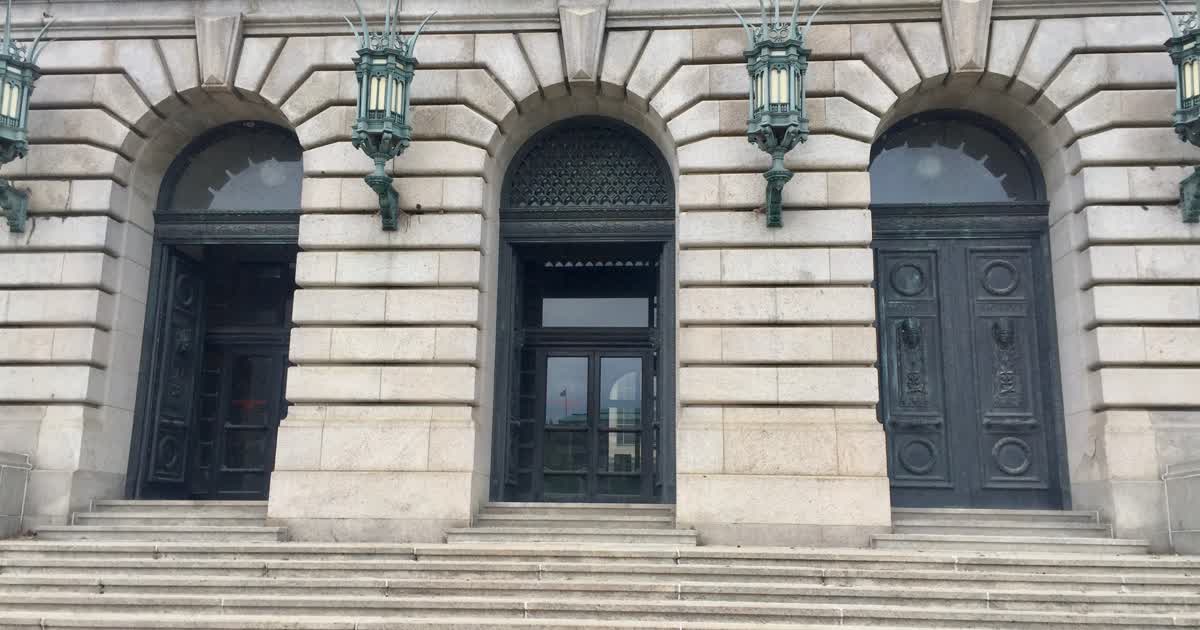
CLEVELAND, Ohio — Attorneys for a Cleveland man accused in a 2013 killing have asked the Ohio Supreme Court to halt his murder case, arguing that the indictment at the center of the prosecution was never formally returned by a grand jury, WKYC reported, in coverage summarized by Wisevoter.
The defense argues that the document filed as the indictment on May 2, 2025 is labeled a “Draft Indictment” and lacks the endorsement of a grand jury foreperson that Ohio law requires, according to WKYC’s reporting. An emergency motion asks the Ohio Supreme Court to stay all proceedings in Cuyahoga County Common Pleas Court while the court considers a writ of prohibition against Judge Kira Krivosh.
The killing at issue happened on March 24, 2013, outside a Cleveland office building, according to the reporting. The case has already passed through the hands of three grand juries, and the document dispute now asks a threshold question: whether a valid indictment exists at all.
Under Ohio Criminal Rule 6, a grand jury’s foreperson must endorse a true bill for an indictment to be formally returned. The defense position, as reported by WKYC, is that without that endorsement the Common Pleas Court lacks authority to continue the prosecution.
The filing is not the defense’s only open motion. A motion to dismiss filed on October 20, 2026 remains undecided before Judge Krivosh, according to the reporting, and an evidentiary hearing on a cellphone extraction is scheduled for November 30, 2026.
A separate fight is running alongside it: the Ohio Bureau of Criminal Investigation is asking the court to quash defense subpoenas involving Special Agent Lindsey Mussell, according to WKYC’s reporting. A prosecutor’s filing submitted November 13, 2026 contained a disputed citation, and a correction followed on November 16, 2026.
The timeline shows how long the paperwork question has shadowed the case. The killing occurred in March 2013. The disputed document was filed in May 2025, and the defendant was taken into custody. The defense moved to dismiss in October 2026, and this week carried the fight to the state’s highest court.
What we know — and what we’re still waiting on: the filings, the November 30, 2026 hearing date and the undecided dismissal motion are confirmed in WKYC’s reporting. What is not yet known is whether the Ohio Supreme Court will grant the emergency stay, or how quickly it will rule on the writ itself.
For the family of the victim and for Cleveland residents who have followed the case, the stakes are plain: if the defense claim holds, a prosecution built over more than a decade could be stopped on the form of its founding document. If it fails, the case returns to the Common Pleas Court and the November 30 hearing.
The case also tests a distinction courts draw every day: between a defect that can be corrected and one that goes to the court’s power to hear a case at all. A writ of prohibition, the vehicle the defense chose, is aimed at the second kind — it asks a higher court to stop a lower court from acting outside its authority, which is why the filing names Judge Krivosh and asks for a stay first.
Whatever the Supreme Court decides on the stay, the underlying dismissal motion from October 20, 2026 still sits before the Common Pleas Court, and the November 30, 2026 hearing on the cellphone extraction will test how much of the case moves while the indictment question is pending.
Three grand juries having considered the matter cuts both ways in the argument, as the reporting lays it out: the defense points to the missing endorsement on the document that was actually filed, while the prosecution has continued to treat the case as properly before the court for more than a year of proceedings, filings and hearings.
What happens next: the Ohio Supreme Court will consider the stay request, and the evidentiary hearing on the cellphone extraction remains scheduled before Judge Krivosh on November 30, 2026.
Photo: Cuyahoga County Courthouse, Cleveland — CC0