


Quick Takeaways
- The Dayton Performing Arts Alliance (DPAA) publicly answered its Philharmonic musicians on November 17, 2026, saying it wants a fair labor agreement but will not approve a deficit budget.
- The musicians, represented by American Federation of Musicians Local 101-473, have worked without a contract since their agreement expired on August 31, 2026, and have voted to authorize a strike.
- What happens next is continued bargaining; DPAA says scheduled performances, including The Nutcracker, remain its focus.
Dayton’s orchestra labor dispute is now being argued in public by both sides. The Dayton Performing Arts Alliance issued a statement on November 17, 2026, responding to public comments by a representative of the Dayton Philharmonic musicians, reaffirming its respect for the musicians and its commitment to reaching a fair labor agreement, BroadwayWorld reported. The statement is management’s fullest public answer since the musicians began working without a contract this fall.
“Dayton’s performing arts are a treasured part of our community, and our musicians are extraordinary artists whose contributions are essential to that legacy,” Joe Zehenny, chair of the DPAA Board of Trustees, said in the statement reported by BroadwayWorld. Zehenny pointed to The Nutcracker as an example of what is at stake: this year, 2,000 students will experience the production, and more than 100 young vocalists and youth choirs will help bring it to life, he said.
Management’s case: the money is not there yet
DPAA’s argument is financial. “Our current and projected financial resources are insufficient to support all the additional commitments our musicians are seeking,” Patrick Nugent, DPAA president and chief executive officer (CEO), said in the statement reported by BroadwayWorld. “We need stronger ticket sales and increased philanthropic support. Until that revenue exists, we cannot responsibly spend money we do not have. This is not a question of whether we value our musicians. We do. It is a question of what DPAA can afford while sustaining the Philharmonic, Ballet, and Opera together.”
The Board of Trustees will not approve a deficit budget, DPAA said in the statement. Committing resources beyond what the alliance can reasonably expect to receive would jeopardize future performances and the financial health of all three companies — the Philharmonic, the Ballet, and the Opera — it said. “Our responsibility extends to every part of DPAA,” Zehenny said in the statement. “We want our Philharmonic musicians to have more opportunities to perform, while also honoring our responsibilities to the Ballet, Opera, and the artists who bring them to life.”
How the dispute got here
The musicians’ side of the timeline is a matter of public record through their union’s statements, reported by OperaWire. The collective bargaining agreement between DPAA and American Federation of Musicians (AFM) Local 101-473 expired on August 31, 2026, and the musicians have performed without a new contract since then, OperaWire reported. In September 2026, the musicians voted to authorize a strike, with 98.4 percent of voting musicians in favor, according to OperaWire’s report of the union’s announcement. The vote gives the negotiating committee authority to call a strike at a time of its choosing; the musicians have continued to perform.
In October 2026, the union filed an unfair labor practice charge with the National Labor Relations Board, accusing management of refusing to bargain in good faith and of unilaterally cutting musicians’ guaranteed services while negotiations were underway, OperaWire reported. The charge also said DPAA sent negotiators who lacked authority to respond to proposals and withheld information the union requested as far back as April 2026, according to OperaWire. DPAA’s November 17, 2026 statement does not address the charge directly; it says continued discussions at the bargaining table offer the best path to an agreement.

What we know — and what we’re still waiting on
What we know: the contract expired on August 31, 2026; a strike is authorized but has not been called; an unfair labor practice charge is pending; and both sides now say publicly that they want a fair agreement. What is still open: the specific money gap between the two sides, whether a federal mediator is involved, and whether any performance dates are at risk. Neither side has announced a bargaining deadline.
The dispute is unfolding while Dayton weighs other long-term investments, including a $4.32 million technology contract to replace 30-year-old city systems, and in a week when the Dayton Flyers football team cracked the national Top 25. What happens next is the next bargaining session: DPAA says its focus remains on presenting scheduled performances and preserving the region’s performing-arts legacy while talks continue.
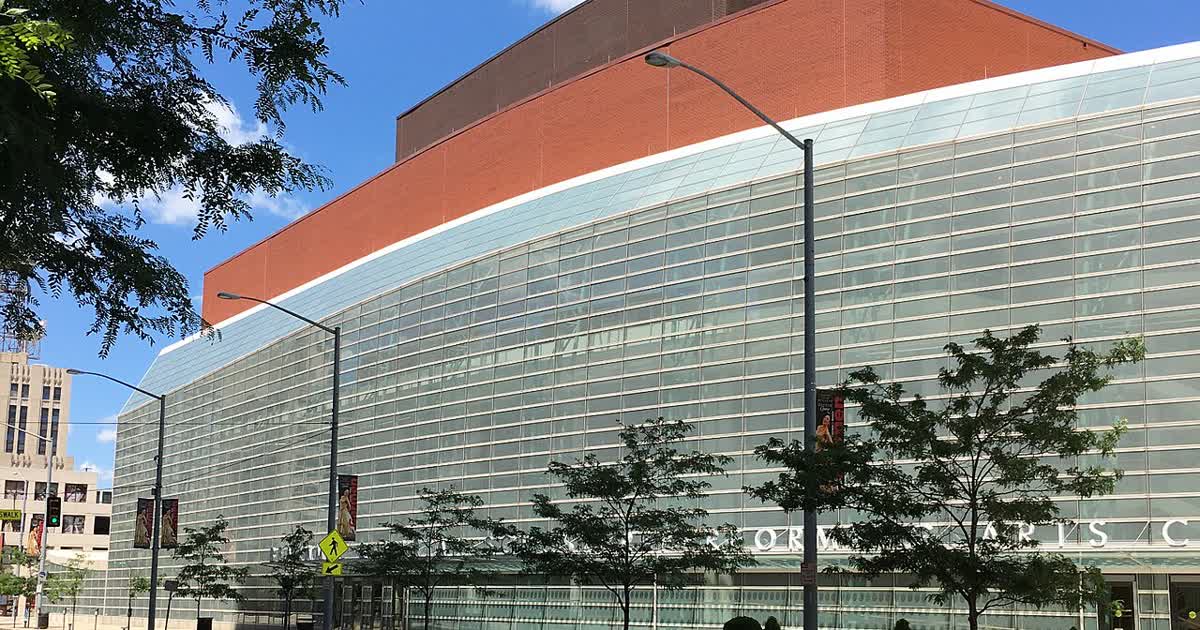
Photo: The Schuster Center in Dayton, Ohio, home of the Dayton Performing Arts Alliance. Photo: TastyPoutine, CC BY-SA