


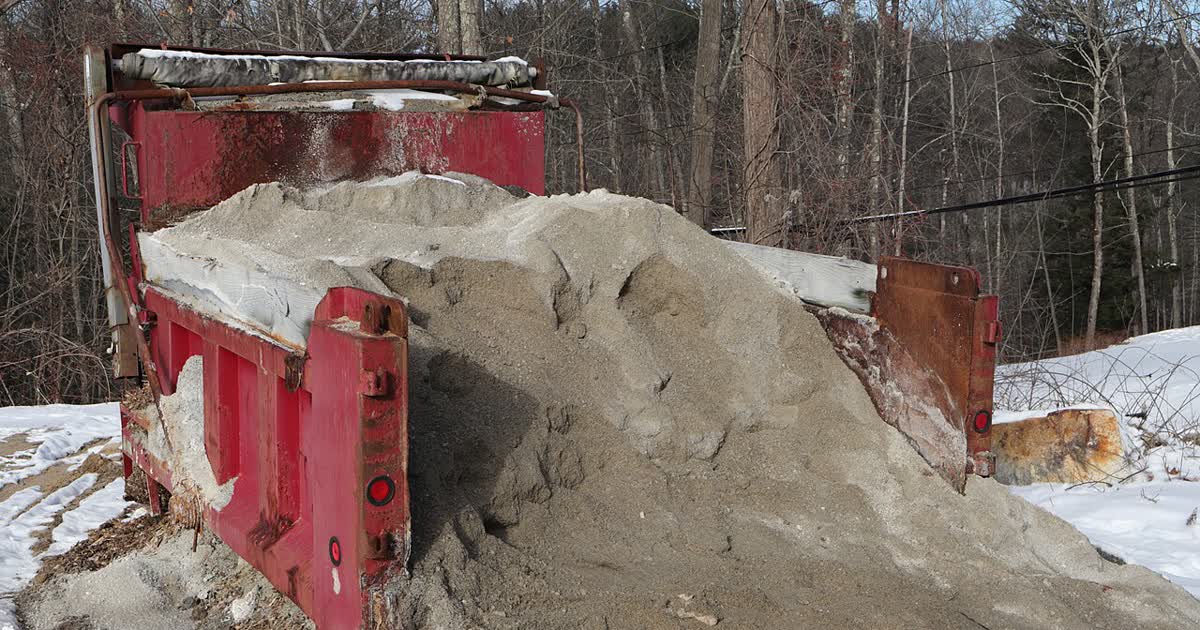
Akron can count on receiving its full supply of road salt this winter even as a flooded Lake Erie salt mine squeezes deliveries to other Ohio communities, city officials say — a piece of good luck that comes down to where the city buys its salt, the Akron Beacon Journal reported.
An underwater Morton Salt mine in Fairport Harbor flooded on October 22, forcing the evacuation of miners and the closure of the mine through the winter, the Beacon Journal reported. Akron, however, gets its road salt from Cargill and will be unaffected by the shortages, Public Works Manager Jon Malish said in an email to the Beacon Journal on Tuesday, November 17.
Cargill’s Whiskey Island mine in Cleveland is one of the world’s largest salt mines and one of the region’s main rock salt providers, and like the Morton site in Fairport Harbor it extends beneath Lake Erie, the Beacon Journal reported. Cargill also maintains operations in Akron: in 2019, Akron City Council authorized a 50-year lease on 119 acres along Manchester Road to Cargill so it could drill salt wells.
How Akron treats its roads depends on the storm. The city uses salt brine, made from rock salt, for anti-icing pre-treatments, and rock salt too, depending on weather conditions and temperatures — a rain-to-snow changeover, for example, or heavier snow and ice events, the Beacon Journal reported. De-icing operations use enhanced rock salt that stays effective at temperatures below 20 degrees.
"Every event is different," Malish said, in remarks reported by the Beacon Journal, "which is why we have various ways to treat the roads."
Malish said Akron ordered 20,000 tons of white salt and 20,000 tons of enhanced salt, according to the Beacon Journal. "This is on par with previous years’ orders," Malish said, in remarks reported by the Beacon Journal. "We have five salt storage locations throughout the city with Triplett being the largest capacity."
The timeline shows how fast a single mine became a regional supply problem. The Fairport Harbor mine flooded on October 22 and its miners were evacuated; by November 10, Bainbridge Township was telling its residents that Morton’s stockpiled salt would be divided at roughly 30 percent of each community’s order, with the mine closed throughout the winter, according to the Ohio Department of Transportation as cited in the township’s release; and on November 17, Akron confirmed it sits outside the problem entirely because its supply contract runs through a different mine under the same lake.
What we know — and what we’re still waiting on
What is confirmed: the Morton Salt mine in Fairport Harbor flooded on October 22 and, according to the Ohio Department of Transportation as cited in a November 10 Bainbridge Township press release reported by the Beacon Journal, will be closed throughout the winter; the salt Morton already had stockpiled is being divided between its customer communities, with each set to receive roughly 30 percent of its order; and Akron’s Cargill supply is unaffected, with 40,000 tons ordered across its two salt types. What is not yet known is how the roughly 30 percent deliveries will stretch for Morton customer communities if the winter turns harsher than forecast, or whether those towns will need to buy salt elsewhere at winter prices.
Bainbridge Township in Geauga County is one of the communities on the short end of the split. Of 7,000 tons of salt the township ordered, it will receive roughly 2,200 tons, according to the township’s November 10 press release as reported by the Beacon Journal — a gap township crews will have to manage through every storm until spring.

Akron is expecting a mild, wet winter based on weather reports, but officials aren’t taking chances, the Beacon Journal reported. "We always plan for the worst case scenario and can ease up on our response from there," Malish said, in remarks reported by the Beacon Journal.
For drivers across northeast Ohio, the practical difference this winter may come down to which side of a city or township line a road sits on: Akron’s plows will roll with a full salt supply behind them, while crews in Morton-supplied communities start the season rationing roughly a third of what they ordered.

What happens next: Akron’s five salt storage sites, led by the Triplett location, hold the city’s 40,000-ton order ready for the first plowable storms, while Morton customer communities across the region wait out a winter with the Fairport Harbor mine closed and their deliveries capped at roughly 30 percent of their orders.