


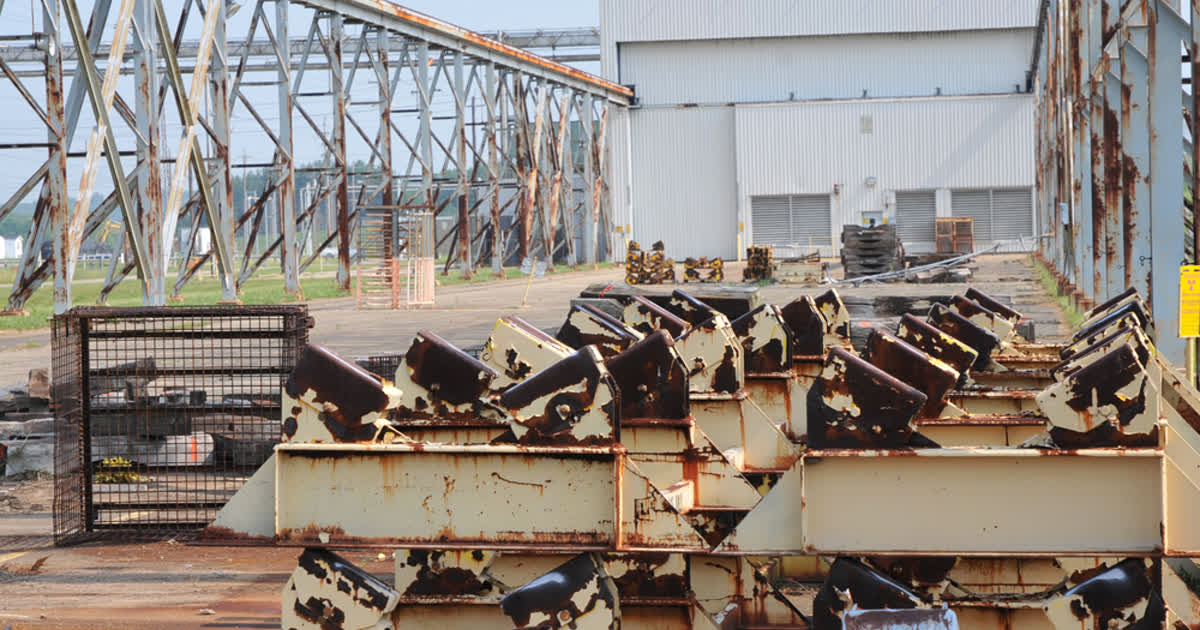
The Cold War is coming down in Piketon to make room for what federal officials call the nation’s largest energy megasite. Crews are now tearing down former uranium enrichment buildings at the U.S. Department of Energy’s Portsmouth Site to clear ground for a $37 billion energy and computing hub, according to the department’s Office of Environmental Management, in a release reported by the Scioto Valley Guardian.
The project combines large-scale power generation with a planned superintelligence computing center on the Pike County site, the department said. It is a remarkable second life for a property that southern Ohio has known for decades as a cleanup job — a former uranium enrichment plant whose Cold War buildings are only now coming down.

The Portsmouth Site is one of three Energy Department properties nationally — along with sites in Paducah, Kentucky, and Oak Ridge, Tennessee — being redeveloped as what the department calls American Energy Hubs, drawing a combined $650 billion in private investment across the three locations, according to the department’s release, as reported by the Scioto Valley Guardian.
Assistant Secretary for Environmental Management Tim Walsh, who oversees the Portsmouth Site and has met with workers there, said the project is meant to turn the site’s environmental liabilities into a long-term economic asset for southern Ohio, according to the department. The department said the demolition of the old Cold War buildings is intended to create career opportunities for future generations in the region as the site transitions from cleanup to reindustrialization.
The money attached to Piketon has been climbing as the plan has taken shape. The Energy Department has framed the project as the nation’s largest energy megasite, and the figures have risen steadily: Walsh toured the site in October and touted a $33 billion plan, and the department now puts the investment at $37 billion, the Scioto Valley Guardian reported.
For Pike County, the stakes are generational. The Portsmouth Site’s enrichment mission defined the local economy for decades, and its cleanup has employed generations of workers since. The buildings now coming down are the physical plant of that Cold War mission — the department’s demolition work is what converts a fenced cleanup site into open, reusable ground, which is why the teardown, unglamorous as it looks, is the project’s true first phase. A hub that pairs power generation with a major computing center would keep the site at the center of the county’s economy — this time building on the land instead of remediating what was left on it. It is the same corner of southern Ohio where residents are weighing what new energy development means for their communities, a debate NewsForce247 followed this fall in the Hocking River cleanup work in neighboring Athens County.
What we know — and what we’re still waiting on
What we know, from the Department of Energy’s Office of Environmental Management as reported by the Scioto Valley Guardian: demolition of the former enrichment buildings is underway; the redevelopment pairs power generation with a planned superintelligence computing center; the department values the Piketon investment at $37 billion, up from the $33 billion figure Walsh cited in October; and the three American Energy Hubs together carry $650 billion in combined private investment. What we’re still waiting on: a construction timeline for the hub itself, the project’s job counts, and which private partners will build and operate the power and computing facilities. Southern Ohio’s other big infrastructure story this week — Chillicothe Transit’s new electric vans — shows the smaller end of the same energy transition playing out an hour north.
What happens next is the teardown itself: crews continue demolishing the Cold War-era buildings to clear the ground the hub will occupy, while the Energy Department advances the redevelopment it has now priced at $37 billion. Details in this report are from the U.S. Department of Energy’s Office of Environmental Management, as reported by the Scioto Valley Guardian.