


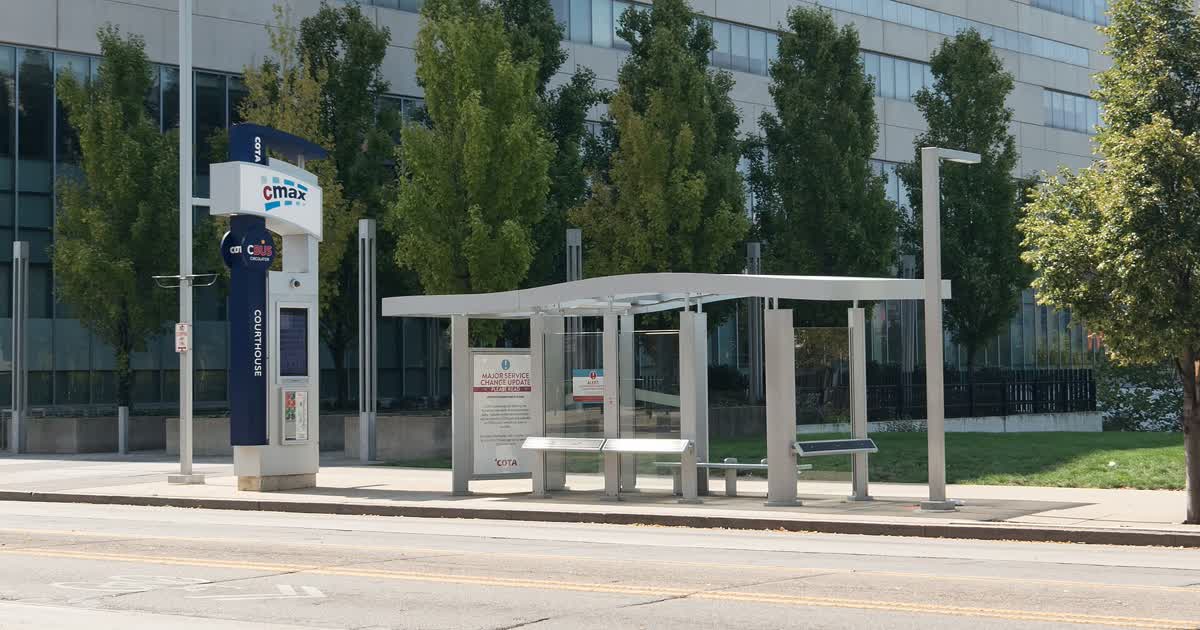
COLUMBUS, Ohio — The free bus rides that thousands of downtown Columbus workers have used to get to their jobs are coming to an end. The C-Pass program, which has provided free Central Ohio Transit Authority (COTA) passes to eligible downtown employees since 2015, will be discontinued on December 31 after its funding sources dried up, according to reporting by The Columbus Focal.
Workers currently enrolled in the program can keep riding free through the end of the year, The Columbus Focal reported. Starting January 1, those riders — a group that leans heavily on downtown service workers, hotel employees and restaurant staff — will need another way to get to work, or will have to pay their own way on the bus.
The program’s roots go back more than a decade. C-Pass began as a pilot project and was fully established in 2018 by the Capital Crossroads Special Improvement District, The Columbus Focal reported. It was paid for through a combination of support from the Mid-Ohio Regional Planning Commission (MORPC) and assessments on downtown property owners — the property-owner assessments collected through the special improvement district were a key funding stream.
That structure unraveled as downtown’s improvement districts wound down. When Downtown Columbus Inc. took over many operations of the Capital Crossroads and Discovery District special improvement districts, the program’s future became uncertain, and both downtown SIDs officially ceased operations last fall, according to The Columbus Focal. COTA and MORPC set aside funding to keep C-Pass running through the end of this year, but no money is available to continue it in 2027 and beyond, COTA spokesperson Jeff Pullin told The Columbus Focal, explaining that downtown property owners are no longer being assessed by the SID.
"For those who have relied on C-Pass for travel over the past several years, we know this news comes as a disappointment," Pullin told The Columbus Focal.
The end of C-Pass was not sudden. City leaders had previously raised concerns about the downtown SIDs operating programs like C-Pass that were not directly related to what they considered the groups’ primary "clean-and-safe" mission, The Columbus Focal reported, and that skepticism — along with the pandemic’s dramatic shift in commuting patterns — contributed to the program’s demise. Marc Conte, who played a key role in implementing C-Pass as deputy director and later executive director of the downtown SIDs, told The Columbus Focal the post-COVID landscape is completely different, with many workers now spending part of the week at home, and that a new funding mechanism and discount structure were needed.
Conte also pointed to what the program achieved in its early years. "Downtown C-Pass was wildly successful in the first iteration prior to COVID," he told The Columbus Focal. "It doubled ridership among eligible workers in three months — a sizable mode shift that’s unheard of. It boosted recruitment and reduced turnover among service workers at places like hotels and restaurants, and it freed up parking which made room to attract more office tenants."
The timing adds one more cost question for Columbus households heading into 2027. The city is separately weighing utility bills that are already set to climb — see our coverage of how Columbus is weighing another 18 percent water rate hike ahead of a Nov. 23 vote — and Mayor Andrew Ginther’s proposed budget is working its way through council, as we reported in our look at the $1.3 billion Columbus budget proposal. For a downtown line cook or hotel housekeeper, a monthly bus pass now joins that list of rising costs.
What we know — and what we’re still waiting on. What is confirmed: C-Pass ends December 31, current enrollees can ride through that date, and no funding exists to continue the program in its current form in 2027. What is not yet settled: what, if anything, replaces it. COTA has long wanted to unify the multiple bulk pass programs created over the decades, Conte told The Columbus Focal, and the agency is now engaging with organizations on new options for convenient, reduced-fare transit that would be available throughout its service territory rather than in just one zone.
Pullin told The Columbus Focal that COTA is optimistic it can announce one or more new partnerships early in 2027, and that options under consideration include bulk discounts employers could use to provide passes for their workers. Until those partnerships are announced, downtown workers who have built their commutes around C-Pass have about seven weeks to plan.

What happens next is a January 1 hard stop for the free rides, followed by COTA’s promised early-2027 announcement on reduced-fare partnerships. Transit advocates quoted by The Columbus Focal say the loss underscores the need for stable, dedicated funding for public transportation as the region’s commuting patterns continue to evolve — a debate Columbus is likely to keep having as downtown employers compete for workers who increasingly split their weeks between the office and home.
Photo: Ɱ, CC BY-SA