


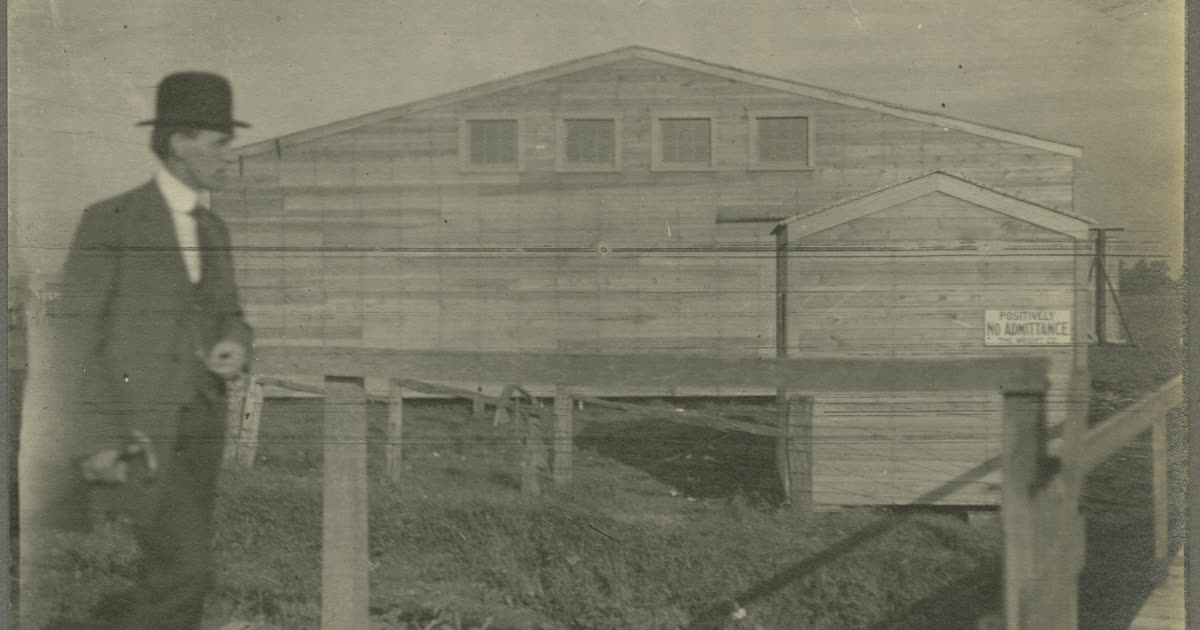
The U.S. Senate has passed a bill that would expand the Dayton Aviation Heritage National Historical Park, the Wright brothers’ hometown tribute, by adjusting the park’s boundary in Dayton. The bill, led by Sens. Jon Husted and Bernie Moreno of Ohio, passed the Senate this week and now needs action in the U.S. House, according to Husted’s office.
The legislation would amend the Dayton Aviation Heritage Preservation Act of 1992 to extend the boundary of the park. The bill text, S. 2434, describes the addition as approximately one acre of land in Dayton, shown as the “Proposed Addition” on the park’s proposed boundary map. Reps. Mike Turner and Greg Landsman introduced the companion bill in the House of Representatives, Husted’s office said.
“More than 120 years ago, the Wright brothers pioneered their aviation work and built the world’s first airplane in Dayton. I’m proud to support efforts that keep Dayton Aviation Heritage National Park showcasing its accomplishments and sharing Ohio’s rich history with visitors from our state and across the world,” Husted said in his office’s announcement.
The park Husted’s bill would grow is not one continuous tract. The 1992 act authorized the park with four non-contiguous sites, and Congress has twice since enacted laws expanding its boundaries to include additional sites. On average, more than 81,000 people visit the Dayton Aviation Heritage National Historical Park each year, according to National Park Service figures cited by Husted’s office.
There is a reason a one-acre change needs an act of Congress. The park has only limited access to minor boundary-adjustment authority under the Land and Water Conservation Fund, so any adjustment to its boundaries requires congressional action, Husted’s office explained. Husted and Moreno introduced the bill in July 2025.
What happens next is the House, where the Turner-Landsman companion bill waits. If the House passes the measure and it is signed into law, the added acre becomes part of the national historical park that preserves the Wright brothers’ Dayton story — the bicycle shops, printing business and flying fields where powered flight began.
For Dayton, even a small boundary change is a statement about a big inheritance: the city where flight was invented keeps investing in the ground that proves it.